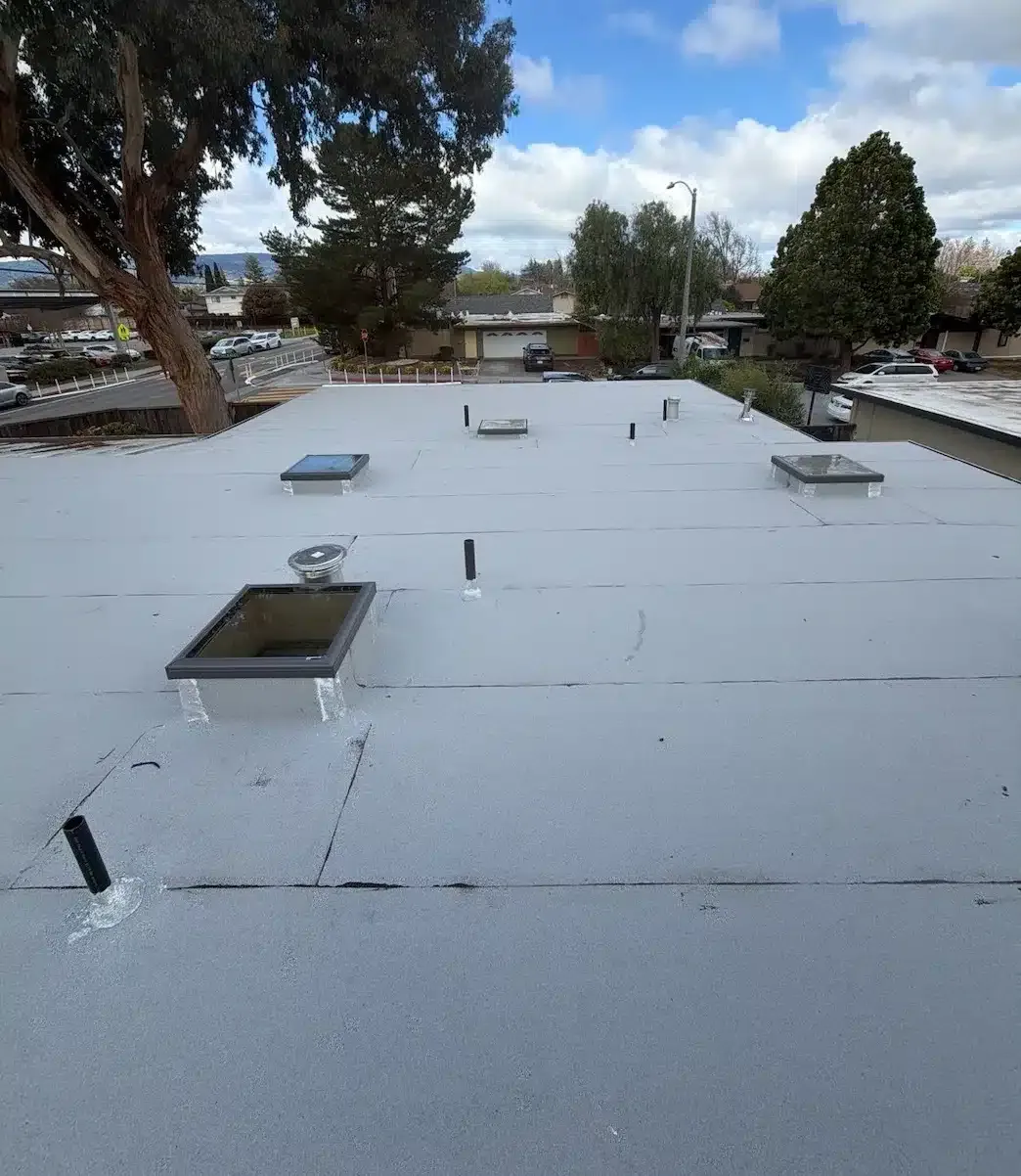
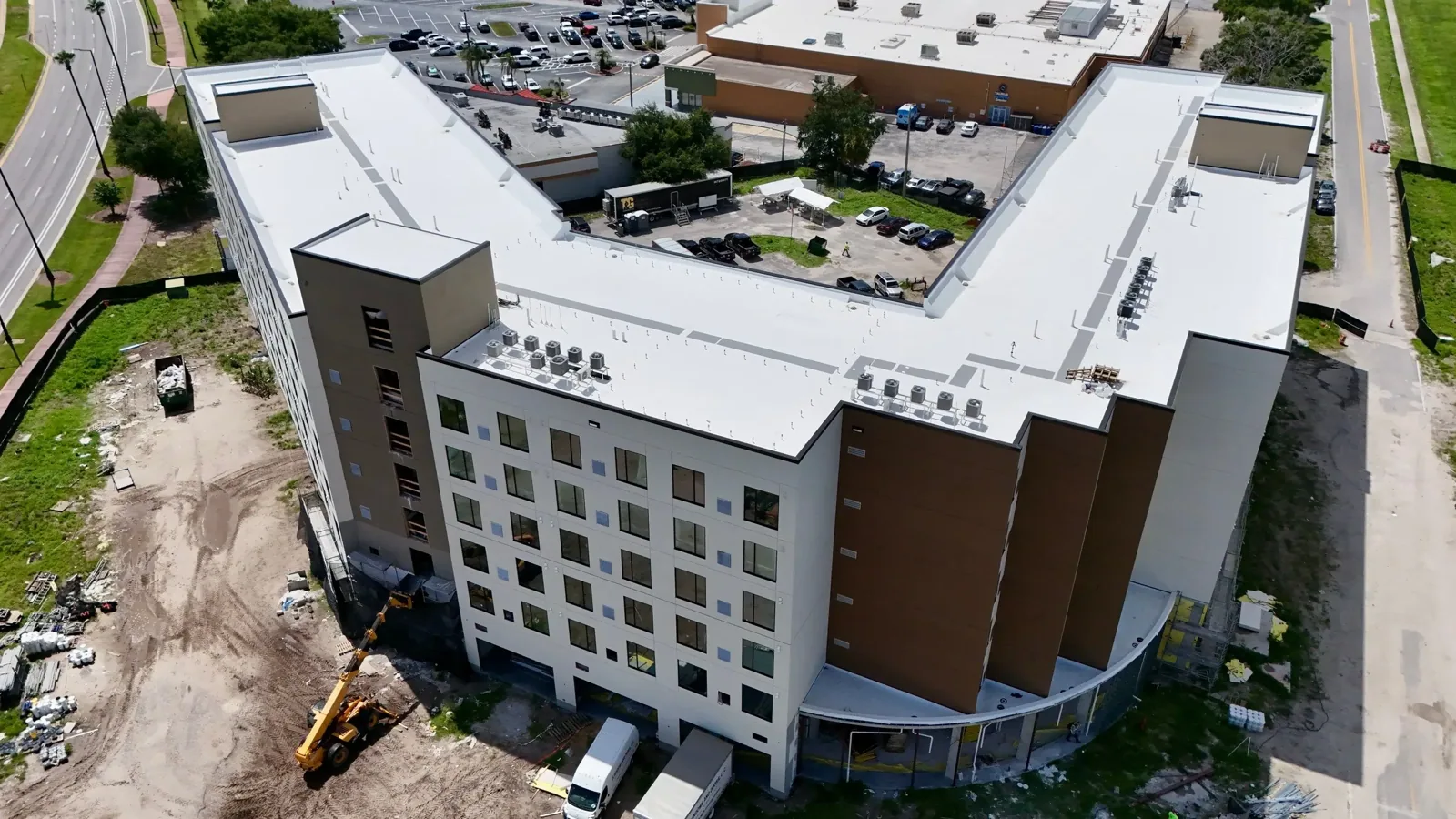
TPO is the white single-ply membrane you see on many newer commercial roofs around Temecula. Its seams are heat-welded, and the reflective surface is a good match for a city where summer heat can turn extreme. For an office building roof, though, the estimate has to cover more than the membrane: whether the old roof is torn off or kept, how the new roof is attached, and how crews will work around rooftop units and tenants below.
We start with any roof records you have and a walk with your building contact. A change in tenants or past repairs can change how the roof is built at walls and curbs. The TPO system we propose follows what we find, and we flag any insulation questions we cannot answer until the roof is opened. A cooler roof may help the building, but that is separate from choosing the right attachment and system.
The new membrane needs a sound base, whether we tear off the old roof or keep some layers. The surface can look fine while the insulation underneath is wet or loose, so those questions stay open until they are checked. A commercial roof inspection before a TPO project tells us what can stay, what needs moisture scans or core samples and what the quantities should be.
Wet or damaged insulation gets removed and replaced as part of the TPO scope, not left out of the price. If tear-off reveals more damage, we show you the location, get your approval and keep the roof sealed until it is repaired. Compare TPO bids on the same insulation work and the same finished details, because two bids for the same roof can hide very different tear-off and preparation. A good weld does not prove the insulation underneath is dry, and a cheap bid should not depend on that question going unanswered.
Welding the seams and attaching the roof are two different jobs. TPO can be mechanically fastened, fully adhered or, in some cases, ballasted, and the proposal should say which method is being used. Carlisle and other manufacturers offer several attachment options, and the right one depends on the building and the project requirements. A PVC roof is also heat-welded, but it has its own accessories and attachment details and should be priced on its own terms.
The estimate should show insulation, attachment and accessories along with the membrane, and explain what changes with the attachment method chosen. If the deck or an existing component needs an engineer's review, that should be scheduled before installation rather than assumed. That way the price difference reflects real construction, not just the membrane name. A white surface and an attachment label do not, by themselves, make a complete approved roof for your building.
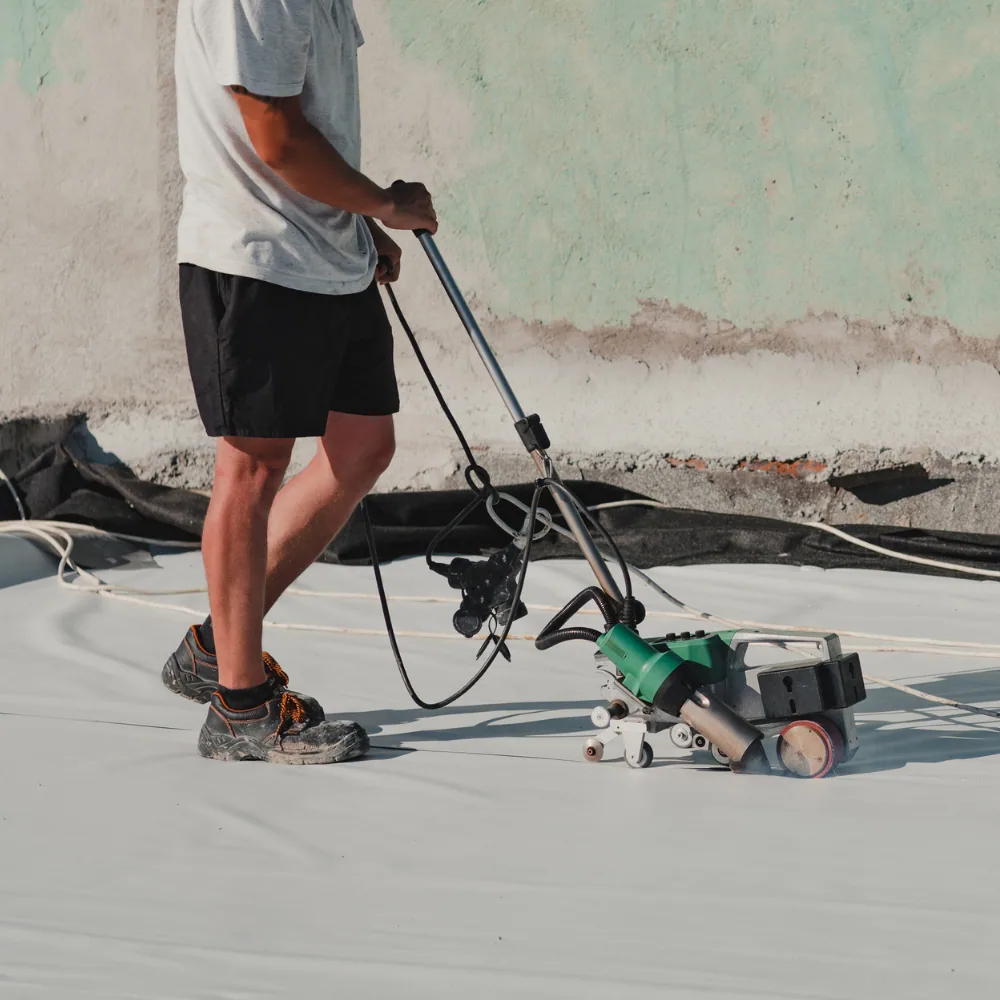
TPO seams are welded with hot air, and good crews make test welds at the start of each day and probe every seam after it cools to catch gaps. Those checks confirm the seam; they do not prove the insulation underneath is dry. Good commercial roof repair on an existing TPO roof starts by identifying the existing membrane and past patches, because older or coated TPO may not weld well to new material without preparation.
We identify the existing surface and the accessories before assuming new material will weld to it. An old coating or patch can change the preparation needed, and a curb blocked by a unit cannot be finished even if the rest of the roof is done. Compare the full seam and detail work along with the insulation repairs, following the product's requirements rather than a generic procedure. A good repair explains which connection was fixed and how it was tested, without claiming one good seam proves the whole roof is sound.
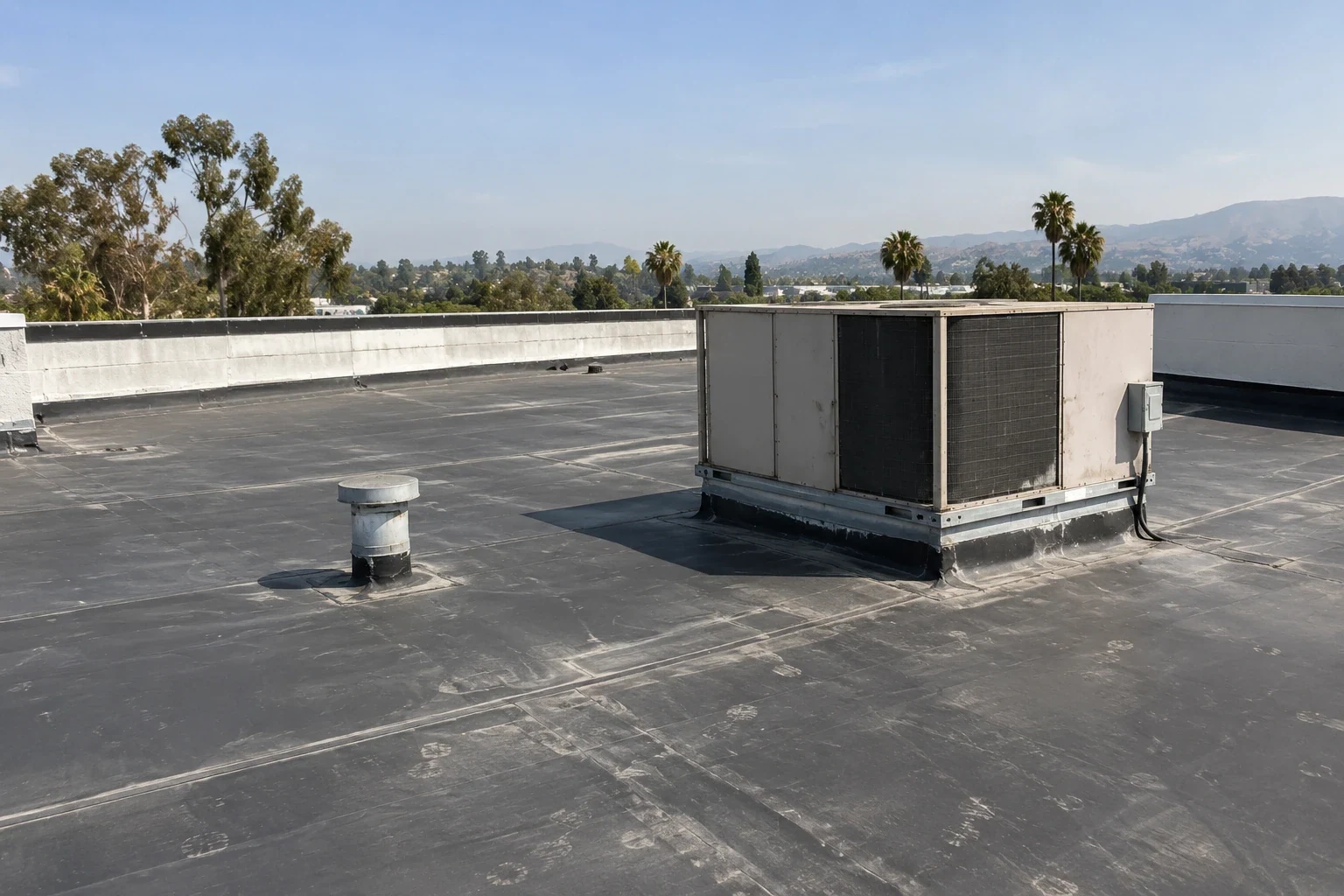
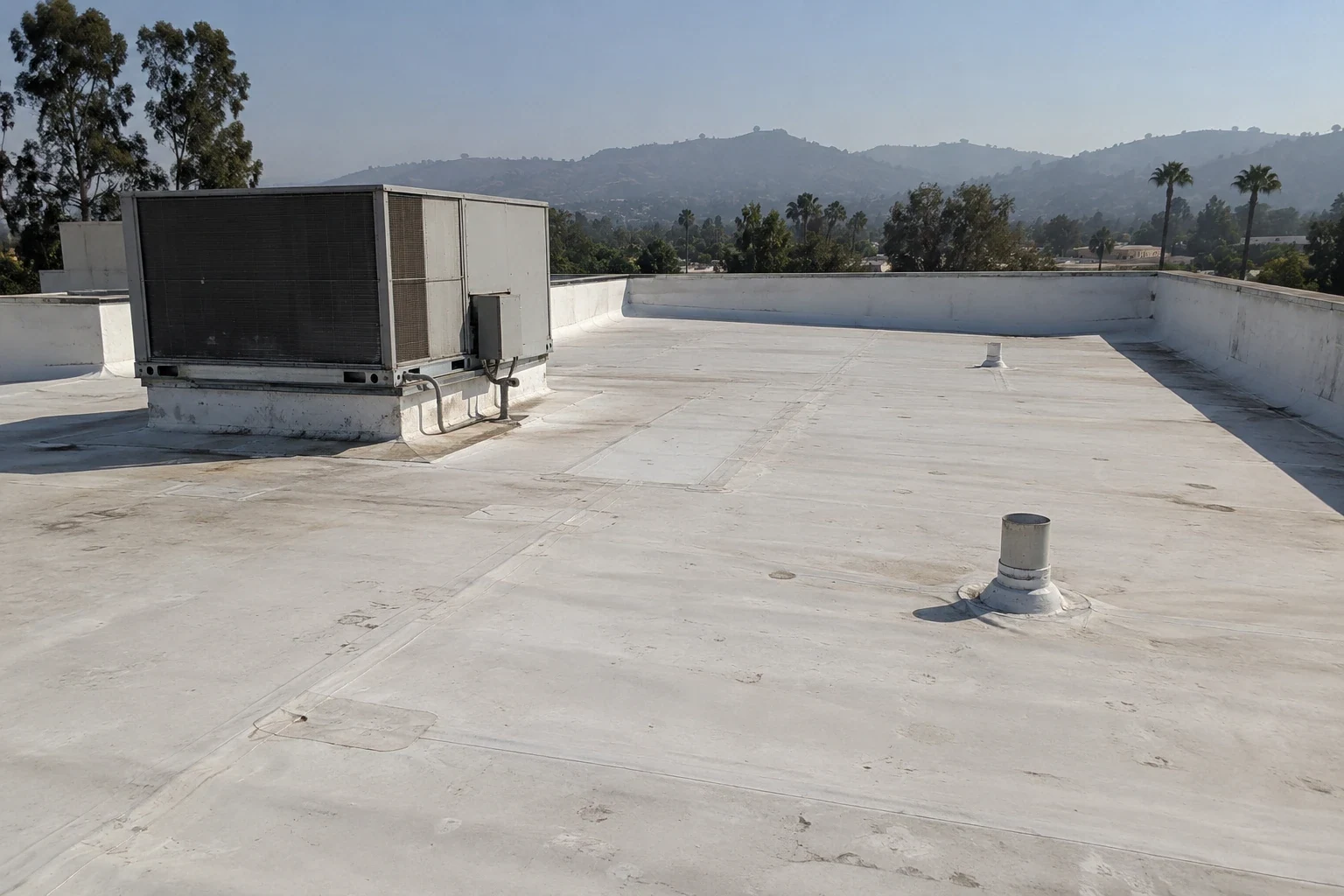
A complete TPO scope includes drains, edges, wall flashings and equipment curbs, not just the field membrane. Each one has its own shape and preparation. An EPDM roof uses tape and adhesive instead of welding and has different accessories, so the same roof area does not mean the same labor or parts. Compare them on the same finished scope before letting membrane price decide.
A rooftop unit may have to be moved or disconnected before a curb can be rebuilt, and that has to be scheduled, not left vague. Occupied spaces below, delivery access and protection all affect the schedule, and limited work windows can add setup and handling. A roll of TPO on the roof does not finish a blocked curb, and new membrane will not fix wet insulation left underneath. The work goes smoothly when the insulation, flashing parts and equipment shutdowns are all ready together.
At the final walk, we point out where insulation was replaced and where details were completed, and confirm the membrane, attachment and accessories installed. Projects in Old Town Temecula work the same way, with the roof area and system tied to what we found there. Any unfinished equipment work stays on the list so you can tell roofing that is complete from items still waiting on another trade.
You get photos, product information and seam test records along with any approved changes. If a warranty is offered, read the actual document before relying on it. If equipment is changed later or a leak shows up, it can be compared against the finished details and any work done since. Retail buildings along the Winchester Road corridor may have different membranes, attachments and equipment layouts. We identify the existing roof on each building before choosing a TPO detail. A busy storefront also affects where materials can be staged and which customer routes must stay clear during a repair. The corridor name alone does not tell you what roof is on the building.
Heat is a fair reason to consider TPO, but the insulation condition and the flashing details should lead the decision. Compare options with the same insulation repairs and details, then weigh the reflective surface as one factor.
No. Test welds and seam probing confirm the seams. Wet insulation underneath has to be checked separately with moisture scans or core samples, and damaged material replaced.
The existing membrane, past repairs and the shape of the details being repaired. Older or coated TPO may need special preparation before new material will weld, and accessories have to be compatible with the existing roof.
Compare them with the same insulation repairs and the same finished details, then look at differences in attachment, seams and accessories. Both should account for equipment shutdowns, and any energy benefit depends on your building.
Send us your roof records and any concerns about leaks, insulation or access. We will inspect the roof and explain a TPO option with attachment, insulation and flashing work included, plus an alternative for comparison.
Request a Roof Assessment