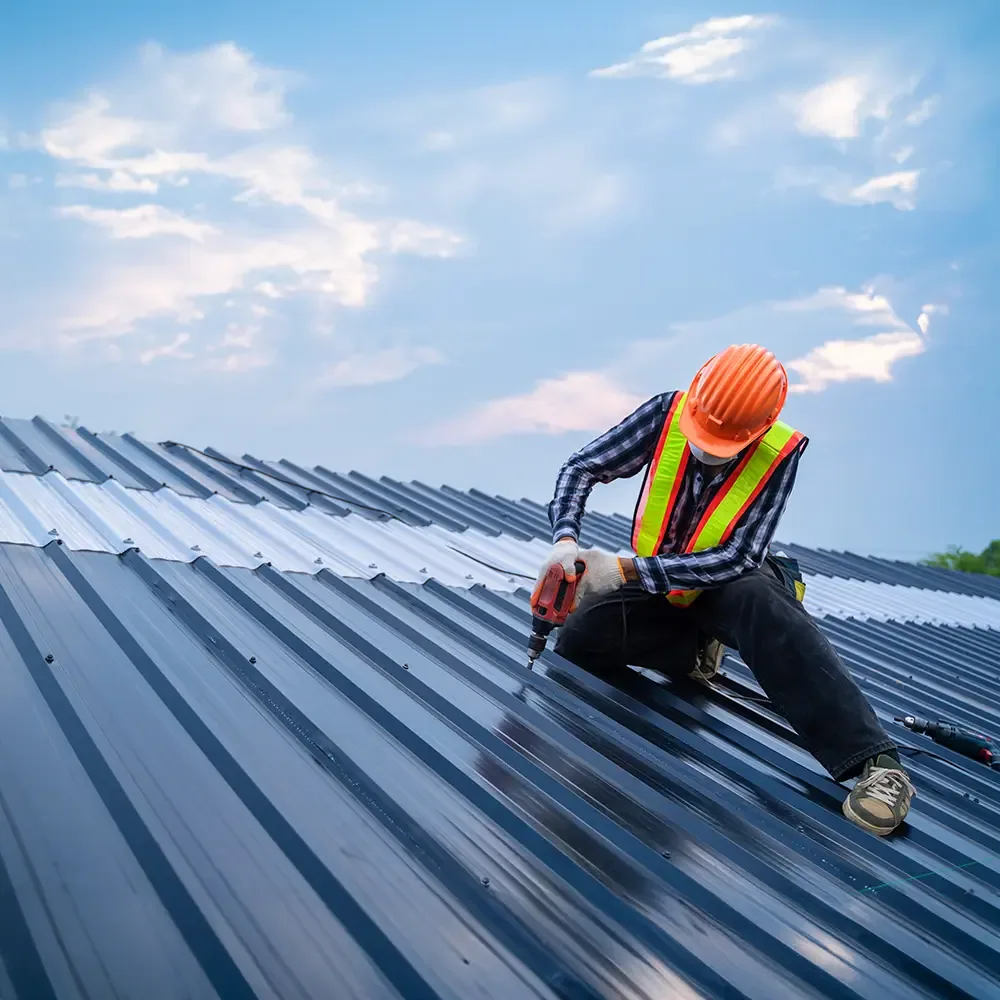
Parapet wall flashing is one of the most common sources of repeat leaks on Menifee commercial roofs. The sun heats the wall and the roof differently, the flashing gets pulled at the top, and water gets behind it. We provide inspection, repair and replacement from our base in Temecula, CA, and we check where the wall meets the roof before recommending a coating or a bigger project. Menifee has commercial buildings across several fast-growing areas. For each building, the decision should cover the condition of the flashing, the material behind it and the interior protection needed to rebuild it.
A dark stain in an interior corner or a split in the flashing does not mean the whole roof has to come off. It does mean the wall flashing and any water that got in there need to be checked. We keep that separate from the possible benefit of a reflective coating, which can reduce how much heat a suitable roof absorbs. The wall repair comes first, so a coating does not hide a flashing problem that will mean tearing into the new work later.
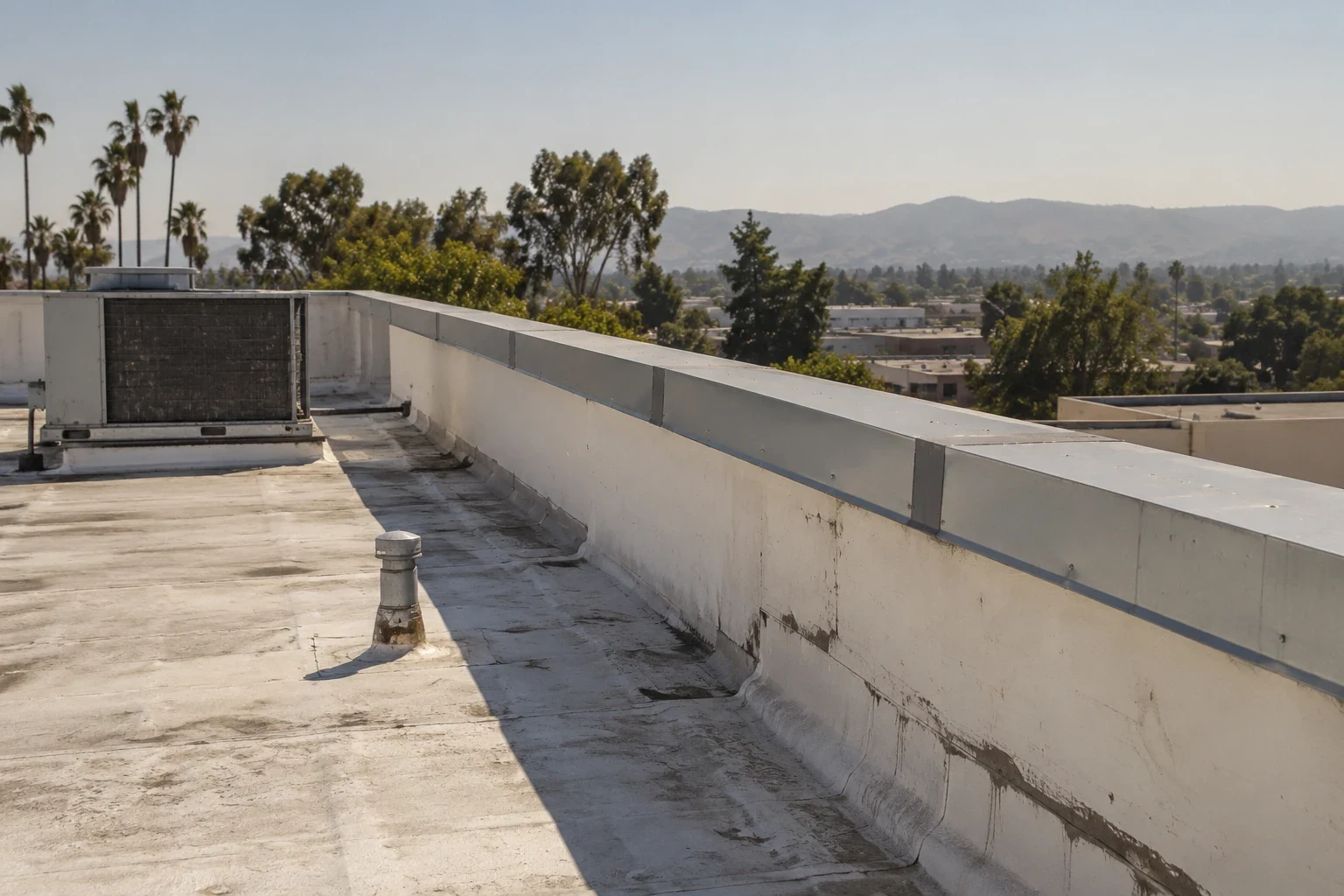
If the top edge of the wall flashing has pulled loose, water can run down behind material that otherwise looks fine. We inspect the termination, the wall surface and the transition into the roof before deciding what can stay. The fix may need new fastening, a counterflashing or a different detail, with preparation that suits the wall and roof materials. Another bead of caulk at the top edge is not the same as rebuilding a termination that has failed.
Our flashing failure repair covers the full wall detail, not just the visible gap. We identify what has to be removed to reach sound material and where other trades need to be involved. That affects disposal, new flashing and temporary protection costs. It also lets you compare a permanent local repair with a temporary fix meant only to keep water out until access or further investigation can be arranged.

Joints in parapet coping move and attach differently from the flexible roofing below them. We inspect the metal, the wood or blocking it is fastened to and how water runs off the wall top. Sealing over a coping joint can stop it from moving while the connection underneath stays broken. The inspection should show whether the leak is coming from the coping, the wall itself or the roof flashing, so the right work gets priced.
With edge metal, coping and gutter repairs, the proposal includes the right joint and fastening detail for that wall. Design requirements are handled where needed rather than assuming a few more screws will do. Ordering metal and access for tear-off can affect timing, especially if the nearby flashing has to be disturbed. We explain how those pieces fit together before you combine coping replacement with bigger roofing work or choose a smaller standalone repair.
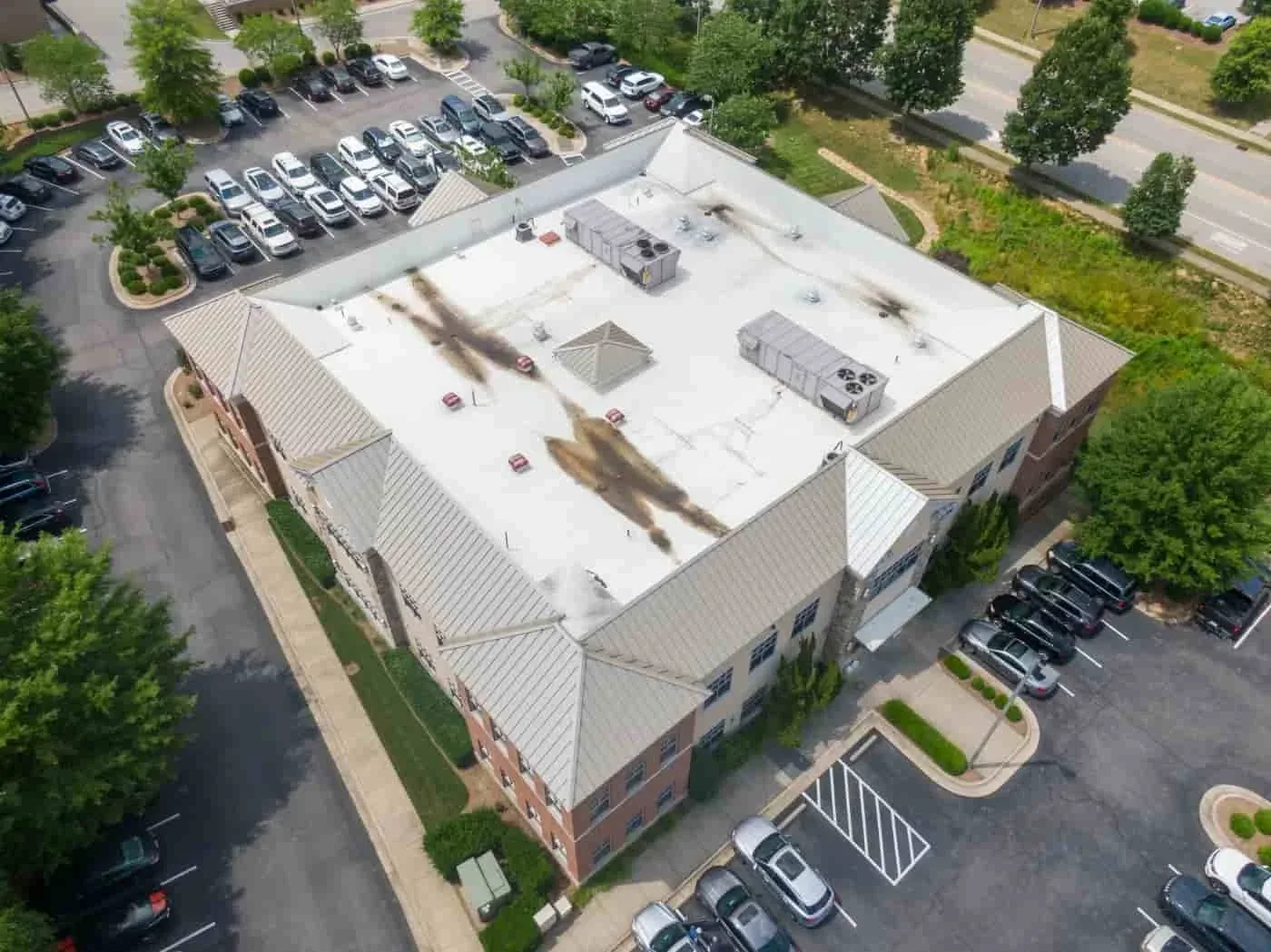
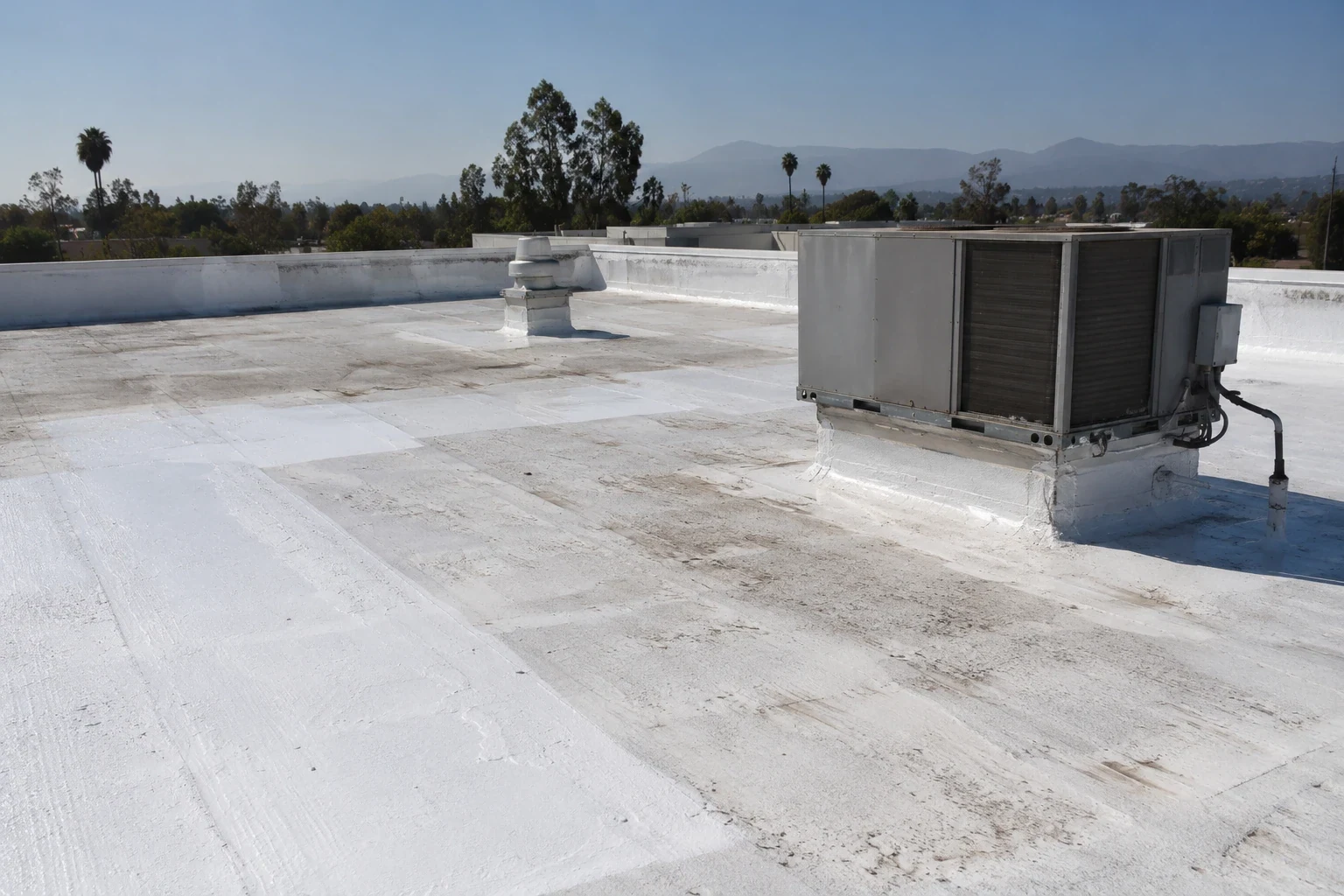
A roof field that looks intact may still need preparation and testing before a coating will work. We inspect the surface, old repairs and the material at the wall, then figure out what can take the proposed coating. A reflective coating changes how the roof handles sun, but it does not fix a loose flashing or make wet insulation acceptable. Those repairs come first in any restoration comparison.
We evaluate roof coating restoration based on the existing roof, adhesion testing and how much preparation it needs. Insulation and how the building is cooled affect how much a reflective surface helps. We keep that benefit separate from the wall repairs and disposal. You can then compare restoration with replacement using the full requirements, including the cost of cutting into a coated area later if the wall is left unfixed.
Tear-off next to a parapet can open up a roof edge above an occupied room. We confirm the affected room, the route for materials and the protection needed before setting the work schedule. For work on a building on La Piedra Road, for example, the manager would confirm room restrictions and access. Those conditions decide how much wall flashing can be torn off and reliably put back each day.
Our occupied building reroofing approach covers daily sealing, debris handling and coordination between metal and roofing work. Finishing the open roof while leaving the wall transitions for later creates extra temporary protection that could have been avoided. We lay out a schedule that does both together and show the cost difference between phase sizes. That helps you decide how much disruption is acceptable without the wall work getting lost in a general schedule.
A roof in Lake Elsinore may need a different wall detail even if the same owner is paying for both jobs. We compare the wall surfaces, fastening and existing layers separately before discussing combined purchasing. Similar buildings do not mean the same construction. A combined bid is still useful when each roof's material and protection needs are clear on their own.
A project in Sun City can be added with its own recommendation. Stopping active leaks, investigating and permanently fixing the walls each have different timing. We identify those steps before looking at surface upgrades or replacement, so your money goes where it fixes the cause. That keeps a cheap first coating price from pushing an unsolved parapet problem into another mobilization after the coating is down.
Menifee's growth along I-215 means retail, education, healthcare and distribution buildings may be in different stages of development. For a newer property, confirm warranty requirements and who must approve repairs before changing a roof detail. For an older building, review prior patch and coating history to avoid coating over an incompatible layer. The inspection findings should name the actual building, roof area and confirmed condition. That gives an owner a sound basis for prioritizing maintenance while nearby construction continues.
No. If the roof next to the wall is sound, a defined wall-flashing repair is often the right fix. We inspect the termination, the wall and the nearby roof first. If wet or worn areas are larger, we compare a bigger repair with the tear-off and rebuild costs laid out.
Often it makes sense, but it depends on the condition of both. If removing one will disturb the other, doing them together avoids a second trip. The proposal still explains the metal work and the roofing work separately.
No. A loose or failed termination has to be physically repaired first. Once the walls are fixed, a coating can be compared for the sound areas of the roof, with preparation and adhesion testing included.
How much flashing comes off that day, how the room below is protected and how everything is sealed before the crew leaves. We agree on access and room restrictions with the building's manager and keep the metal and roofing work together.
Start with active leaks and failed wall details, then consider coatings or other upgrades. We give each roof its own findings and repair plan. Purchasing can be combined afterward, without applying one fix to every wall.
Send us the Menifee address and describe the wall or coping joint that is leaking. We will inspect it and compare an immediate repair, coordinated metal work and restoration options.
Request a Roof Assessment