Temecula's summer heat gives an office owner good reason to think about the roof surface, but a loose curb flashing still needs to be rebuilt either way. Commercial roof replacement in Temecula, CA, brings those decisions together for the whole roof, starting with what we can confirm about the existing layers and the details the new roof has to tie into. An office roof replacement should price tear-off, new insulation and equipment prep alongside the membrane. The order of work follows what the building actually needs, not just a preferred color; a new membrane will not fix wet insulation left in place, and it will not free up an HVAC curb that is still blocked. At a Wildomar property, the scope ties the tear-off limits to the condition we find under each roof section. We record what can stay, what has to come off, and which curb and drain details must be finished before the new membrane is closed up. When access to equipment depends on a building contact, that is written into the schedule and the price rather than left as a loose Diligence Notes.
A membrane can look intact while the insulation under it is ruined, so the tear-off should follow core samples and test cuts, not how the top looks. We separate confirmed bad layers from areas that still need checking, and include disposal and new insulation in the same scope. Compare the prepared deck each bid leaves you with, because a price that only covers pulling the membrane can leave out the prep that makes the new roof last. If we uncover more damage once the roof is open, it gets measured and approved by your side, and the roof stays sealed in the meantime.
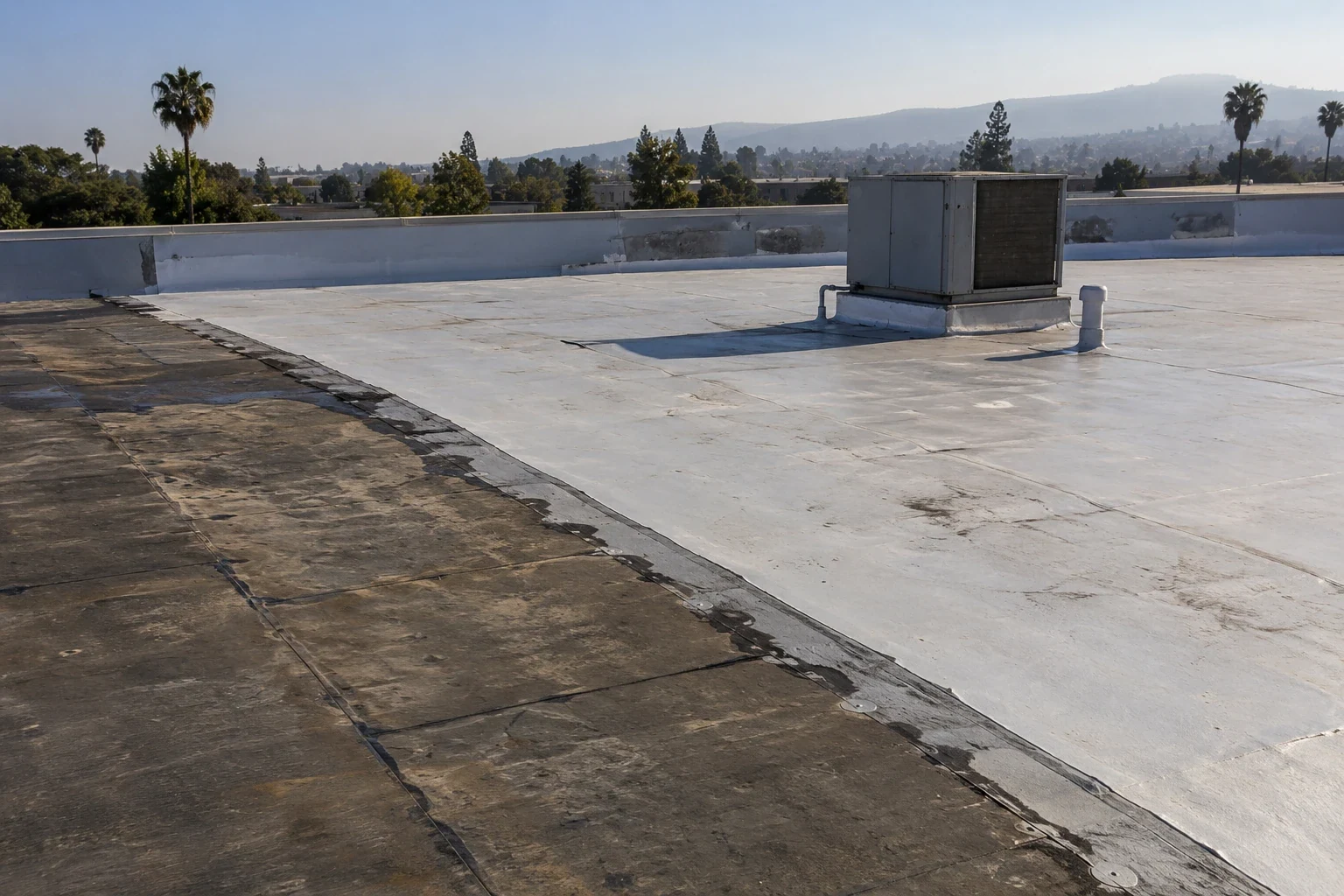
A recover option compared with full tear-off needs its own proof that the existing roof can stay. Skipping disposal saves money when the old roof is sound, but covering wet insulation does not make it a good base. We compare both options on the same roof with the same finished details, including the insulation repairs either one needs. The real price difference is what each option actually delivers; keeping a wet roof in place is not savings just because you can no longer see it.
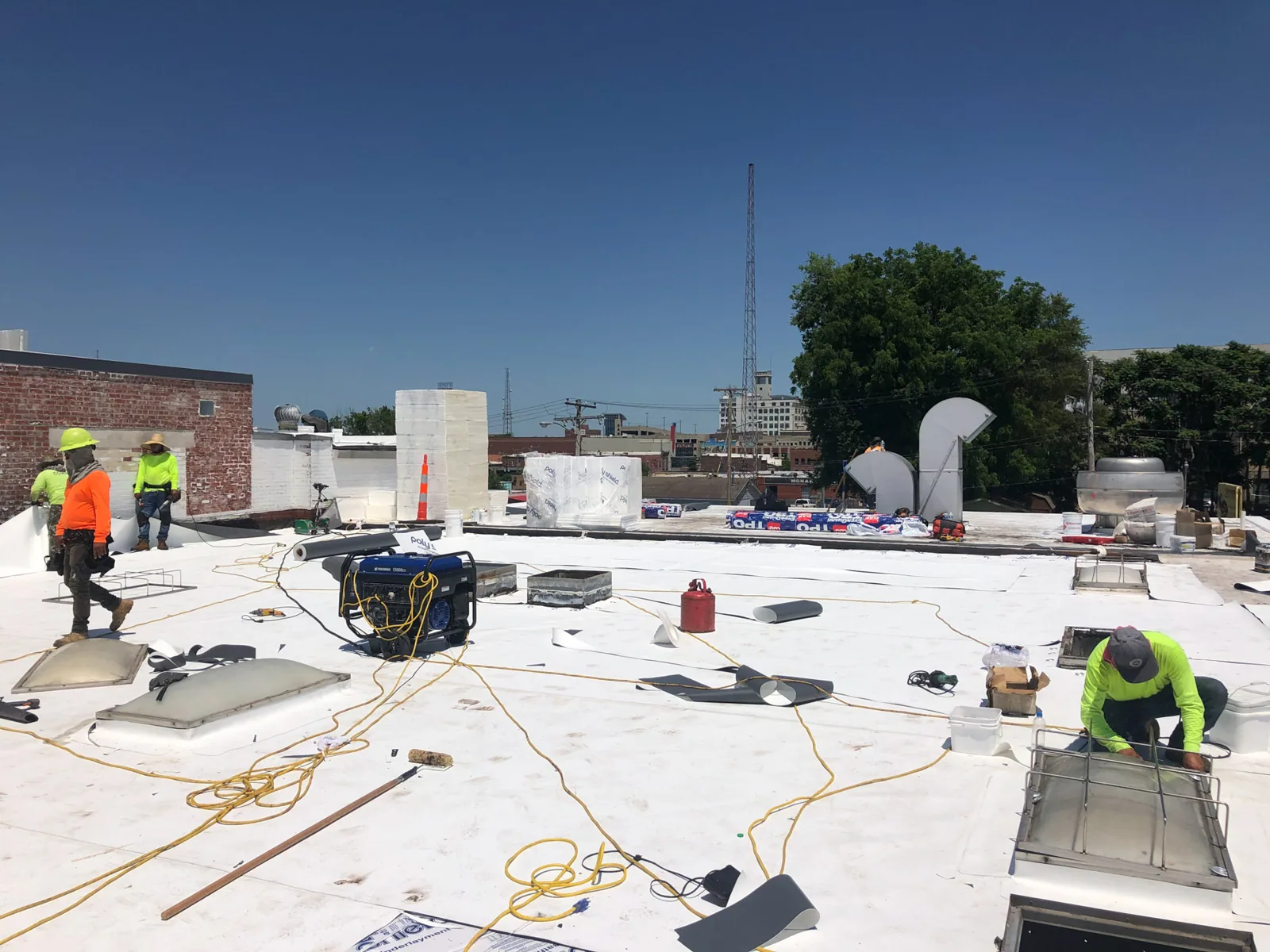
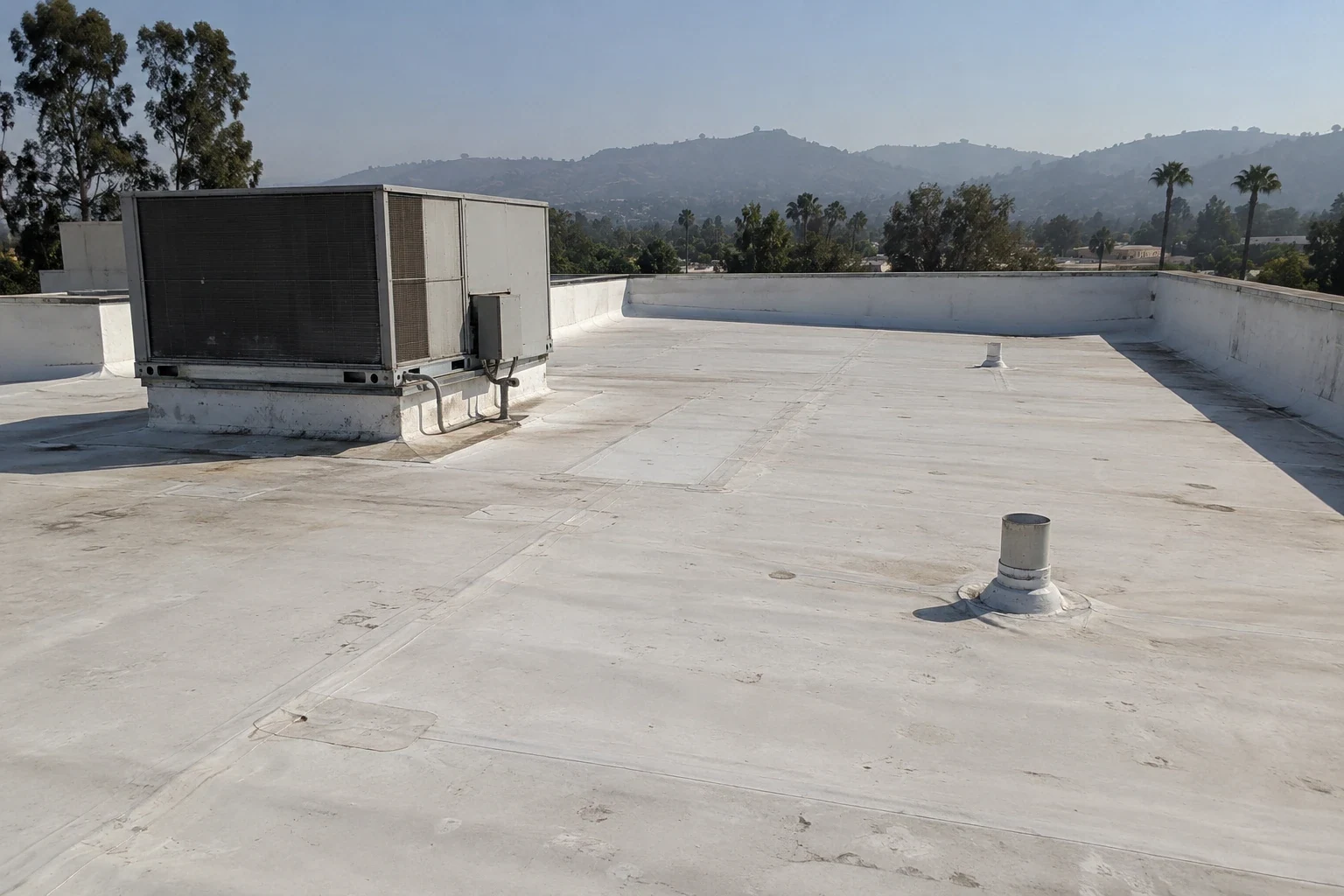
A reflective roof absorbs less sunlight and can cut the heat that reaches the building, though the cooling effect depends on the building and the membrane. We keep that separate from the question of whether the deck and insulation are sound, and compare specific membranes and full roof assemblies before ordering. If operating cost matters to you, the comparison should include your building, its roof shape and the product's real requirements; a white roof alone does not guarantee a rating or energy savings. Good details and solid insulation are needed whichever membrane you pick.
A TPO replacement option needs its exact parts and fastening pattern spelled out. Seam testing and insulation checks are separate steps, because a well-welded seam does not prove the insulation under it is dry. We make sure the insulation, cover board and flashing accessories are planned together and reviewed before you sign off on the purchase. A preferred membrane becomes a good choice once the whole installed roof reaches every edge, curb and drain it needs to.
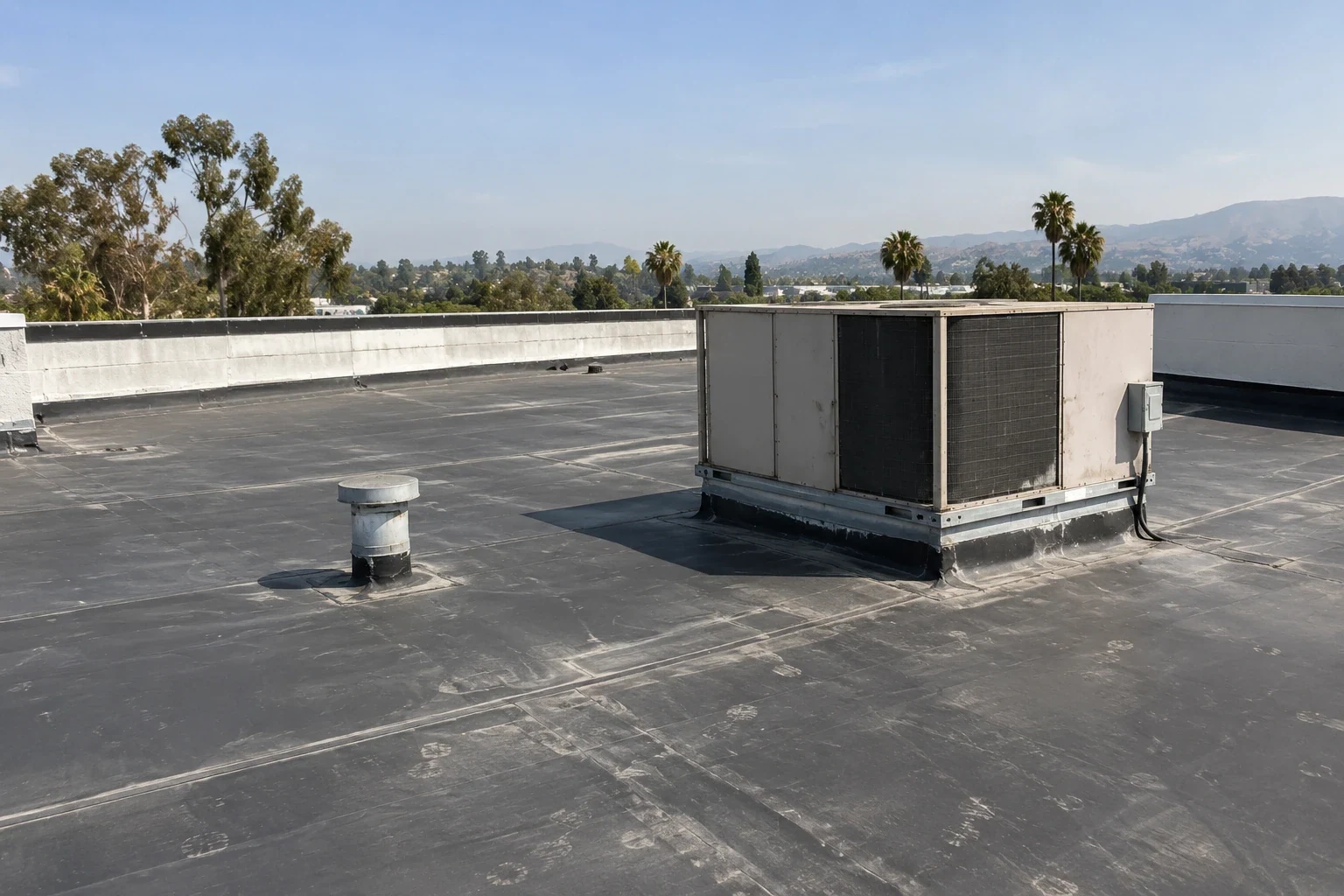
Thicker new insulation can leave an existing curb too short for a proper flashing, which makes rebuilding the curb part of the replacement, not an extra. We measure curb and wall heights against the new roof build-up and confirm flashing parts and prep before quantities are final. The HVAC contractor's work stays separate from ours, because they may control the lift or disconnect needed to free up the curb. Finishing the open field elsewhere does not finish that blocked detail, and the mechanical work is scheduled with the flashing it makes possible.
A rubber-membrane (EPDM) alternative has its own seam and flashing requirements. Two roofs the same size do not need the same prep or accessory labor, so we keep the insulation and work-hour limits the same across options and explain how the build-up differs. Manufacturer and project approval follow the system you choose, and surfaces are prepped before seams and flashings go on. The recommendation carries the new roof all the way to walls, units and drains, rather than treating the open field as the whole job.
Before we start a section, we check the work plan against material staging, protected walkways and how crews reach each roof area. You can cut down on disruption by naming who approves temporary shutdowns, who gets told when a tie-in has to stay sealed overnight and which rooms or equipment cannot be down at the same time. Those limits go into the phase plan rather than being sorted out the morning of. If hidden damage changes the work area, we stop that section, photograph what we found and agree on protection and quantity before moving to the next phase.
A tight delivery route means extra handling and protected material moves, and separate shutdowns for occupied rooms add setups and temporary tie-ins between sections. We include those building-specific tasks with the tear-off and installation before assuming crews have open access to the whole roof. Having membrane on site does not make up for missing insulation, flashing parts or equipment prep, so the schedule follows when each section can actually be finished. Every opening gets a clear end point for the day, and any extra insulation found along the way stays a reviewable line item rather than disappearing into a general allowance.
An occupied-building replacement plan keeps sections ready to build separate from details still waiting on other trades. We talk through room restrictions and equipment responsibilities before the schedule depends on them, and keep the roof protected while any new insulation findings get reviewed. You can then compare what each phase really involves, instead of assuming that materials on site means the whole roof is ready. The price follows the finished roof within your building's real operating limits.
For a replacement in Temecula, we confirm the specific roof section and the person who coordinates building access before the schedule relies on occupied rooms or equipment. Requests around Old Town Temecula roof replacements follow the same approach, with insulation checks and flashing details tied to that roof alone. Keeping any existing layers depends on testing those layers, and details blocked by other trades stay listed next to the work already finished.
We document what came off and what went on with photos of the new insulation and finished details, and note any agreed checks for each section. Areas we did not work on need their own inspection rather than being assumed fine because the new roof is done. If a warranty is offered, the installed system and its terms should be reviewed, and a cool roof does not promise coverage or building-wide energy savings. You get a clear account of what was fixed and what is still someone else's responsibility, so future changes to the roof can be checked against the record.
Confirmed wet or failing material in the existing roof, along with the details needed to finish the new one. We compare a tear-off and a recover on the same roof with the same edges and flashings, so you are weighing what each actually includes, not just the price per square foot.
Not on its own. A reflective membrane cuts the sun the roof absorbs, but the effect on the building depends on its insulation, HVAC and use. We get the insulation and details right first, and we do not promise a specific dollar savings.
We measure what is actually exposed and get your approval before replacing it. The roof stays sealed while that review happens, so a change in quantity is handled as part of the job rather than leaving an open roof waiting for a decision.
The HVAC contractor's move or disconnect, the flashing parts and the prep all need to be ready together. We schedule that with the curb flashing; having membrane delivered does not mean every unit is accessible or ready to flash.
Send us any roof records and tell us which details or operating limits worry you. We will inspect what we can reach and lay out a sensible order of work, your membrane options and what we found.
Request a Roof Assessment