Strong sun can make a school roof's reflectivity worth looking at, while a leak above a classroom makes a permanent flashing repair the first priority. We provide commercial roof inspection, repair, restoration and replacement for school districts in Temecula, CA, and tie every recommendation to the roof we inspected and how the building is used. Campuses in Temecula and Murrieta have distinct buildings and room schedules, so we agree on a protective work sequence with the assigned representative at each site.
A district's budget decision is clearer when an urgent leak is kept separate from optional heat upgrades. We check for wet insulation, loose fastening and failing details before comparing keeping the roof with tearing it off, then tie each option to handling, protection and the real school calendar. A reflective surface can reduce the sunlight a roof absorbs where it suits the roof, while insulation and how the building runs decide its value inside. That possible benefit belongs next to the full prep cost, once the work needed to make the roof watertight is defined.
A leak above a classroom that is used every day has different consequences from the same leak above a storage room with a flexible schedule. We confirm the affected room with the district representative and trace the leak on the roof before making that distinction. A ceiling stain does not tell you the cause or how much roofing has to come off. The priority should tie the confirmed roof finding to how the room is used and what protection it needs.
A roof condition report ties what we found on the roof to the district's construction choices. It explains the finding, any testing still needed and the permanent repair in terms that help with funding decisions. We separate urgent leak repairs from upgrades that can be scheduled separately. The district can then compare the cost of leaving a problem open with the cost of a defined repair, rather than ranking projects by roof age or visible area alone.
Keeping an existing roof only works if the layers are sound and the flashings can be tied into, so wet insulation and fastening have to be checked for the actual system. We record what we can see and test where it would clarify how much needs to come off. Wet or failed material belongs in the repair quantity. A broad coating price should not be treated as complete if it leaves the condition underneath, or the testing to find it, out of the comparison presented for approval.
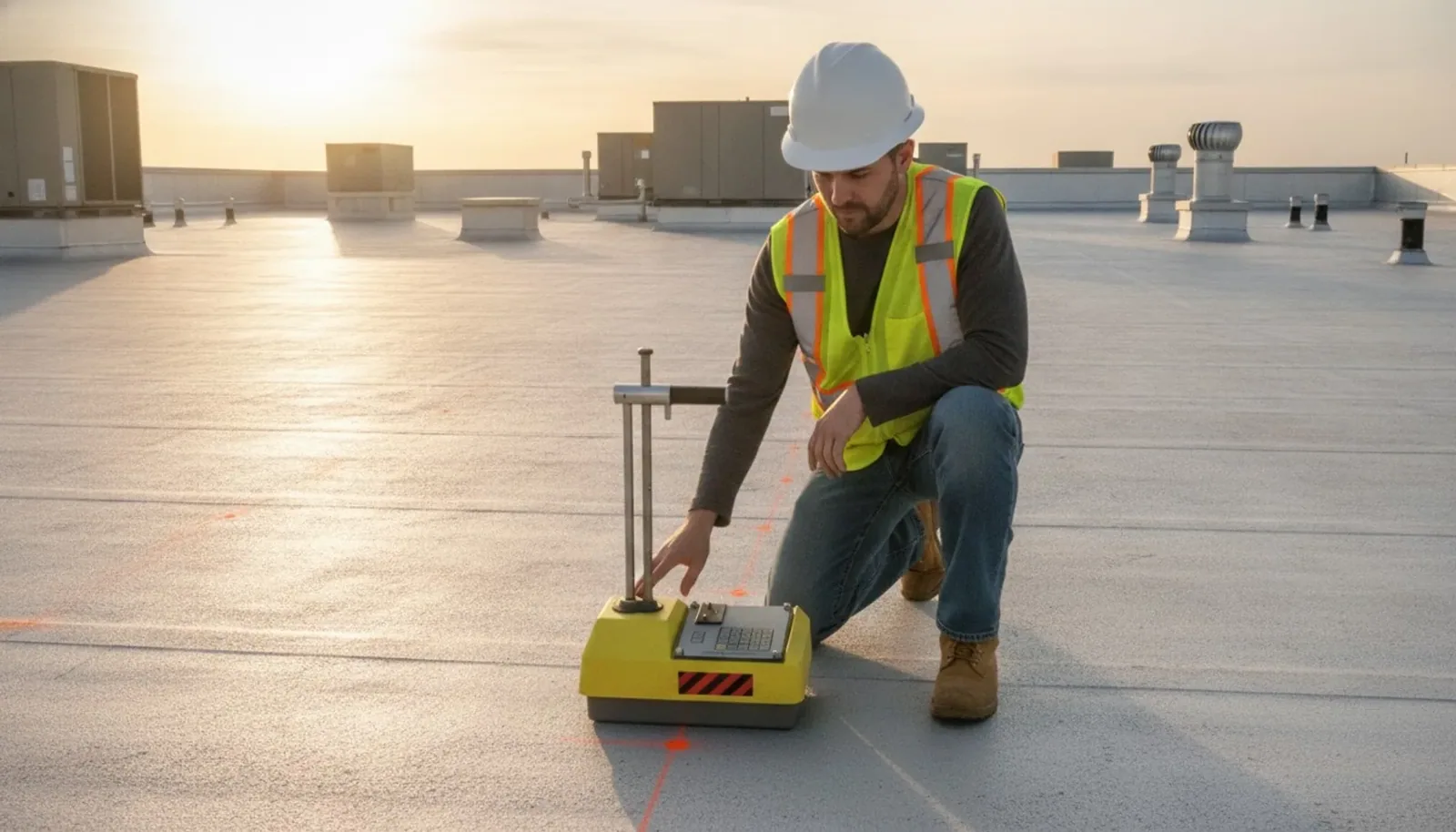
An infrared moisture survey can help locate suspect areas, but readings should be confirmed with core cuts before tear-off quantities are set. We tie confirmed findings to the prep and patching, then compare restoration, recover or tear-off as appropriate. That gives the district a construction choice with its quantities clearly backed up. Settling the one finding that would change the price the most can be a smart first expense before the larger roofing commitment is made.
A school roofing phase has to include the room protection and secure dry-in each opening needs. We agree on the affected spaces, the route we can use and the disruption with the campus representative before setting the sequence. Debris control and material handling have to match the tear-off and patching. A week when a room is empty can make a longer phase practical, but it does not reduce the prep the chosen roof system needs.
Our plan for reroofing occupied buildings at schools compares combined work with smaller phases using full setup and protection costs. Several short phases may fit around room use but repeat the same effort. One larger agreed phase can cut that repetition once the prep is defined. The district can compare timing on those real tasks, keeping the cost of securing the building in view, instead of assuming a break in the school calendar settles the construction sequence on its own.
A replacement, or a coating over a sound existing roof, is a chance to compare insulation upgrades and a more reflective surface. Extra insulation thickness can affect curbs, drains and wall flashings, so the finished build-up needs to be checked before an upgrade price means anything. A reflective surface may cut absorbed sunlight, while the cooling system and existing insulation shape the result inside. We explain those dependencies without promising a fixed savings for a campus nobody has assessed.
A district coordinating with public agencies can compare purchasing once each facility's prep work and schedule are defined. A shared heat goal does not mean every roof has the same requirements. We keep prep, flashing changes and protection costs visible for each roof. That lets the district judge the added investment against complete repair and replacement options, instead of counting an insulation or coating allowance without the details it changes.
For each campus, coordinate the roof phase with the school calendar, room-use schedule, delivery route and the person authorized to release space. Identify where crews can stage without crossing student paths, how debris and tools will be controlled, and what temporary closure is needed if work pauses. Put these assumptions beside the proposed work window so the district can compare a summer phase with a shorter in-session repair on the same construction boundary. A calendar opening can simplify access, but it does not replace suitable backing, complete flashing or permanent weather protection.
Where district work involves general contractors, responsibility for roof openings, equipment work and patching needs to be defined before prices are compared. We identify the permanent roofing job and the other trades involved, so no critical detail falls between proposals. If the repair changes structural support, loading or attachment, the district's design professional should be involved before the permanent detail is priced.
A school in Murrieta can join the same budget discussion with its own roof condition and classroom protection needs. We document those findings separately before recommending common materials or combined purchasing. Active leaks and failed material come before optional surface work, and each phase carries its own disruption and protection costs. The district can then choose a capital plan tied to the actual rooms and roofs, with testing and permanent work clearly linked. Campus assignments in Old Town Temecula and Murrieta still need separate access and room-protection plans for the buildings involved.
Match the confirmed leak to the room it affects and what it costs to protect or close that room. After the inspection, separate urgent leak repairs from optional upgrades. That gives a sensible spending order without assuming the oldest roof or the biggest stain is automatically the most urgent.
Whether the insulation is dry, the fastening is sound and the flashings can be tied into. Targeted testing is worth doing where it could change the price significantly. Keeping the roof can then be compared with tear-off using full prep and patching costs, not a coating allowance over unknown conditions.
It helps with timing, but handling and a secure dry-in decide how much can actually be done. Compare smaller phases with combined work using the protection each needs. The district can then choose a disruption window that includes the full prep, rather than assuming open dates mean every opening can be finished together.
They can be, once the existing roof and the affected flashings are understood. Include insulation, the surface finish and the detail changes they cause alongside the needed repairs. Possible energy benefits can then inform the choice, based on the actual cooling system and insulation rather than a fixed savings figure.
Once each building's prep, quantities and schedule are known. Keep those differences in the comparison. Shared material purchasing or a combined setup can then be weighed against separate phases, without assuming similar leaks, room schedules or heat goals mean the same roof work at every campus.
Send us the Temecula, CA campus addresses, the affected rooms and your spending priorities. We will inspect the roofs and lay out permanent repairs, protection and suitable upgrades in a sequence the district can review.
Request a Roof Assessment