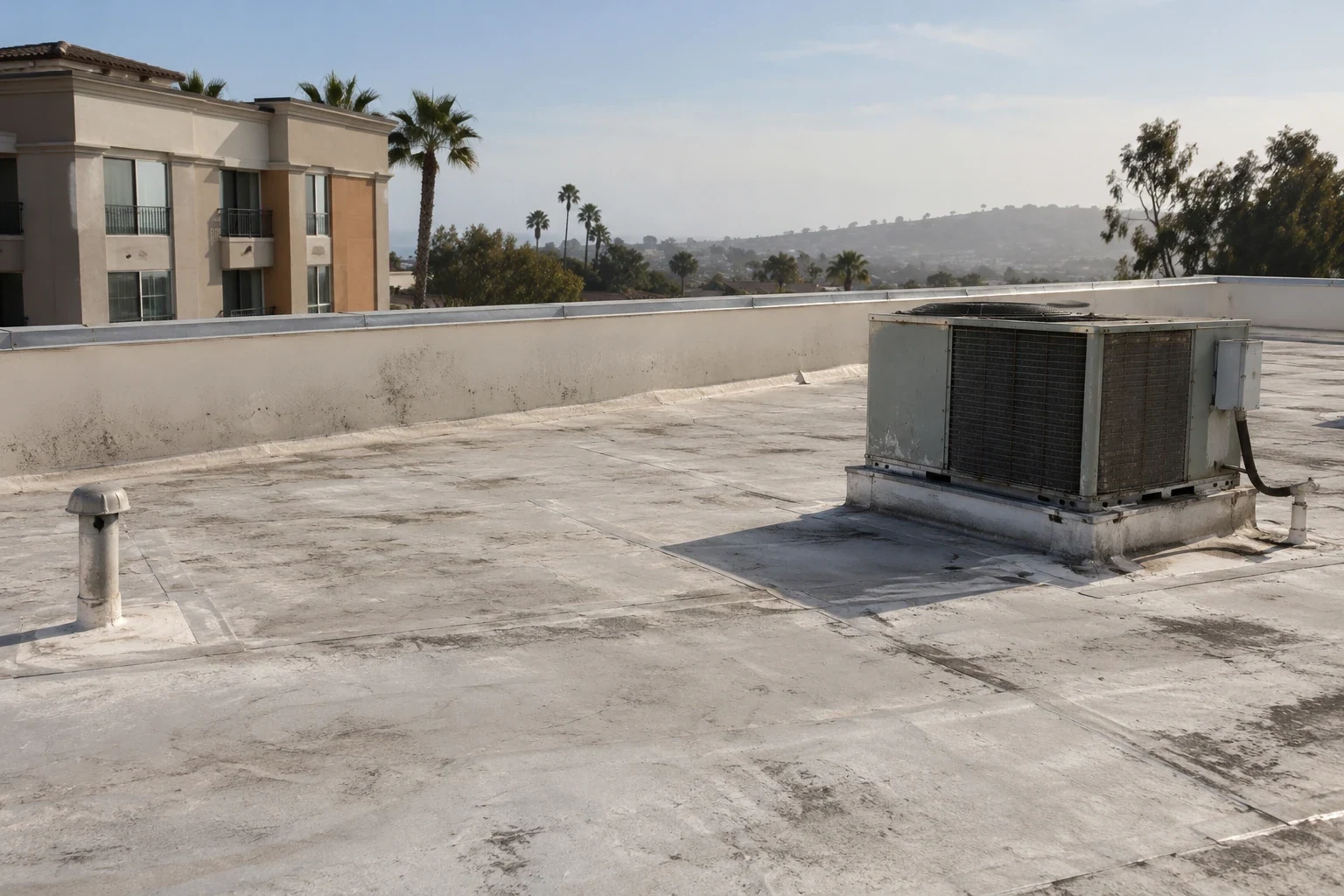
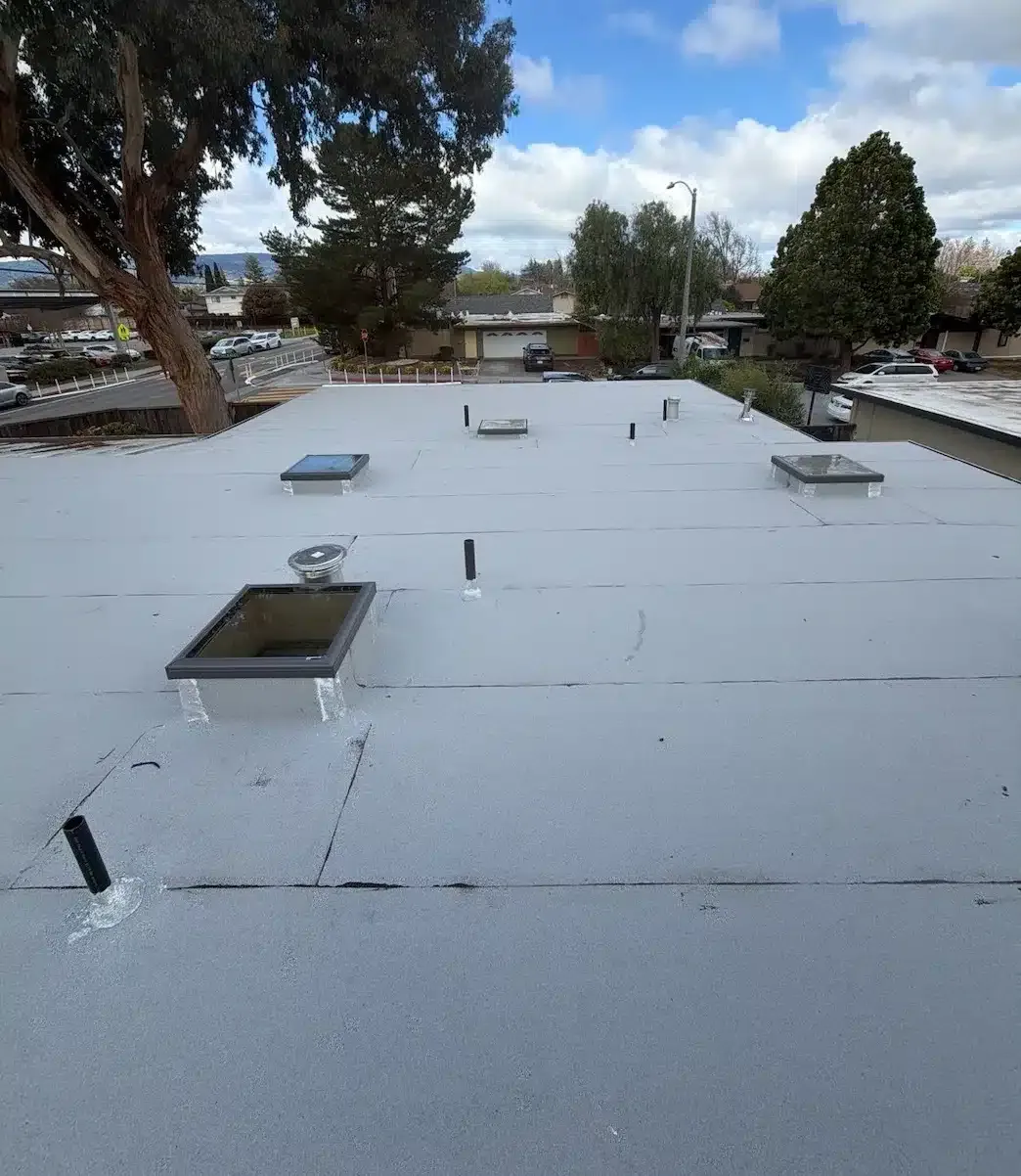
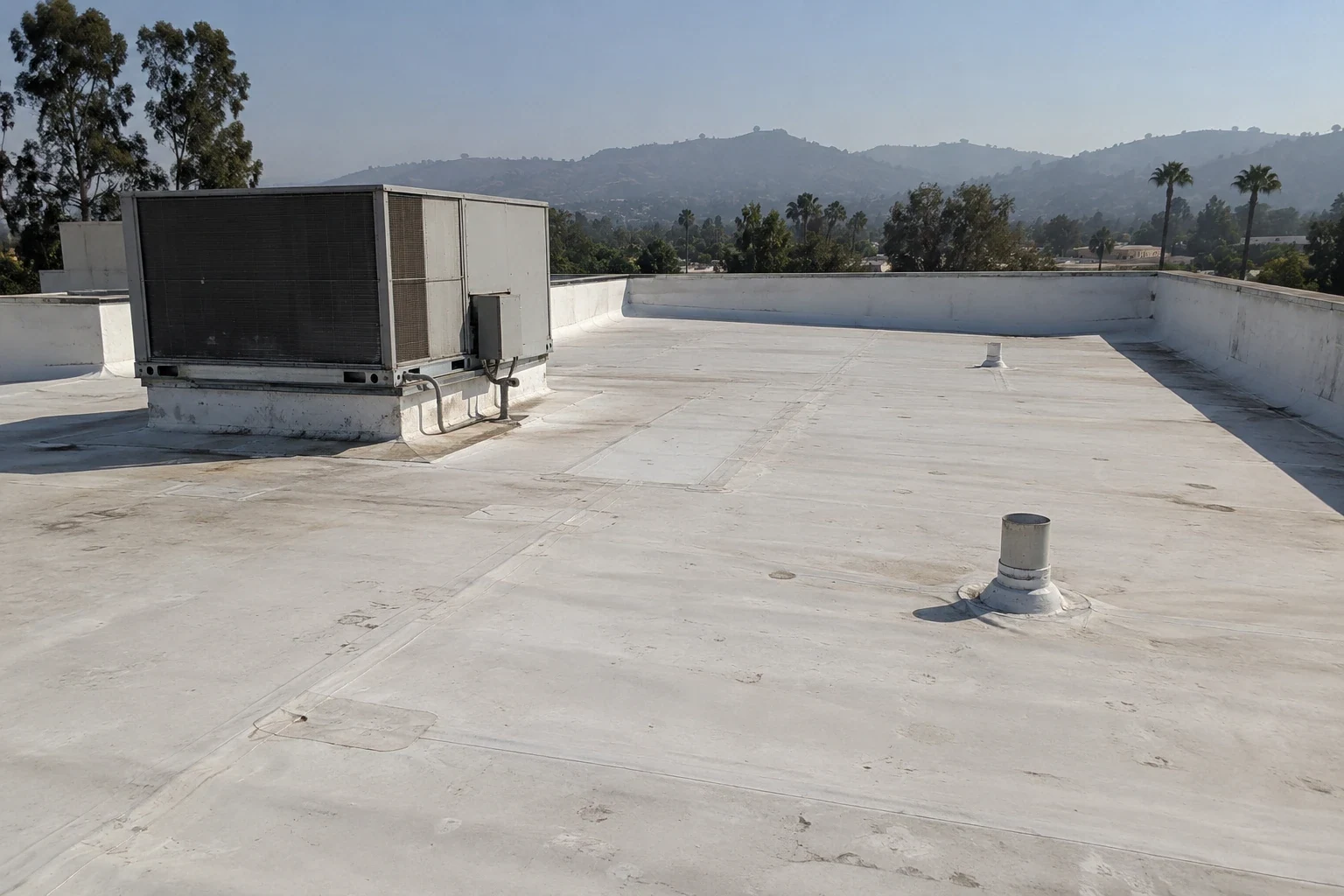
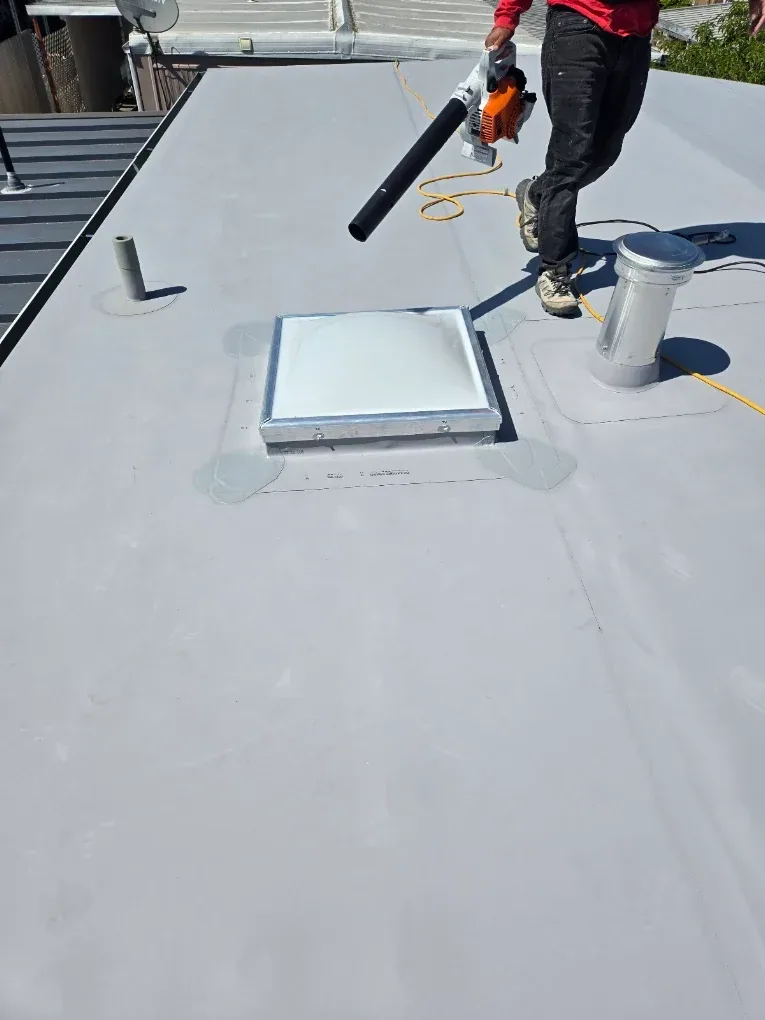
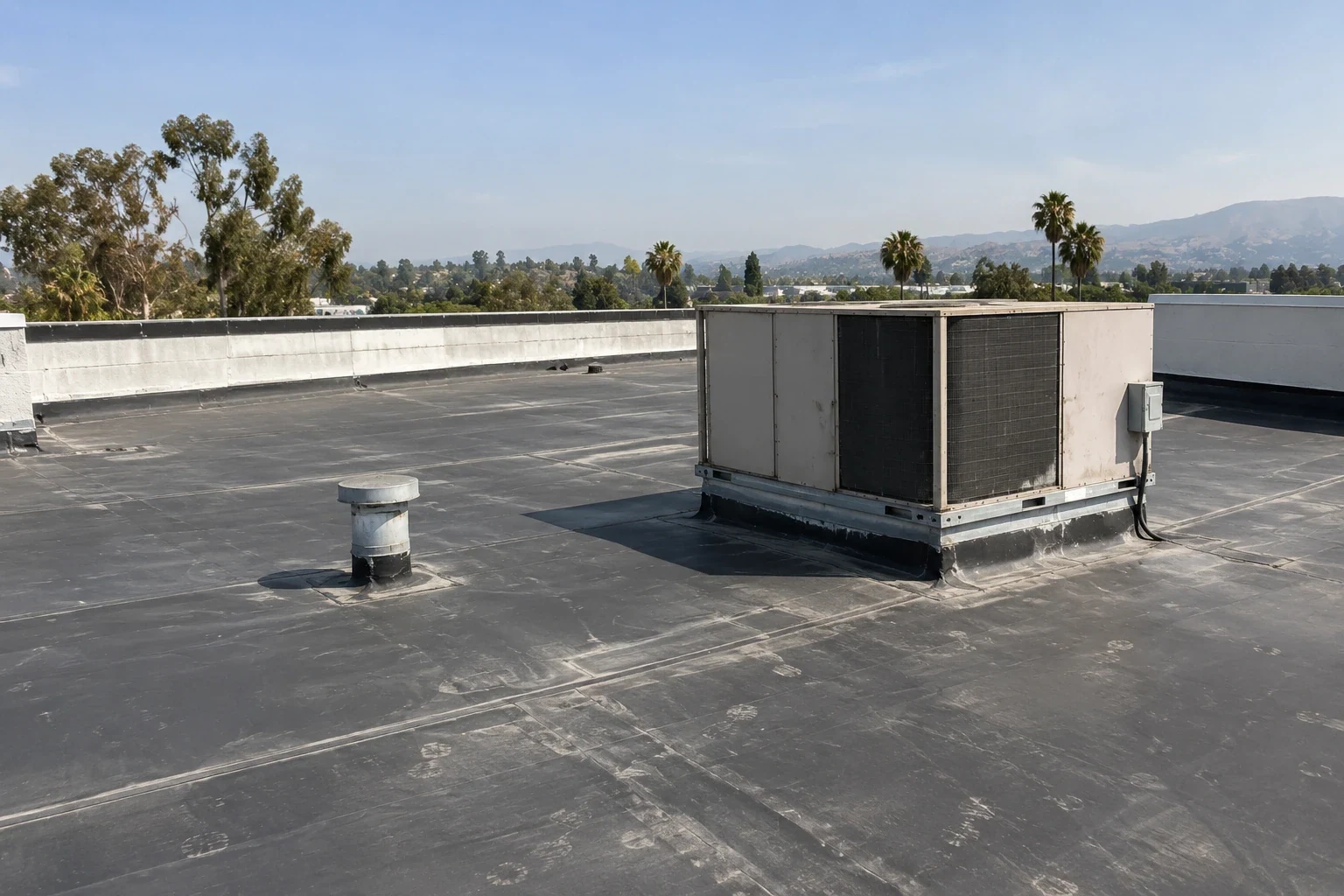
PVC is a heat-welded single-ply membrane: seams and flashings are fused together with hot air, which makes for strong, watertight joints. It is a good fit for buildings with rooftop kitchen exhaust or a lot of mechanical equipment, and the white surface helps in Temecula's summer heat. For a hotel roof, a PVC proposal also has to plan around guest rooms below, quiet hours and rooftop units, not just the membrane price. On a Riverside PVC project, we check the existing membrane, the right seam method and the flashing materials against the new system. At a Rainbow property, we confirm what the new roof will go over and when crews can work. A reflective roof absorbs less sunlight and can reduce the heat that reaches the building, depending on the building itself, but that does not choose the right flashing or tell us whether the insulation is dry. Start with the roof's condition, then choose the material.
A PVC roof needs a sound base, whether the old roof is torn off or some layers are kept. The surface can look continuous while the insulation underneath is soaked, so suspect areas have to be checked before the estimate counts on keeping them. A commercial roof inspection before a PVC project records what we found and which areas we could not check.
Where insulation is wet or damaged, replacing it is part of the PVC scope, not something left out of a low bid. If tear-off uncovers more damage, we show you the location and the added quantity, get approval and make sure the area is sealed at the end of the day. Compare PVC bids with that insulation work included in each. A good weld on top only tells you the seam is good; it says nothing about the insulation beneath it.
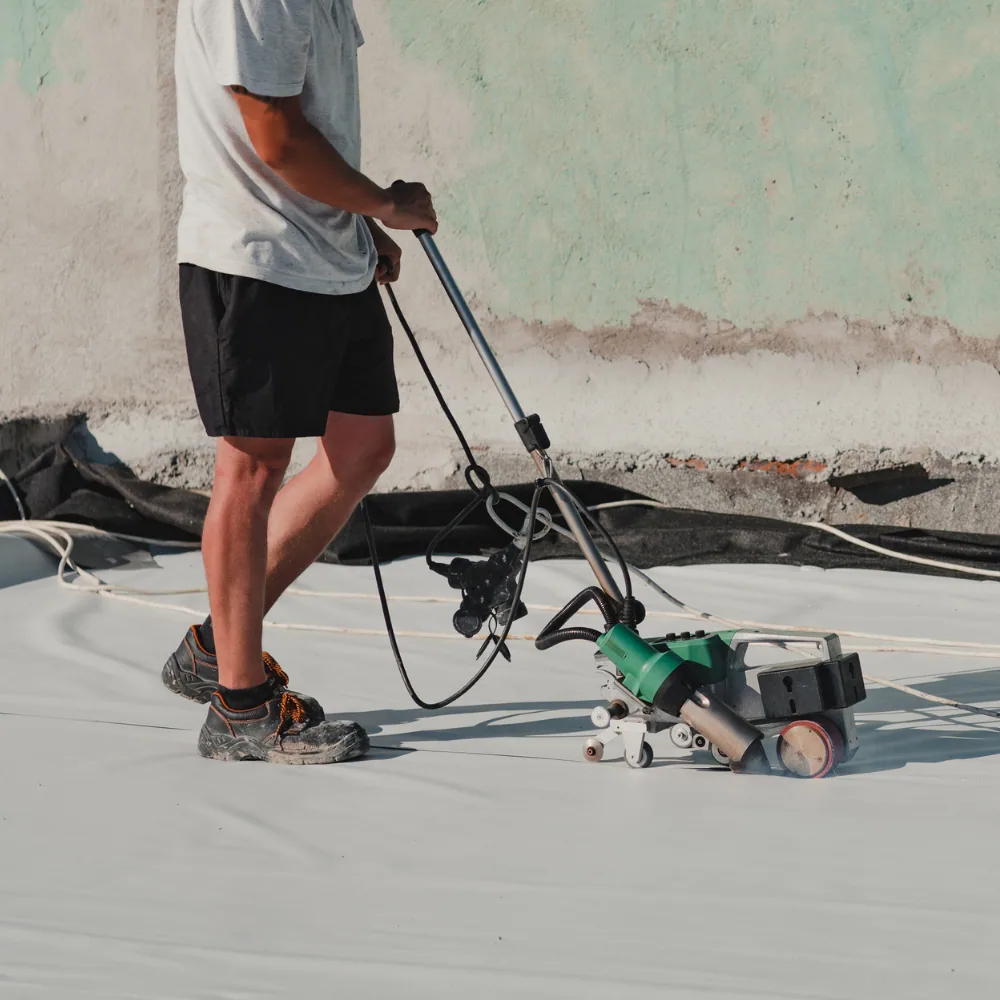
"PVC" alone does not tell you which membrane, attachment method or accessories you are getting. The proposal should name the specific product and how it will be installed, along with any project approvals. A TPO roof is the closest alternative and is also heat-welded, but it uses its own accessories and cannot borrow PVC flashing details.
Compare options with the same insulation repairs and flashing work, then look at which preparation and accessories change between them. Two white membranes may look the same without performing the same or saving the same money, and switching membranes does not make the existing roof surface compatible. Once the complete system is described, the price comparison makes sense. It shows what will be installed and what questions still need answers before material is ordered.
Every PVC seam and flashing has to be prepared and welded according to the manufacturer's requirements, and welds are probed or tested as they are made. Sika's Sarnafil systems are one example of PVC membranes and flashings joined this way. A good weld finishes that connection, but it does not prove the insulation is sound or that another trade's equipment work is done. Skylight and penetration flashing has to fit the actual curb or pipe, and an old detail often needs to be rebuilt rather than patched.
Old repairs can hide what the existing material actually is, so we identify it before assuming new flashing will bond. An open lap we can reach and a curb blocked by a unit are very different jobs, even with the membrane on site. Compare complete flashing work, with sound backing and any equipment disconnects included, following the instructions for the product being installed. A clear detail scope tells you what each connection needs before it can be finished.
A PVC proposal should include drains, edges and wall flashings along with the field membrane, because those are where roofs usually leak. An EPDM roof uses tape and adhesive instead of heat welding and has different accessories, so the same roof area does not mean the same work. Keep the insulation repairs the same when you compare the two.
Material handling, disposal and equipment shutdowns all change the work, especially if crews can only access the roof in limited windows. You should know which details are waiting on something and how open areas will be protected in the meantime. A PVC delivery does not settle those issues, and finishing the field elsewhere does not complete a blocked curb. A meaningful comparison covers the full repair and the real schedule, not just the price of the membrane.
For a Canyon Lake property, we fit the PVC plan to that roof and the building's operating rules. A Menifee project stays separate until we have checked its deck, existing roof and access. Projects in Old Town Temecula get the same approach, with the scope based on that building's roof and our findings there.
When the job is done, you get photos of insulation replacement and the finished welded details, along with the products used and the weld checks for each area. You can see which existing layers stayed, what is new and which details are still waiting on another trade. If a warranty is offered, compare its terms with the components actually installed, including its rules for later changes. That record makes future maintenance and repair simpler, because everyone knows what PVC system is on the roof, where the boundaries are and what was left for others to finish.
We check suspect areas for wet or damaged insulation with moisture scans and core samples. Sound material can stay; damaged material is replaced as part of the scope. The estimate should spell that out so a low membrane price is not hiding insulation work.
Not necessarily. Accessories need to match the specific membrane and the existing surfaces they bond to. Similar color or the fact that both are heat-welded does not make components from different products interchangeable.
The insulation repairs and the finished flashings at walls, drains and curbs. Then compare the differences in attachment, seams and accessories, and make sure both bids account for equipment shutdowns and occupied spaces.
It may help. A reflective membrane absorbs less sunlight, but the effect depends on your insulation, HVAC and how the building is used. Fix the insulation and details first, then weigh the reflective benefit as one factor rather than a guaranteed saving.
Send us any roof records and details about access and rooftop equipment. We will inspect the roof and explain a PVC option with insulation, flashing and equipment work included, plus an alternative for comparison.
Request a Roof Assessment