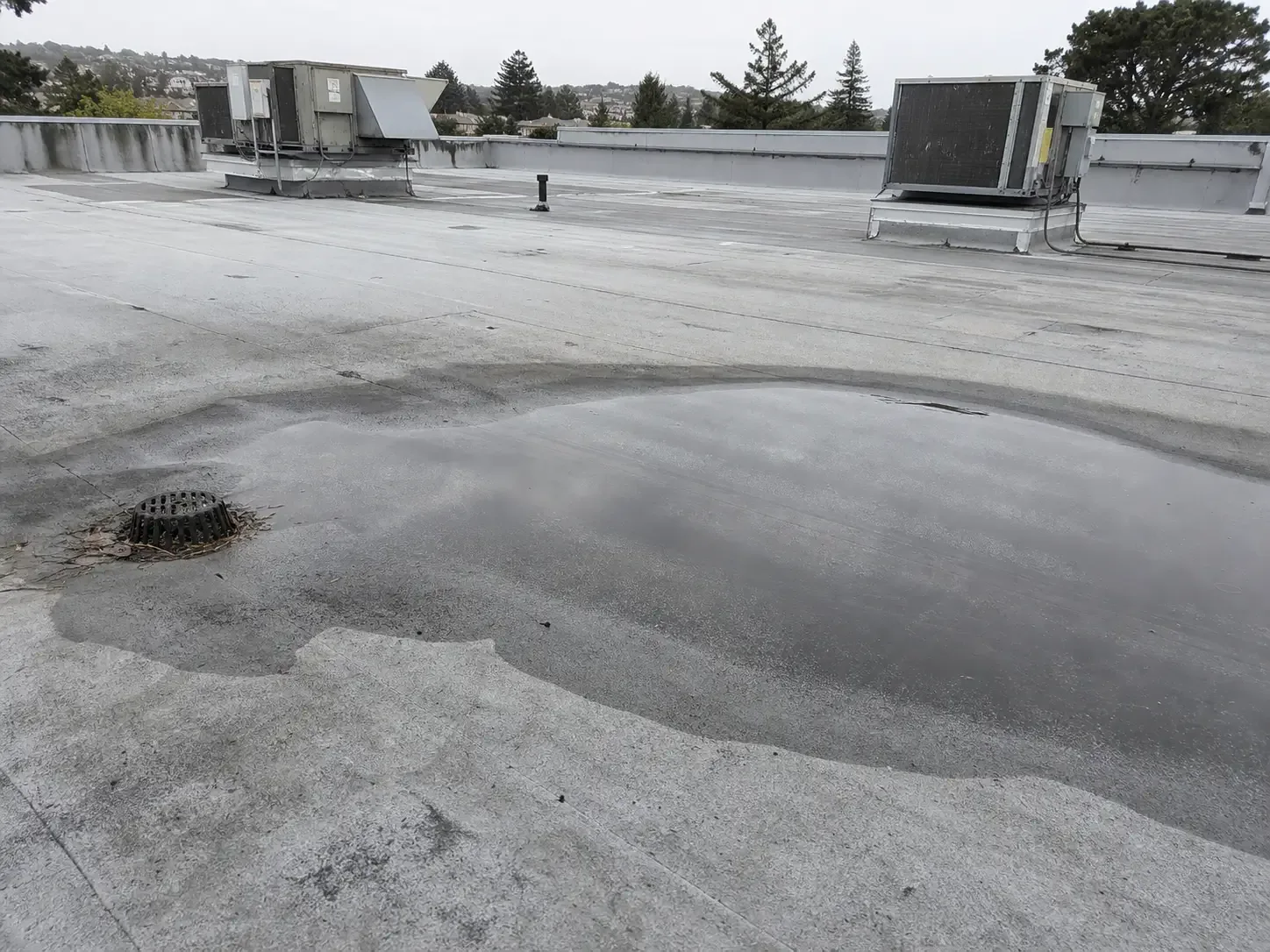
Hotel roof planning in Temecula often puts summer heat next to a low spot where water sits after a rain, and those are two very different jobs. A reflective surface can reduce the sunlight the roof absorbs and the heat reaching guest rooms, depending on the product and the building. Before recommending a new surface, we inspect the drains and the deck in the low area. You need to know whether the ponding comes from a clogged drain, damaged roofing that needs a local rebuild, or a slope and drainage problem that calls for an engineer, before roof-wide work makes sense.
Guest complaints and any roof drawings help us connect the low area to the roof build-up and the rooms below it. We check nearby drains and curbs and note where testing is needed before keeping the old layers. Hotel management reviews which rooms are affected and how furnishings are protected during tear-off and material handling. Structural, drainage and equipment decisions stay with the right professionals. Your budget can then separate the water problem, the condition of the roof layers and an optional cool roof, with each option tied to a specific repair and a realistic plan for working around guests.
Water sitting in a low spot may need a very different fix than a drain clogged with debris, so we check the drainage path before choosing a repair. Ponding water repair compares the drains, the roofing around the low area and the deck underneath. If slope, loads or structure are part of the problem, an engineer should evaluate it. We plan the roofing work once those questions are answered. A new coating will not change the shape of a low area or create solid backing under a drain connection.
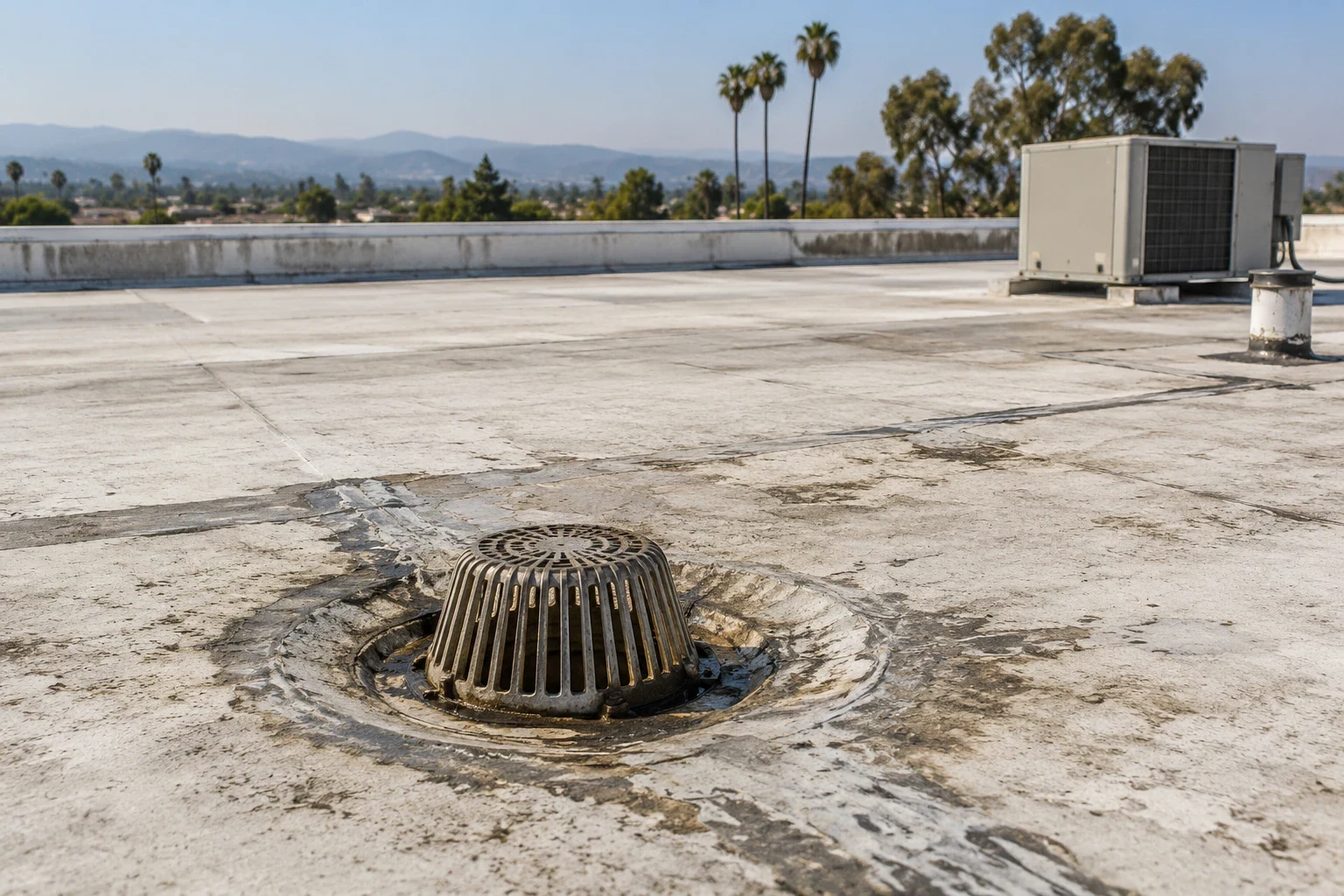
The roofing around a drain may still need a permanent rebuild even after the drain is cleared. Drain and scupper repair looks at the flange, the membrane around it and the backing that holds the new seal. Cleaning is listed separately from replacement where deteriorated layers will not hold a lasting connection. A plumber handles anything inside the drain line. We lay those steps out next to the ponding repair, so you get a defined drainage fix rather than a vague plan to get rid of standing water while the drain connection stays weak.
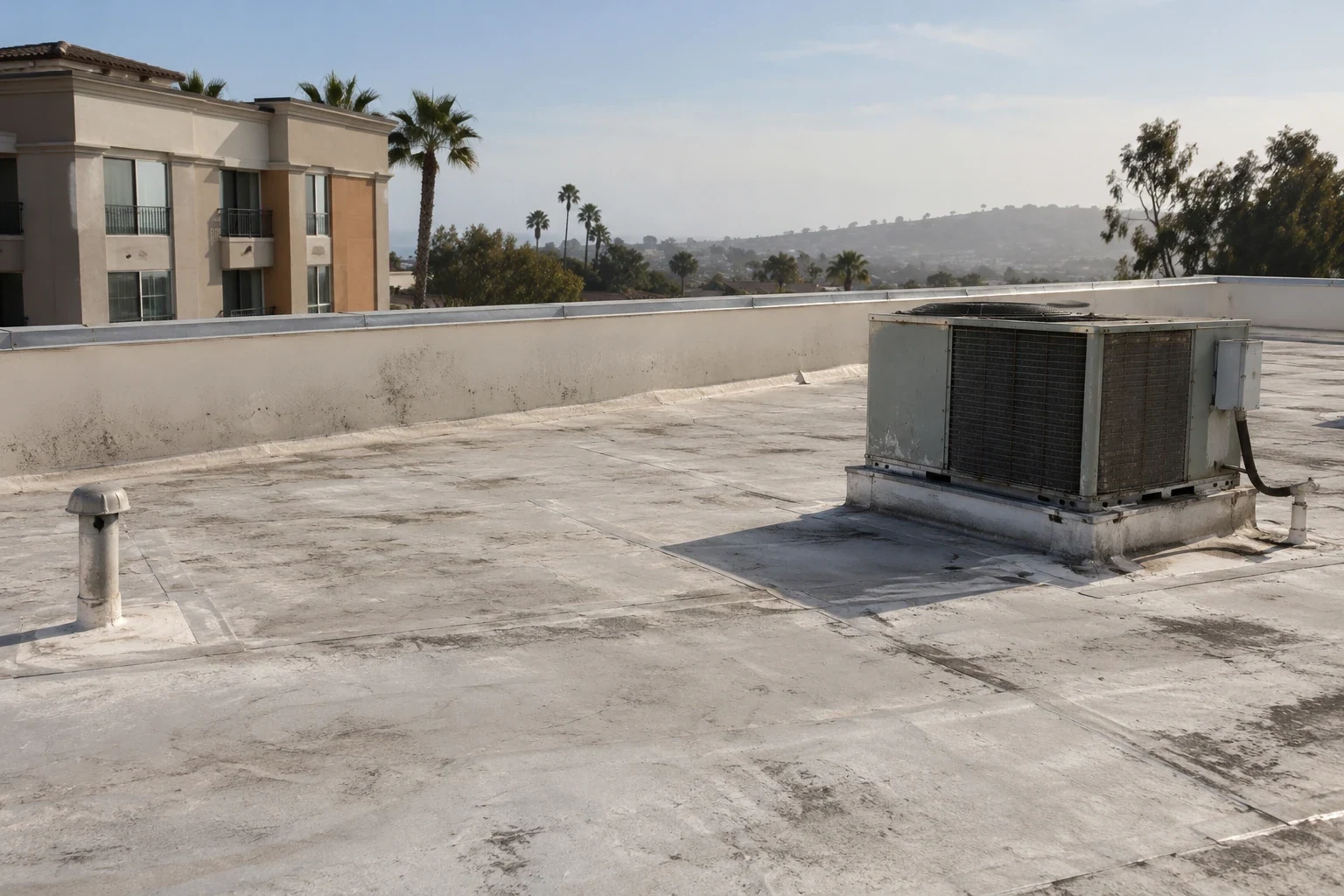
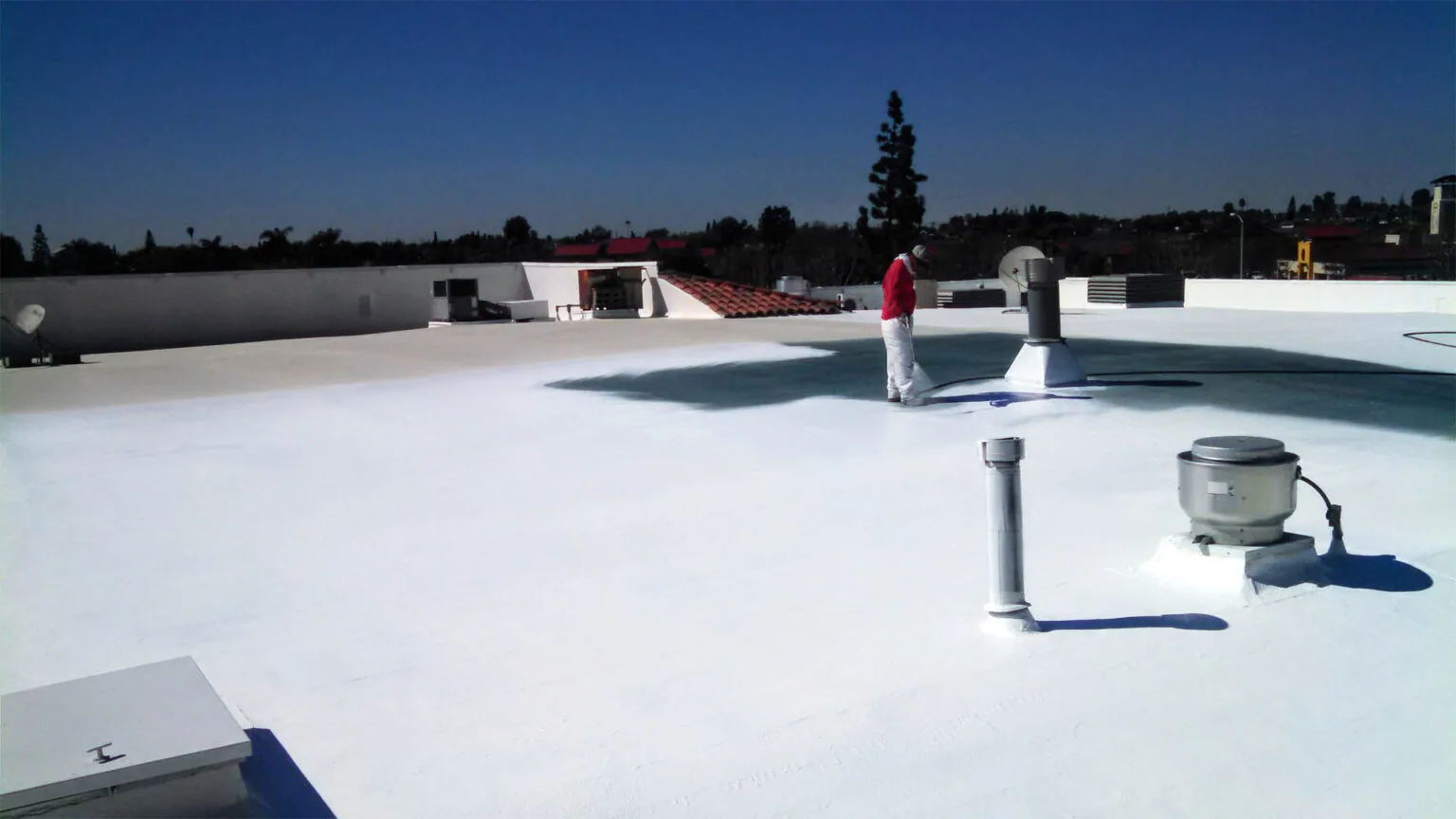
A reflective roof still needs sound roofing around the low area and the drains before it can go across the whole roof. A cool roof assessment looks at the product, the condition of the existing roof and the prep needed at drains and curbs. Energy and equipment specialists review the savings side, while we define the roofing work. A thicker system can change drain height and curb clearance, adding prep beyond the surface price. That work belongs in the comparison before a heat-reduction project jumps ahead of a drainage problem that is still unsolved.
Hidden damage can affect how much of the old roof can stay, even when the surface looks sound, especially if keeping the existing layers is part of the plan. Infrared readings have to be checked against the roof build-up and survey conditions, and core cuts confirm them wherever keeping the old roof depends on them. Every test cut is patched, with the rooms below protected. We explain each question and whether it points to a local repair or a larger tear-off. That way you compare complete options instead of a cool roof that assumes everything underneath is fine.
Tearing off roofing over guest rooms can affect more than the room that reported the leak, so the size of the opening and the debris route matter for occupancy planning. Roofing over an occupied building lays out roof openings, lifts and material routes for hotel management to review. They decide which rooms can be accessed and how they are protected, while HVAC and electrical contractors handle their own equipment. We plan the roofing sequence around those requirements, so the bid has a realistic work schedule rather than one based on guessing when rooms will be empty.
If more bad backing turns up, another room may be affected or a different material route may be needed. We explain the larger area before opening more roof and install a temporary seal if another trade needs its own visit. We respond to urgent hotel roof leaks at night, on weekends and on holidays, with access and room planning arranged through the hotel's contact. If water reaches electrical equipment, a qualified electrician should check it. Our records show which items are temporary and what drainage or design work still has to be done before the repair is permanent.
For a hotel in Hemet, the inspection should pin down the affected roof area and the access rules. A property in Murrieta near Murrieta Hot Springs Road gets its own roof record so its materials and schedule are not assumed. We inspect the low area and the nearest drain connection before choosing a repair or a roof-wide option. Hotel staff review protection and access for the work. The recommendation keeps the drainage repair and the heat goal tied to the actual roof and the guest rooms below it.
Across the Temecula area, each hotel's roof and access rules are reviewed on their own. A property in Hemet and one near Murrieta Hot Springs Road each need their own inspection and their own approval from management. We check the leak area and the deck rather than assuming a drainage setup based on location. Design or structural decisions stay with the project's engineer. Then you can compare a permanent ponding repair with a cool roof option, while keeping the room planning and equipment work that make the job practical at that hotel.
An apartment building may need a different resident plan under a similar low spot. Apartment roofing plans around residents and their units. Restaurant roofing deals with kitchen exhaust and grease. We compare hotel options based on the low area and the approved room plan on this roof. Another hospitality property nearby does not tell us what the deck looks like here or when the work can be scheduled, so each building's repairs stay on their own.
Final photos should show the permanent repair, the sound roofing around it and the drainage path at the low area. Temporary protection stays clearly separate from finished work, and any open drainage, equipment or design items are listed on their own. A future guest complaint can be checked against that exact spot and the work completed there. A later cool roof project can start from the finished drain details when new layers are considered. Your ten-year plan then shows the drainage work, the deck repairs and the optional upgrade, each backed by a real roof question rather than an assumed cooling result.
Not always. We check the drainage path and the shape of the low area. If slope or structure is involved, an engineer reviews it separately from the cleaning, and then we plan the permanent roofing repair.
A thicker system raises the roof surface at each drain, so the drain connection has to be rebuilt to match. That should be settled before the new roof closes off access to the drain.
We show the larger opening and material route before going further. Hotel management reviews the added room protection and access, and we install a temporary seal if the work runs over several visits.
The photo record of the finished ponding repair and the roofing around it. Temporary fixes and open items for other trades are listed separately, so you can tell right away whether a new report involves finished work.
Tell us about the heat concerns, where water is ponding and which rooms are affected. We will inspect the drains and roof layers and compare the permanent repair with cool roof options for your hotel.
Request a Roof Assessment