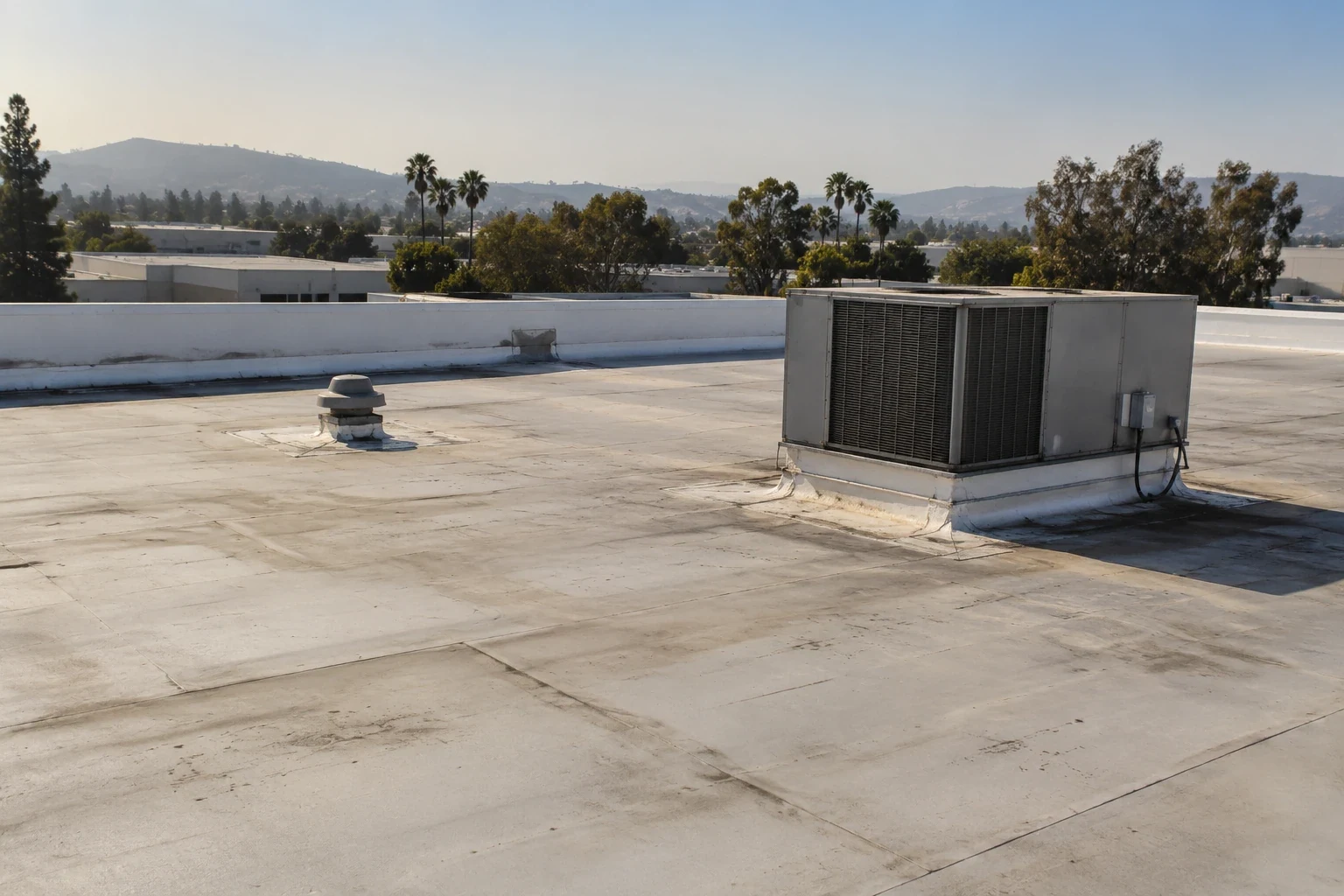
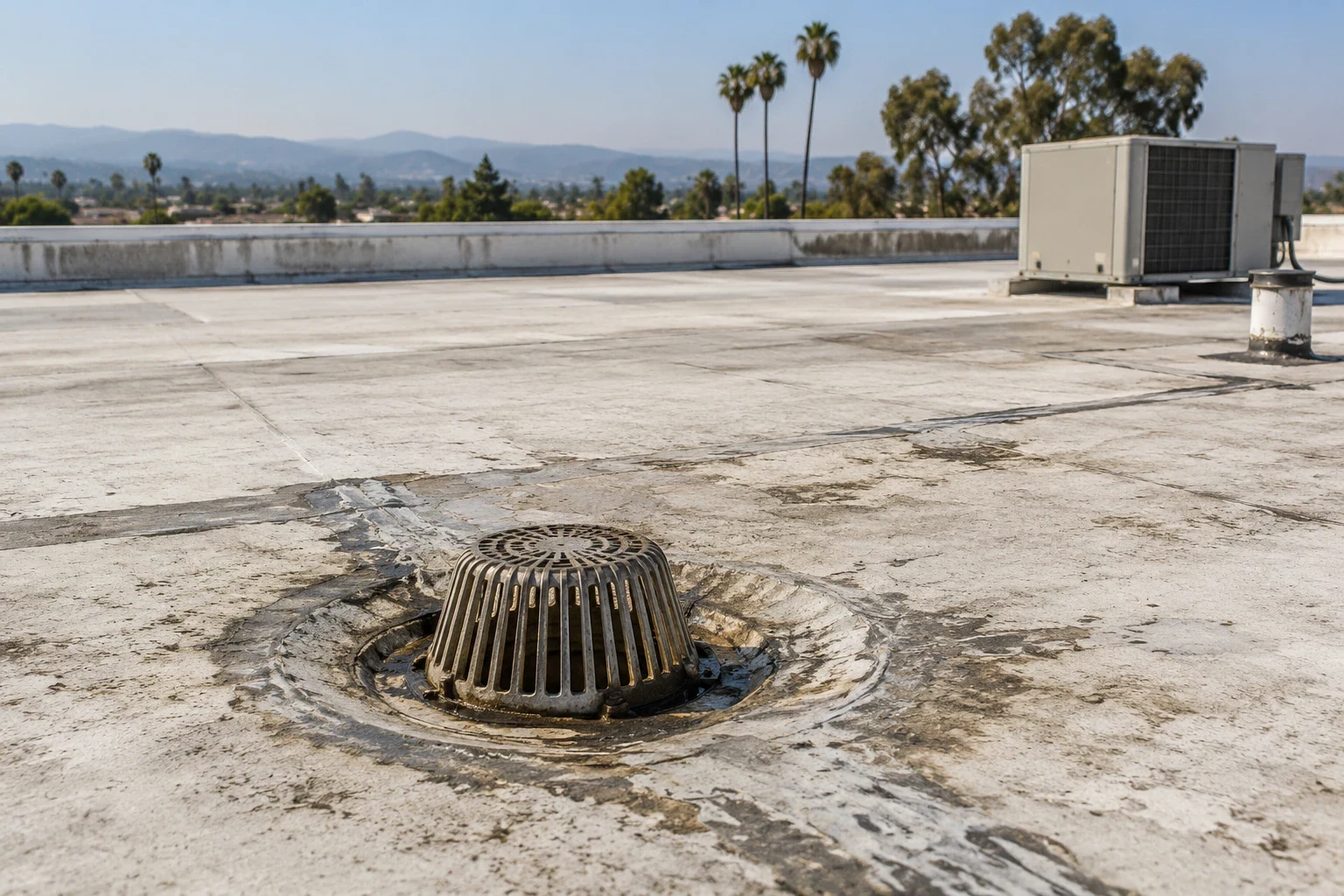
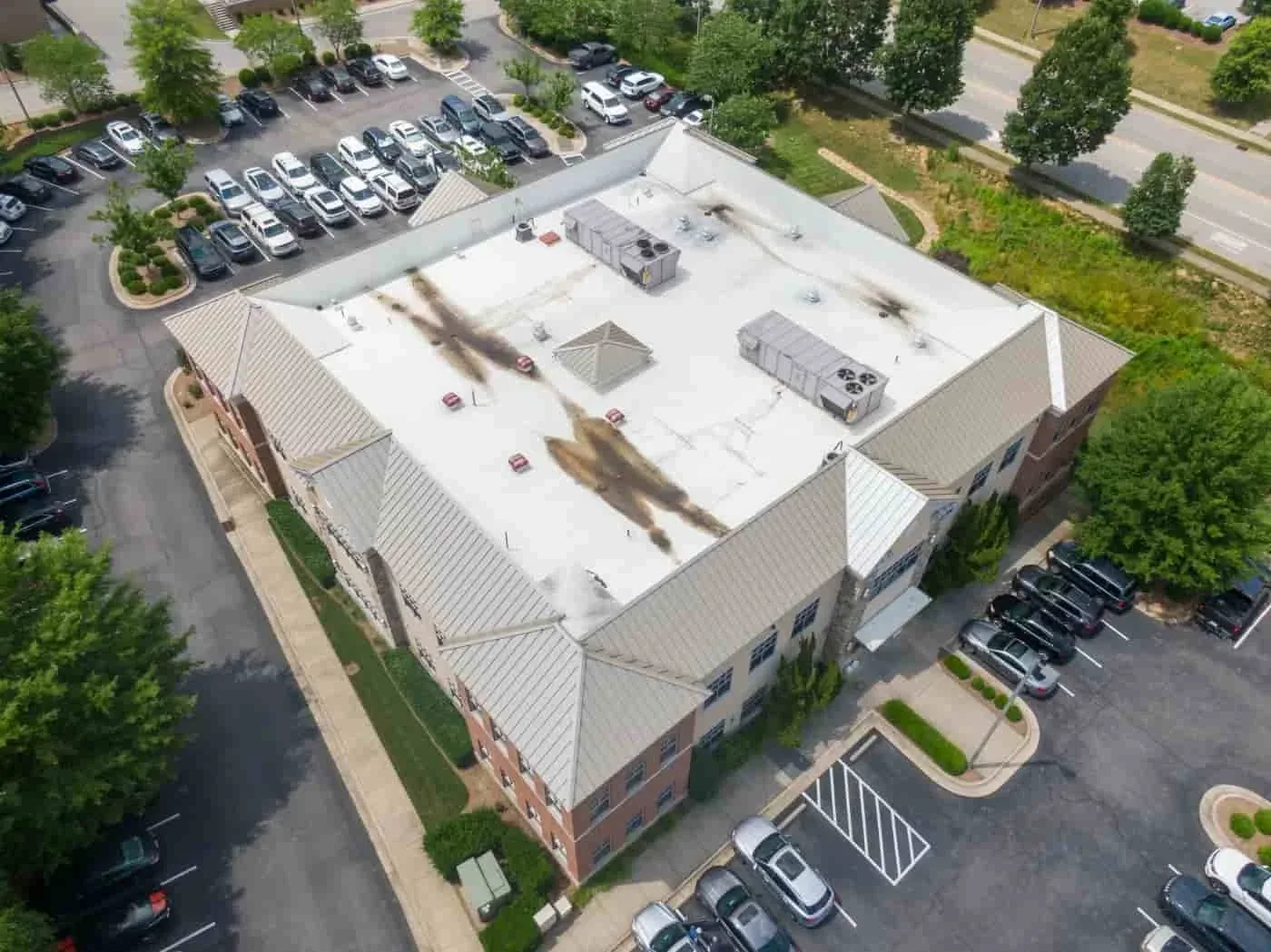
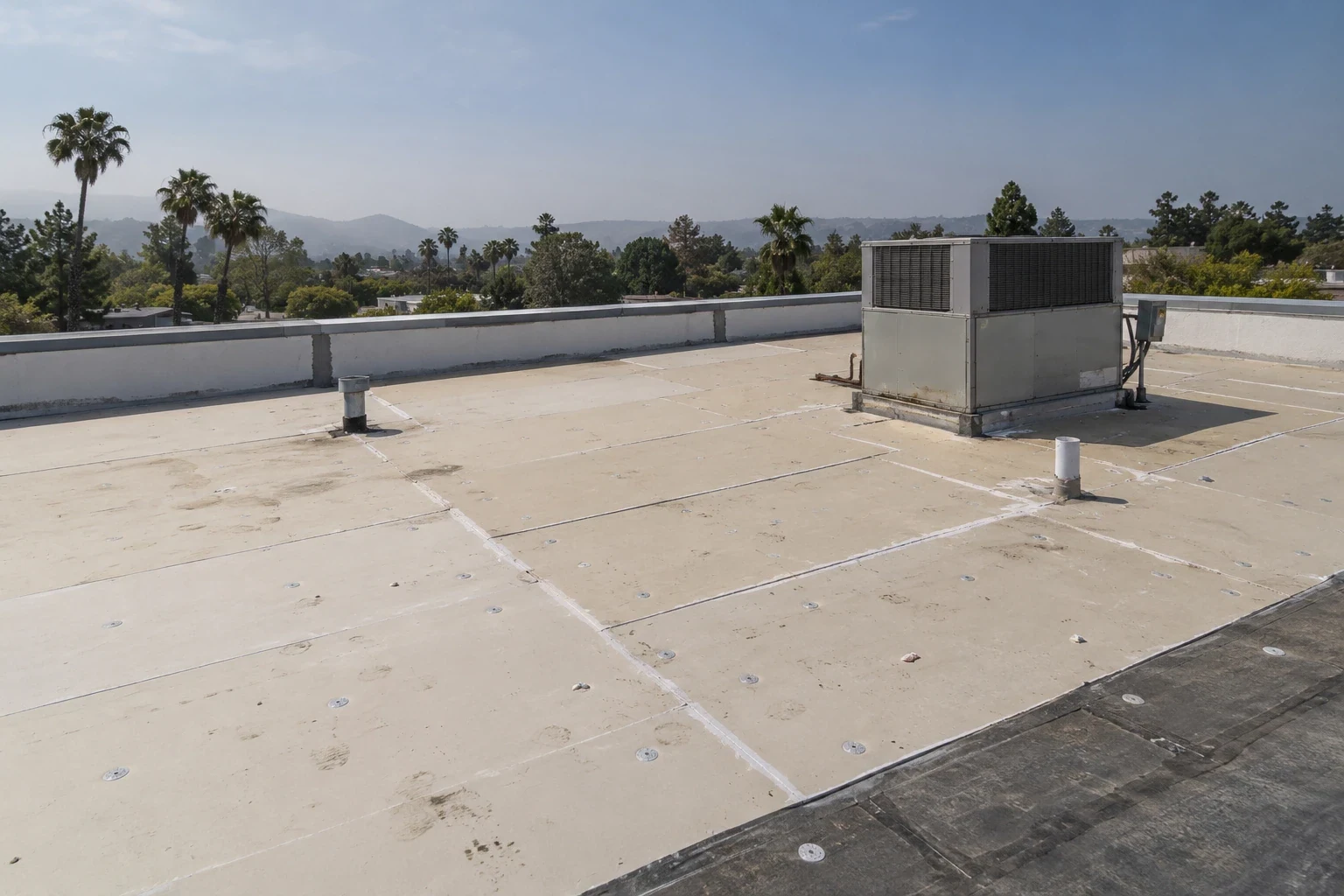
A cool roof proposal can look great on a Temecula distribution building, but water that sits around a drain for days after a storm is the more pressing problem. Ponding water roof repair in Temecula, CA, looks at where the water goes, the roof heights around the drain and the layers we can reach before anyone picks a new finish. We figure out whether the fix is cleaning the drain, a plumbing repair or rebuilding part of the roof. You get a repair aimed at the real drainage problem, with the prep included where it affects the permanent detail. A reflective coating cannot reshape a low spot or seal a failing drain flange. We trace the low area back to its drain, then check whether the membrane and insulation around it can stay. Another roof, say in Winchester, gets compared only after its own drainage has been checked. One roof's drainage tells us nothing about another's. For distribution center roofs, we confirm the building and where the water collects. Photos showing how long the water stayed help guide us, and drawings help explain how the drains were meant to work. We compare that with what is on the roof. The repair follows the real water path and what we find, not a guess based on one photo of a puddle.
Extreme heat is part of Temecula's emergency planning, and a reflective roof can reduce the sunlight a roof absorbs and the heat that enters the building, depending on the roof. That may be a good reason to look at an upgrade, but drainage needs its own fix first. We inspect the area that holds water and the layers under any proposed coating. Wet or crushed insulation can change whether a coating is suitable at all. Compare the full prep for each option, and keep any cooling question separate from the work needed to get water off the roof.
Inspecting roof drains and scuppers next to standing water includes checking for debris and looking at the drain flange and clamping ring. Clearing leaves and dirt can fix a blockage, but it does not fix a broken roof seal at the drain or a problem in the pipe below. We list those as separate jobs in the proposal. A plumber looks at anything below the roof. You can see which job gets water flowing and which job repairs the roof around the drain. A price for cleaning alone should not look the same as a repair that also replaces wet insulation.
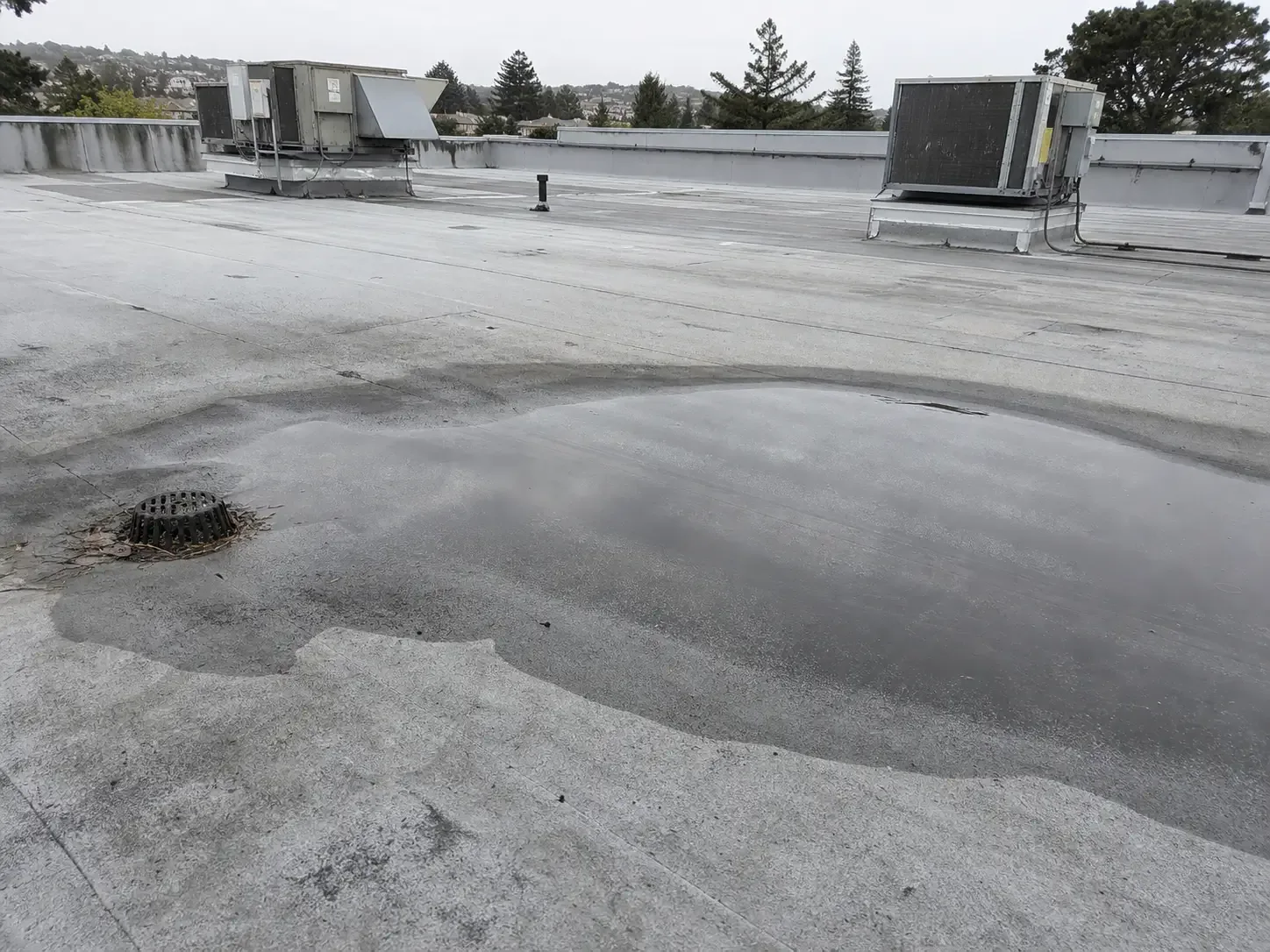
The way the roof layers sit decides how water gets to a drain. A built-up patch, a change in insulation thickness or a poorly made transition can block that path. We check the heights and the roof build-up in the problem area, and where the fix needs a new slope design, we bring in a designer. A low area on its own does not tell you what is causing it underneath. The inspection shows what we actually found and what is still unknown. That gives you a specific repair decision instead of treating every puddle as the same problem.
Checking the drain flashing is part of flashing failure repair, so the seal and the drainage get solved together. The existing membrane has to give us a sound edge to tie a rebuilt section into. Old mastic and patches can add prep. If something blocks access to one side of the drain, we explain what has to move before we can finish. The finished detail has to meet the product and design requirements. Laying a new layer over the area without fixing the slope can leave the original problem, or a new bad transition, in place.
Water on the surface does not tell you whether the insulation underneath is wet, crushed or failing. When that decides the repair, we test it. Infrared points to suspect areas, and core cuts confirm which layers are bad. We record each finding with its location and size. Any area beside it we have not tested is listed as unknown. You can approve prep based on what the roof actually needs, instead of assuming a small patch or a full tear-off from the outline of the puddle.
Replacing insulation and cover board near a ponding area should restore the slope to the drain. The new height can affect the drain parts and the flashing nearby. We check how everything fits before ordering materials or starting tear-off. If opening the roof shows more damage, you get a clear account of the added quantity and how it affects the drain. There should be an agreed way to approve that change. The roof stays temporarily sealed while the permanent fix is settled, so the opened area stays manageable as we learn more.
The building operator tells us which rooms, entrances and delivery routes the work will affect. We use those limits to choose a daily work area we can seal before we leave. Access for an inspection may not include the space we need to stage material for the repair. If the drain body or another fixture has to be changed by a plumber first, that has to happen before we can finish. The proposal lists those steps instead of setting a date without them. A permanent repair needs the new insulation and the corrected drain height ready at the same time.
Roof work over occupied buildings keeps temporary patches clearly separate from finished work. For a ponding problem near Old Town Temecula, each building keeps its own access rules. We describe how much roof will be opened and any plumbing work still waiting. The building manager can plan the next step based on where the job really stands. Progress across the rest of the roof should not hide a drain that is still waiting on a plumber, because that one detail decides whether the rest of the work does its job.
The closeout record shows the rebuilt area, what we found underneath and the finished drain detail. Photos show how the new layers meet the existing roof. Plumbing or interior problems outside our work stay with the people responsible for them. Later, anyone looking at the roof can compare it with the finished detail before deciding on another repair. A new blockage or a change in how technicians cross the roof may be a different issue. The record helps spot that change without assuming every new puddle means the same hidden problem has come back.
A separate seam failure repair near the drain may need to be done along with the drainage work. We explain how the two repair areas meet when the findings support doing them together. A wider cool roof option still depends on a sound roof underneath and the product's requirements. You can decide on that upgrade once the drainage and leak repairs are clear. Each phase keeps its full prep and clear limits, so you are comparing work that solves a defined roof problem, not just how much new surface goes on.
No. We check for debris, the roof seal at the drain and the slope around it separately. A plumber may need to look at the pipe. What we find decides whether the fix is cleaning, rebuilding the roof around the drain or adjusting the drain itself.
Usually not. A new coating does not change the slope or fix wet insulation or a bad drain connection. We check the roof heights and the layers underneath first, and include any rebuilding needed so water actually reaches the drain.
Testing, usually infrared followed by core cuts, not the outline of the puddle. We confirm which insulation is wet, list any area we have not tested and explain what further finding would change the amount of tear-off.
They are different jobs. Fix the drainage and any leaks first, then look at a reflective surface once the roof is ready for it. Any energy savings estimate should use real building data. A reflective coating is not a drainage fix.
Send us photos of the standing water and anything you know about the drains. We will go over what we find, the prep involved and the steps needed before any wider roof work.
Request a Roof Assessment