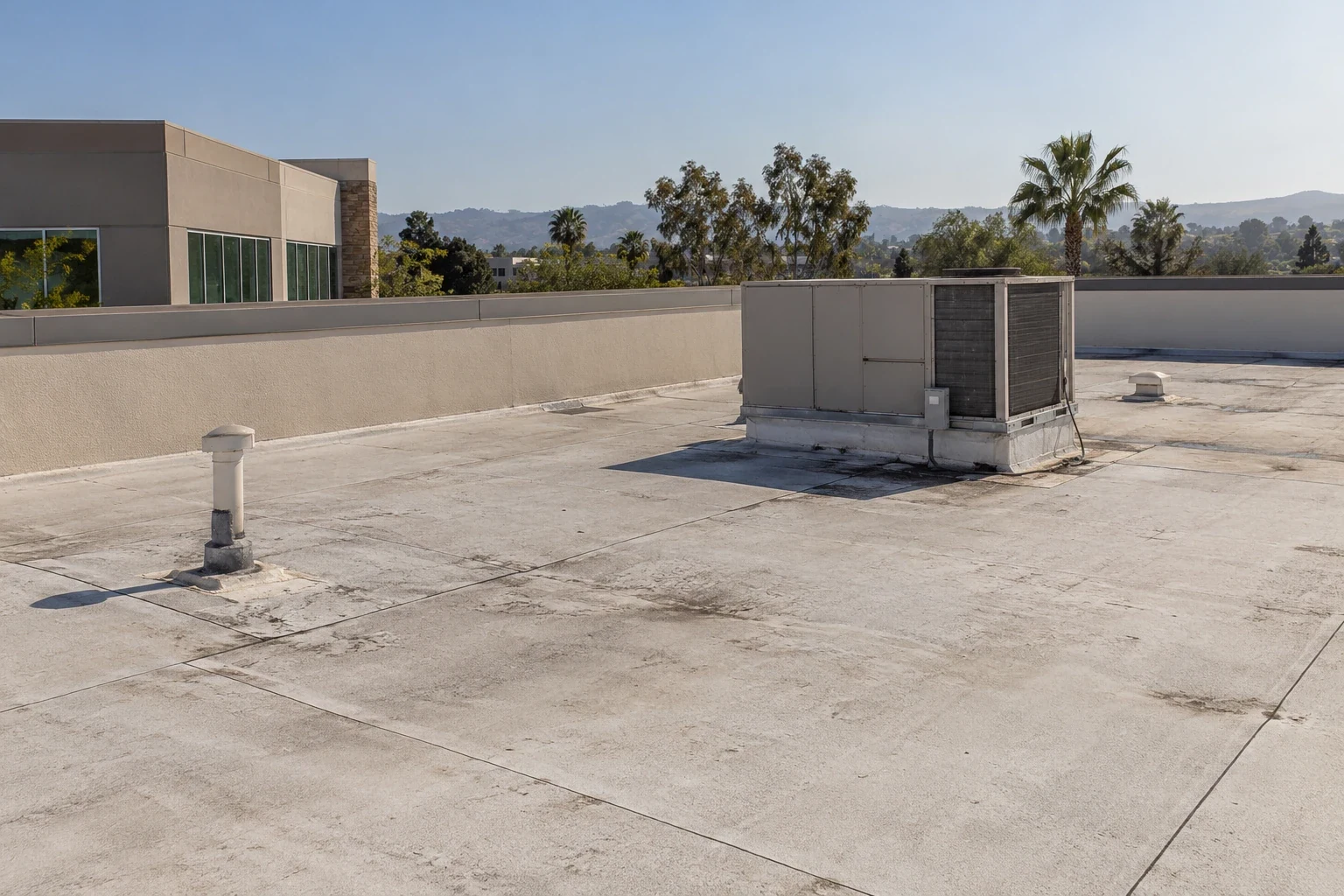
Temecula's summer heat can get an owner thinking about how much heat comes through the roof, but wet insulation is a separate problem that needs its own fix. Roof insulation and cover board work in Temecula, CA, starts with the layers already on the roof and the new system being proposed, before choosing replacement insulation or a new membrane. A warehouse insulation repair proposal should keep tear-out of bad insulation, new insulation and board, and the membrane flashings in the same price comparison, so a board quantity does not stand in for the full roof job. Buildings near Murrieta and Riverside can have very different roof build-ups and operating rules. We set insulation quantities only after we know how the roof is built and how far any wet or crushed material extends. A membrane that looks fine does not show the condition of the insulation under it, and a promised energy savings does not answer that question either. You can then decide what stays and what has to be replaced before considering optional upgrades, with protection during testing planned around how the building runs.
We start with any roof records and what we can see, then list the insulation questions that need cores or test cuts before a new system is chosen. A beat-up membrane can sit on perfectly good insulation, while a membrane that looks intact can hide wet board that changes the decision. A roof inspection focused on the insulation is honest about those limits, and marks where the condition is still unknown instead of treating a walk-over as proof of what is underneath.
Each finding gets a roof location and a note on what was checked, since one test cut cannot speak for every layer on a large roof. When more testing is needed, we plan safe access, a same-day seal and who approves the cuts before we start. The price comparison then separates insulation confirmed sound from insulation that the findings say must go. That helps you avoid both a new roof over wet insulation and paying to replace insulation that tested fine.
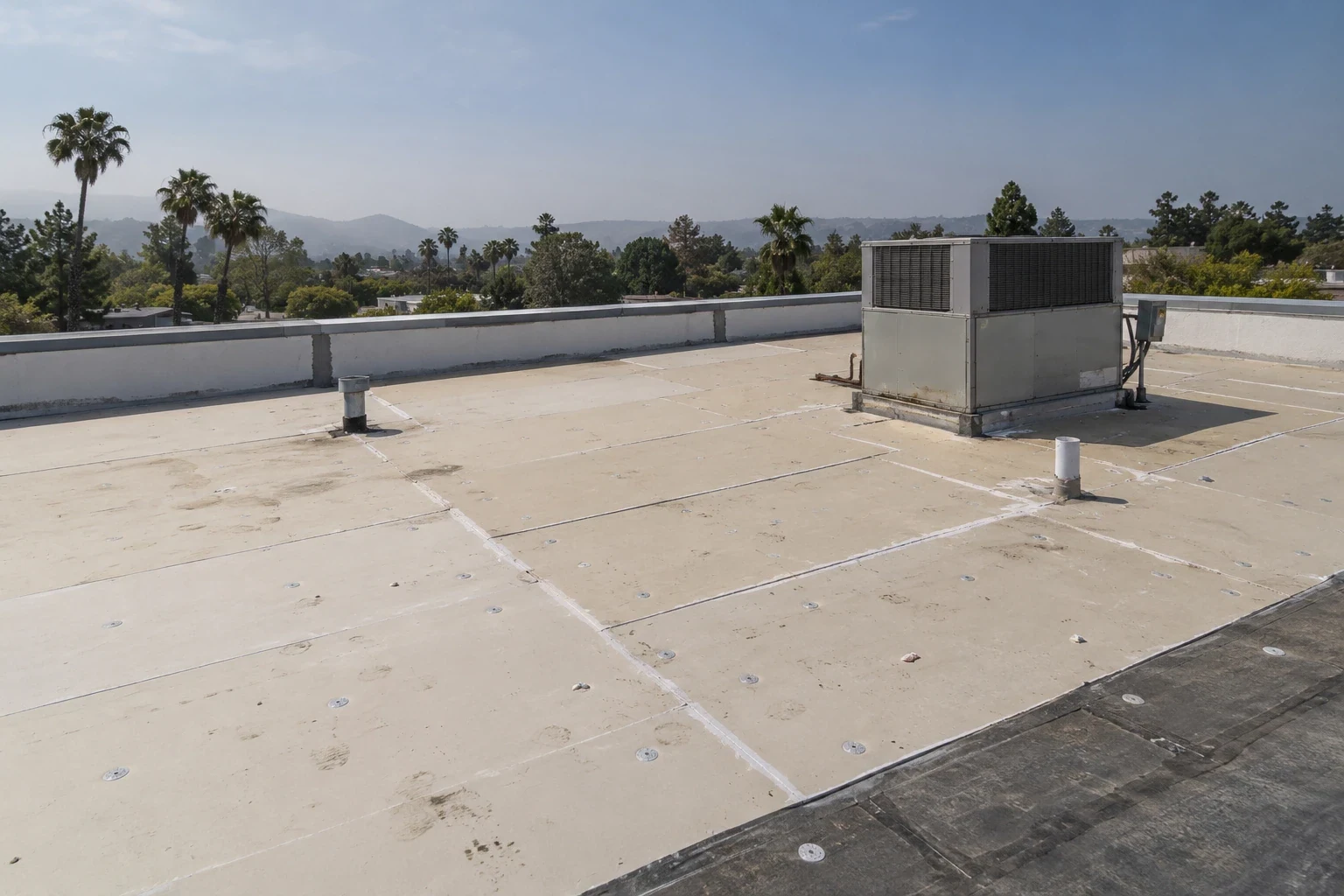
The insulation you choose depends on the roof system and the building's requirements, and the condition of what is already there comes before any thermal upgrade. Thicker insulation can raise the roof height at drains, edges and curbs, so its price should include those details. Roof replacement with insulation repairs lets you compare the full job instead of treating the insulation type as the whole reroofing decision.
Required R-values and project approval come from the review for your building; we do not borrow a number from another job or assume one thickness fits every roof. You should see what stays, what comes off and how the new insulation supports the membrane. Summer heat makes this worth discussing, but it does not prove a specific energy savings for a building no one has evaluated. A sensible order is to fix the bad insulation and meet the project requirements first, then look at optional upgrades with their extra work spelled out. This matters most when an existing layer looks intact but cannot be checked at every fastener. We record the location and size of each opening so it is clear what stayed and what was replaced.
Cover board has to work with the roof system, the way it is fastened or adhered and the insulation under it. It is not a fix for wet insulation. The board gives the new membrane a firm, smooth surface, but laying it over wet or crushed insulation does not make the roof sound. A TPO roof with cover board needs the right board and attachment for that specific system.
The estimate should tie cover board quantities to the work area and list the prep needed where new roofing meets old. At curbs and drains, the board and insulation also have to be tapered or built up so the flashing can be finished, so square footage alone may not show the full insulation scope. Compare options that include the same detail work before choosing the lower board price. That explains the price difference in real terms and keeps you from paying for a new layer that still sits on bad insulation or leaves a detail unfinished.
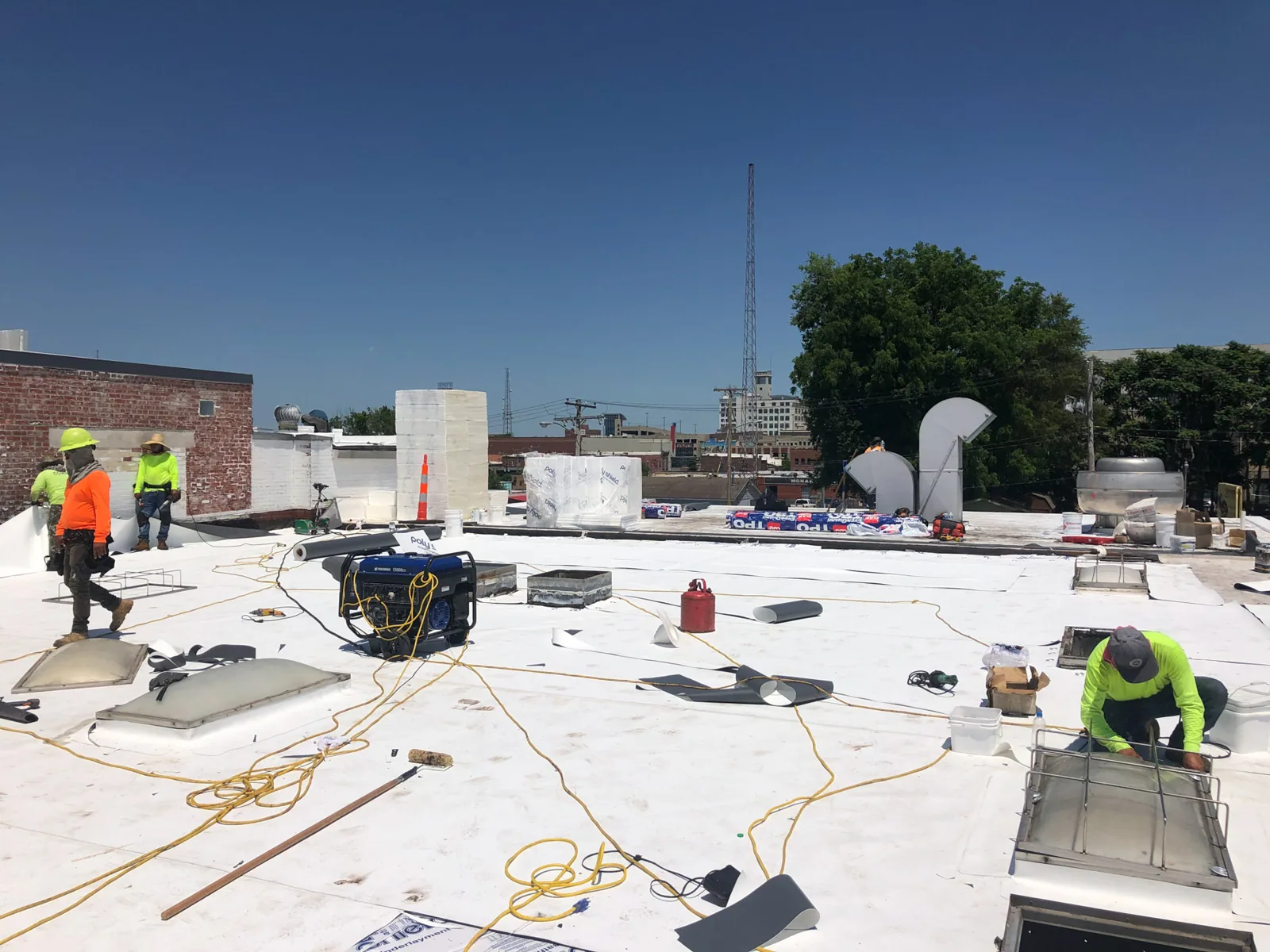
When replacing insulation, we open only the approved work area and have materials and a way to seal the roof ready for whatever we find. If tear-out uncovers more wet insulation than expected, we mark where it is and how much, and get it reviewed before doing the extra work. An occupied medical office insulation job also has to protect the rooms and equipment below, since extra tear-out can affect more of the building.
Compare proposals that explain how hidden damage gets handled and approved alongside the permanent repair, rather than assuming a fixed membrane area covers every insulation quantity. Sealing the roof each day and finishing the membrane details are still part of the job even when the insulation scope changes. That keeps the estimate easy to review: the wet insulation explains the extra cost, and the building plan explains how the work can continue. It also keeps an allowance from becoming a license to tear off parts of the roof that were never tested.
On a roof in Bonsall, the closeout should show where existing insulation stayed and where new cover board went in. We photograph exposed conditions, board seams and membrane tie-ins before they are covered. A separate Lake Elsinore property gets its own measurements, since one roof's findings say nothing about the layers on another. At an Old Town Temecula building, the new insulation is tied to the work area and the conditions we recorded there.
You get photos and location records of what we found, the insulation replacement you approved and the finished details we could reach. You should be able to tell the existing layers from the new ones, with any open areas and future equipment changes still noted. That makes later repair proposals easier to judge, because a contractor can compare the detail with what is actually on the roof rather than a generic description. Any bigger energy-related spending can then be weighed against your building's own needs, while the insulation work stays tied to what we found.
Confirmed wet or crushed insulation. It should be fixed before a new membrane goes over it. Ask for findings with locations and a full insulation-to-membrane scope, and price any surface upgrade separately so it does not hide work the roof needs.
No. The insulation under it needs to be checked and replaced if it is wet. Cover board gives the membrane a firm surface, but it does nothing to dry out or firm up wet or loose insulation underneath.
Your building's requirements and the roof system chosen, with project review for approval. We compare insulation options alongside the height changes and detail work they cause, and keep any energy benefit tied to your actual building and use.
We record where it is and how much, then get your approval and replace it while keeping the roof sealed. The finished work area stays documented, so the extra cost has a clear reason and one opening's findings are not applied to the whole roof.
Send us any roof records and tell us your insulation or building concerns. We will inspect what we can reach and explain what can stay, what needs replacing and the details tied to that decision.
Request a Roof Assessment