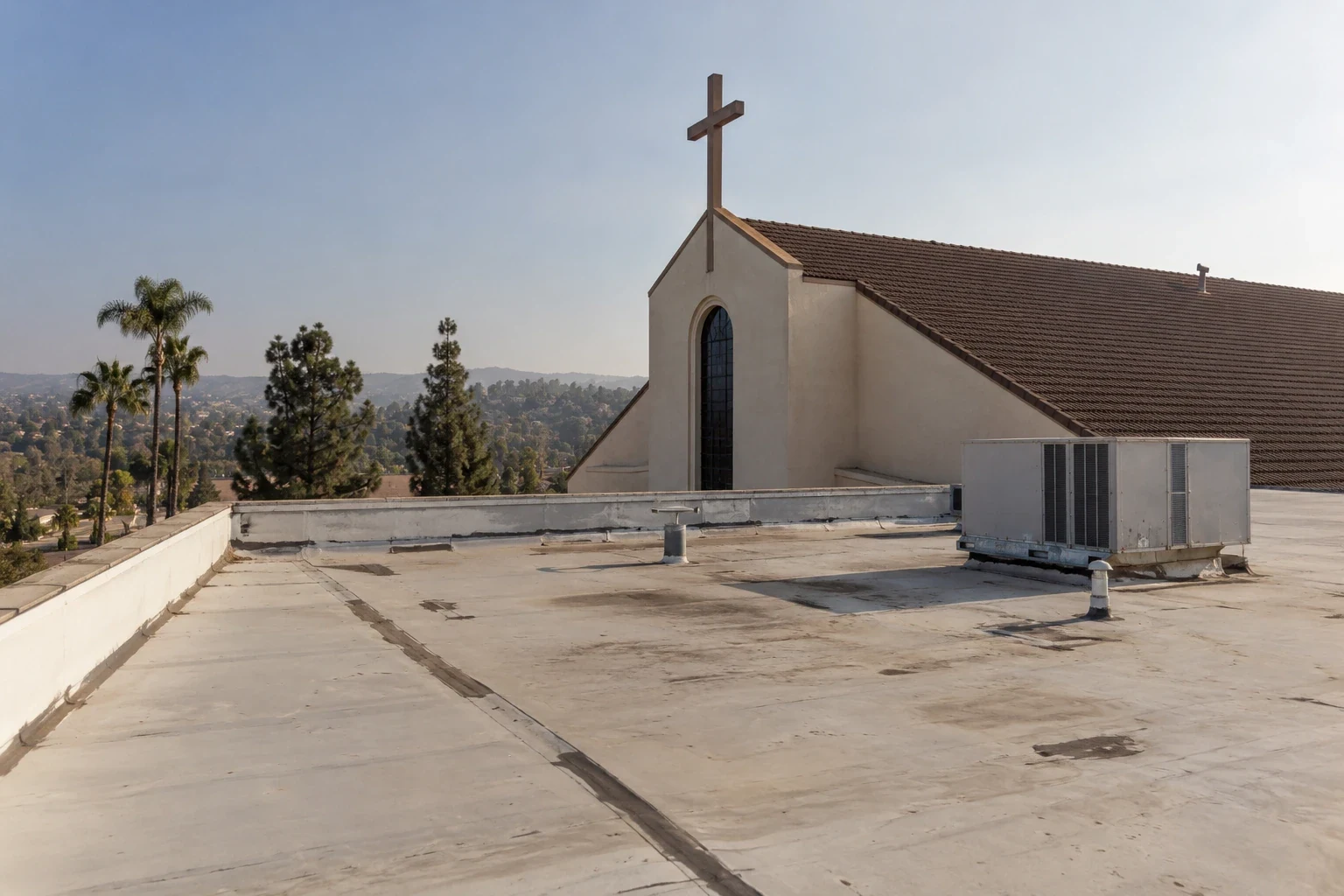
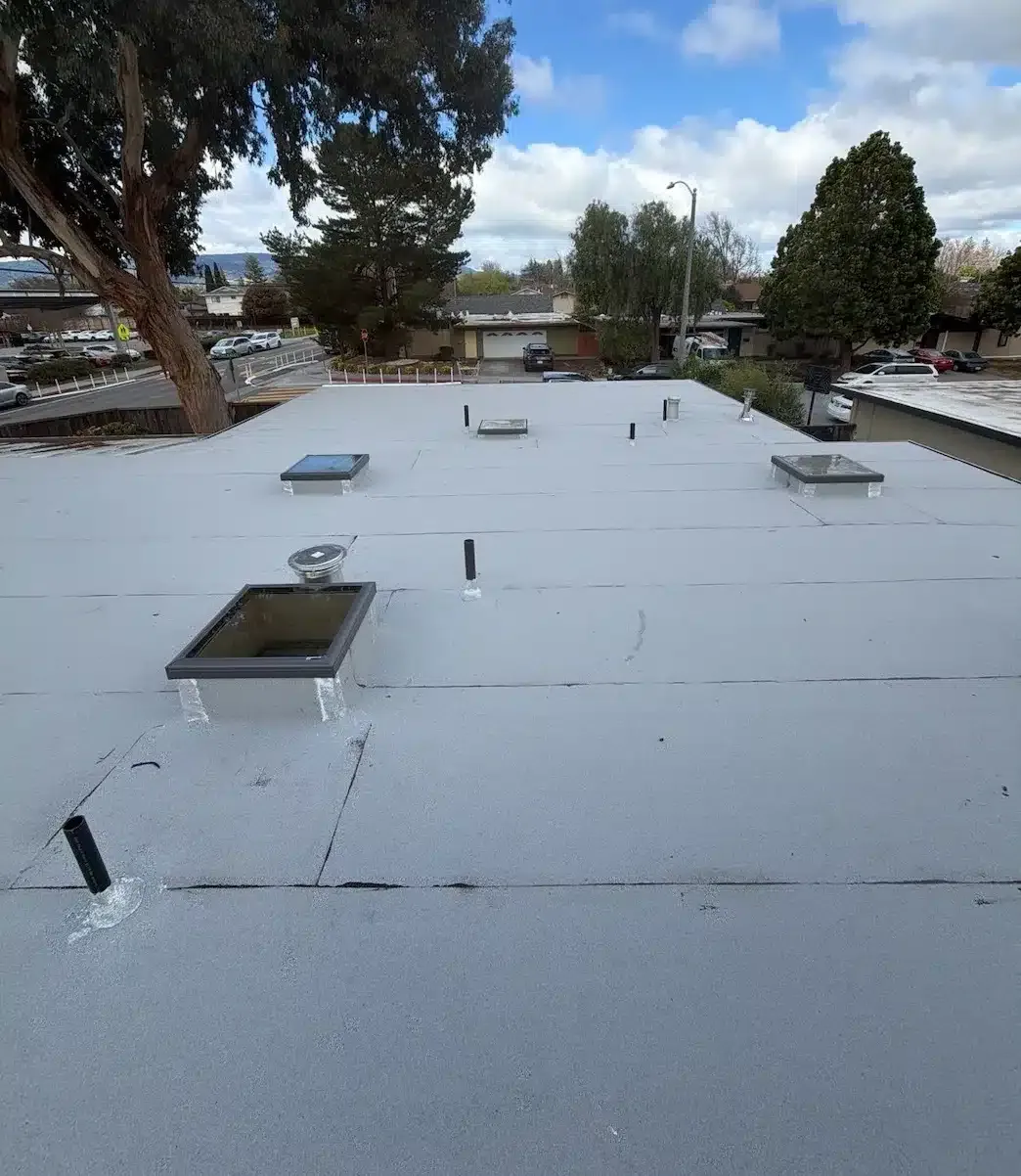
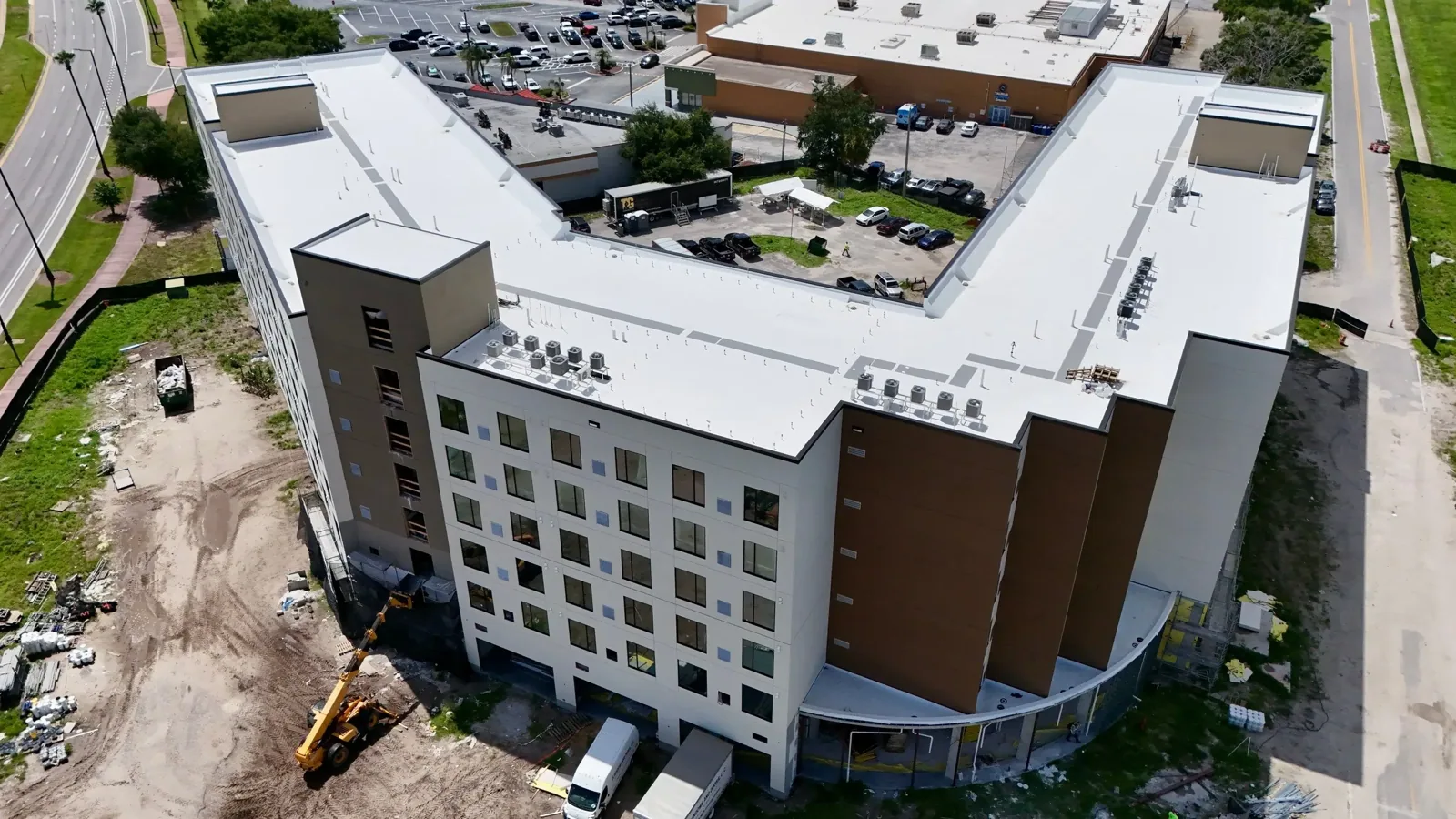
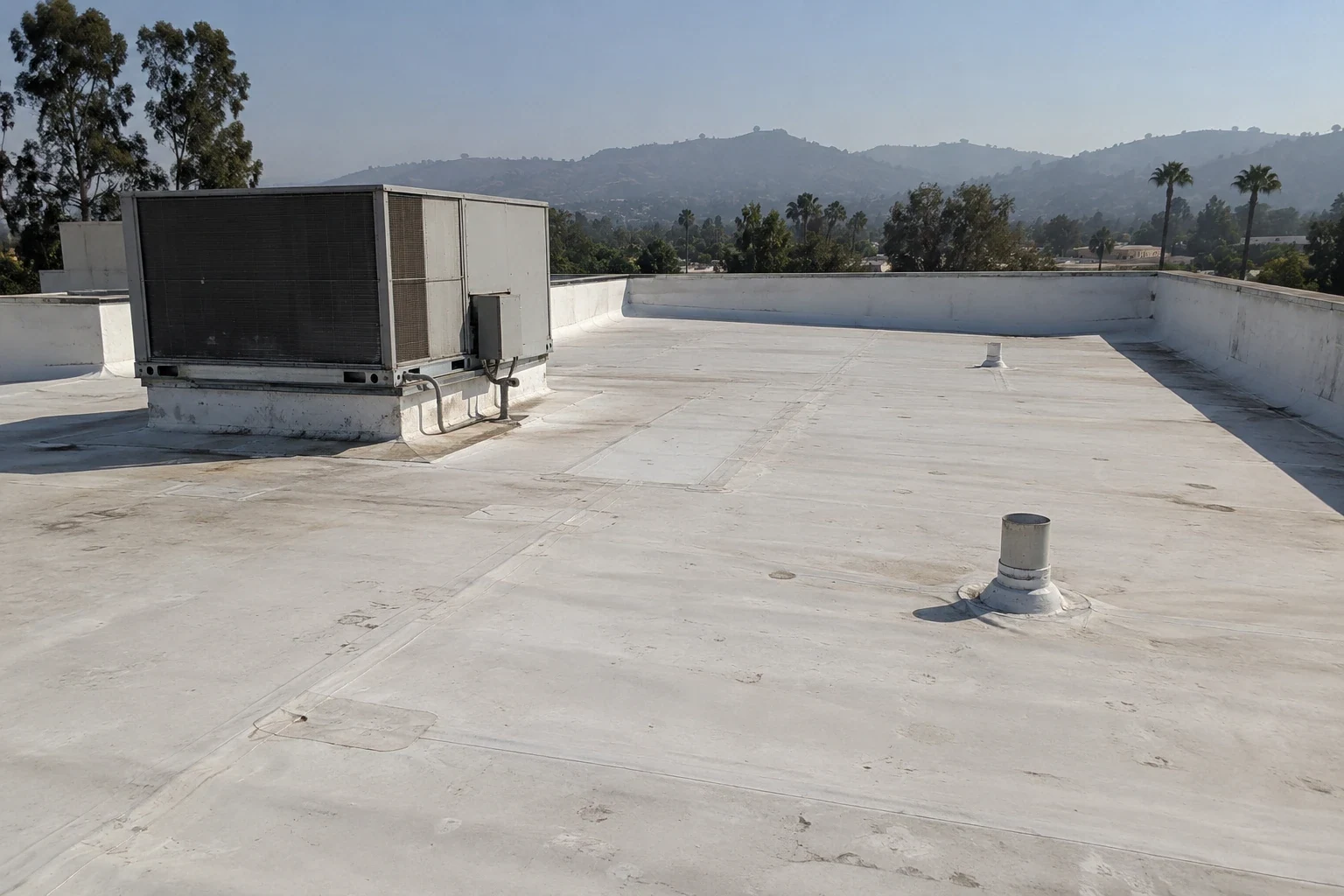
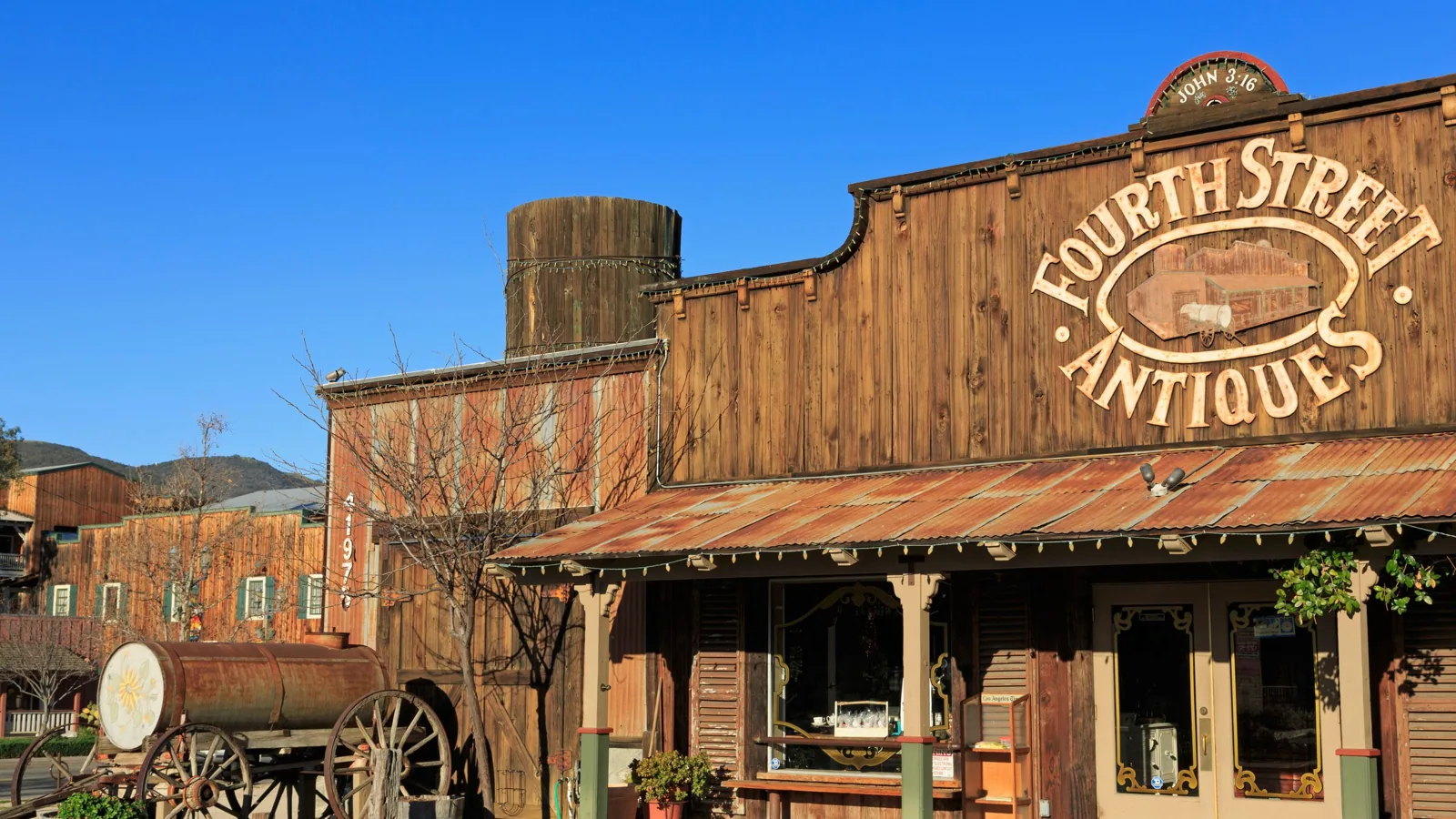
EPDM is a black or white synthetic rubber membrane that has been used on low-slope commercial roofs for decades. In Temecula, where summers can bring extreme heat, owners often weigh a reflective surface against a traditional black EPDM roof. That is a fair question, but the first job is getting the membrane, seams and flashing right. For a church roof, we also plan around services, events and limited access, and we account for any equipment that has to be worked around. Near Winchester, we start by marking the affected area and how crews will reach it. For a property near the Ynez Road corridor, an EPDM repair should match the sheet and seam condition we actually find on that roof. Existing records and the manufacturer's requirements guide which membrane and accessories we use, and we check that new material is compatible with the old. A cooler surface may be a nice upgrade, but it does not make wet insulation acceptable and it is not a promise of lower energy bills.
An EPDM proposal should name the specific membrane and how it will be attached, whether fully adhered, mechanically fastened or ballasted. Saying "rubber roof" is not enough, especially on a repair, where new material has to bond to an older sheet that may already have patches on it. A commercial roof inspection before any EPDM work tells us what the existing membrane is, what condition it is in and what we still need to check.
You should see which layers are staying, which are coming off and how the new details tie into what remains. Two roofs of the same size can need very different preparation, so the estimate should describe the work, not just the square footage. If we need a core sample to identify the existing roof, that gets done before materials are ordered. At seams, we confirm how the existing sheet was joined and what condition the surrounding membrane is in before choosing a repair. A surface patch should never hide weak insulation or an open transition.
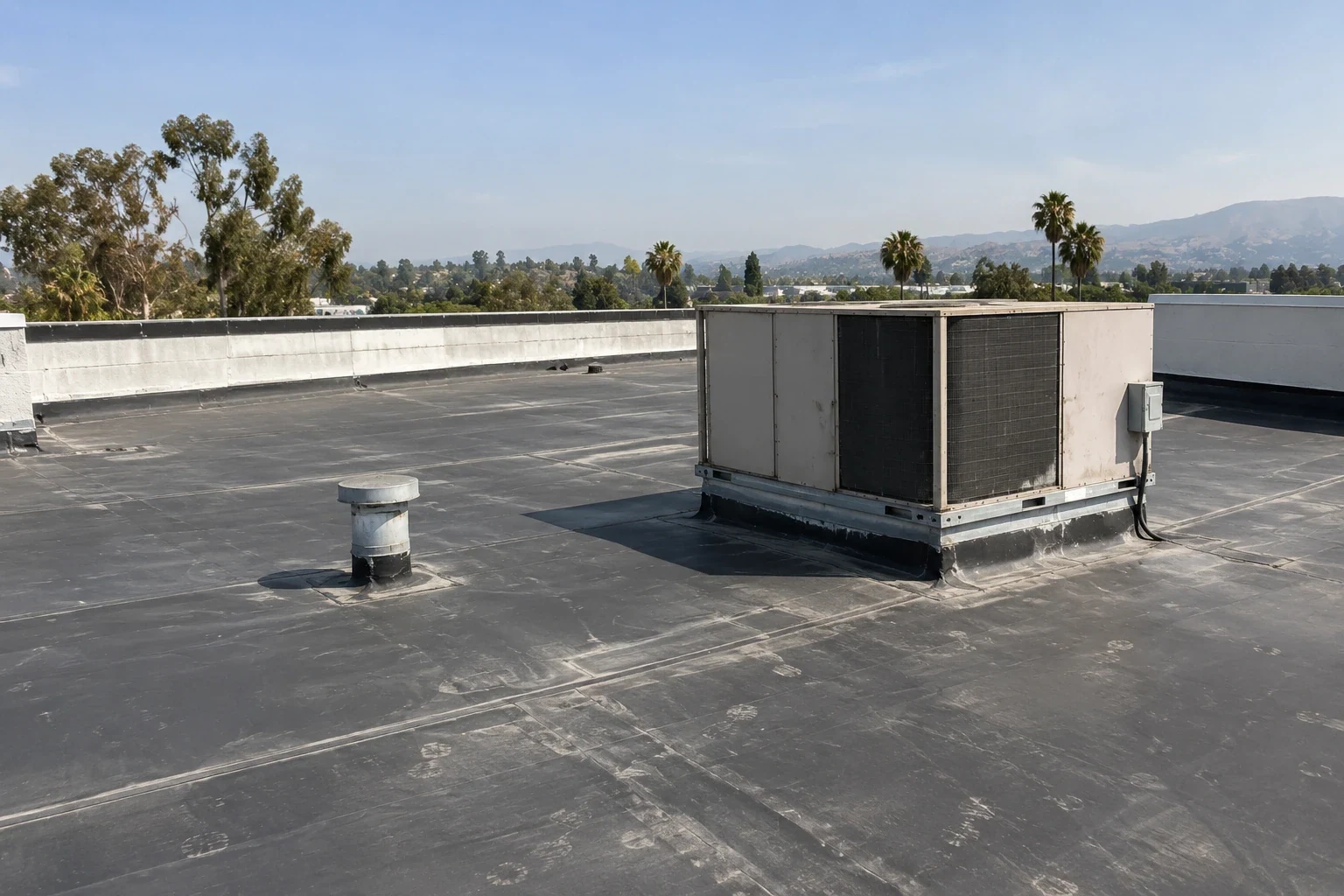
Some EPDM products, such as Carlisle's EPDM with factory-applied tape, come with seam tape already applied at the factory. That speeds up installation and gives consistent seams, but it is one product's approach, not a rule for every EPDM roof. Good commercial roof repair on an existing EPDM roof starts with identifying the old membrane and any past repairs so we can choose primer, tape and flashing that will actually bond.
A seam is only one part of the roof. How the whole membrane is attached and what condition the insulation is in are separate questions. A seam can look perfect on top while the board underneath is wet, and a solid deck does not make an incompatible seam tape work. When you compare repair or replacement options, make sure each one explains how the seams will be made with the products being used, following that manufacturer's instructions. That keeps a brand name from hiding real differences in the work.
If the existing insulation is staying, we need a good reason to believe it is dry and well attached. A membrane can look continuous on top while the insulation below is soaked. Moisture, fastening and material condition each need their own check. A TPO roof is a common alternative to EPDM, but switching membranes does not make wet insulation usable; both options should carry the same insulation repairs.
Where we find insulation that has to come out, the estimate shows the quantity and the replacement material alongside the membrane work. If opening the roof reveals more damage, we show you where and how much, get your approval and make sure the area is sealed before we leave for the day. Comparing options only works when each one includes the same insulation work. A lower price that skips wet board is not a real saving. The new membrane should go over a sound base, and any area we have not confirmed stays flagged until it is.
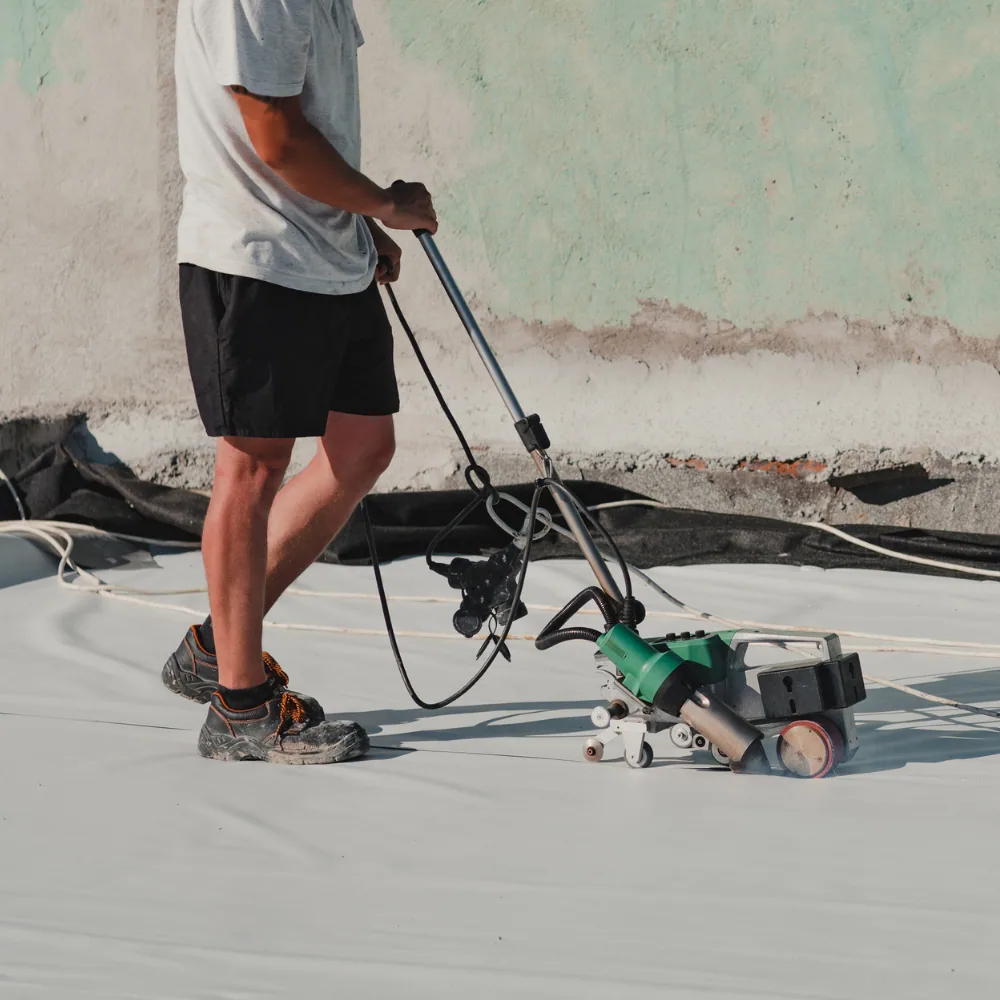
A full EPDM scope includes the wall flashings, drains and curb details, not just the field membrane. Each of those has its own shape and materials, and some depend on equipment being moved first. A PVC roof uses heat-welded seams instead of tape and adhesive, so even if the roof area is the same, the accessories and labor are not. Compare options with the same insulation repairs and the same finished details before choosing on price.
If a rooftop unit has to be lifted or disconnected, we need to know who is doing that and when, before the roof is opened in that area. Tight access, limited delivery times or occupied rooms below can add setup and protection time beyond the membrane itself. Those costs belong in the proposal. Having the rubber on site does not mean every detail is ready to finish. A good EPDM plan accounts for insulation, accessories and access, instead of assuming the membrane alone takes care of the roof's edges and openings.
On an EPDM roof, we look at the field seams, the flashings and how the membrane is attached, because those define what the repair will be. The same leak inside can come from a failed seam or from a damaged section of sheet that needs to be replaced. The estimate should say which one it is and how the new tie-in will be tested. Projects in Old Town Temecula follow the same approach, with the scope based on that roof's existing membrane and our findings there, not on a repair from another building.
When we finish, you get photos of any insulation replacement and the completed seams and flashings, along with the membrane, seam method and accessories used. You will know which existing layers stayed and what equipment or other-trade work is still outstanding. If a warranty is offered, read its installation and alteration terms before relying on it. This record helps future maintenance trace a new problem to the right spot. Any heat benefit from a white membrane is a separate consideration from the repairs that keep the building dry.
We need to know what the existing membrane is, how it was seamed and what past repairs have been made. That tells us which primer, tape and flashing products will bond. A general "EPDM" label does not guarantee every accessory will work with your existing roof.
No. Some EPDM products come with factory-applied tape, but the membrane and installation method chosen for your roof determine how seams are made. A repair on an older roof may use a different method that suits the existing sheet.
Only if it is dry and sound. We check suspect areas with moisture scans or core samples, replace what is damaged, and get your approval if we find more than expected once the roof is opened.
Compare them with the same insulation repairs and the same wall, drain and curb details, then look at the differences in seams, attachment and accessories. Make sure both options account for equipment shutdowns and access so the cheaper membrane is not hiding missing work.
Send us any roof records, past repairs and details about equipment or access limits. We will inspect the roof and explain an EPDM option with insulation, seam and flashing work included, plus an alternative where it makes sense.
Request a Roof Assessment