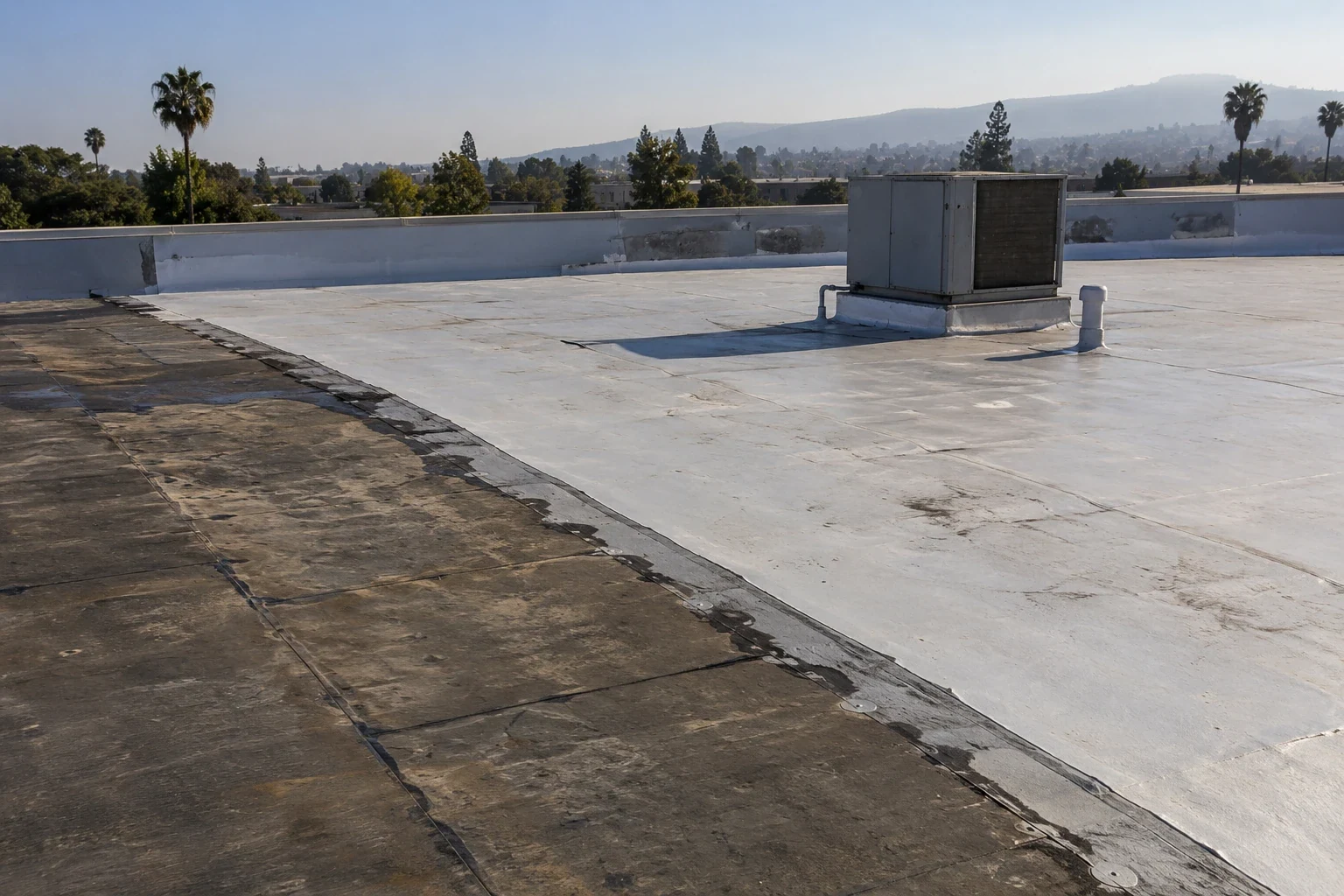
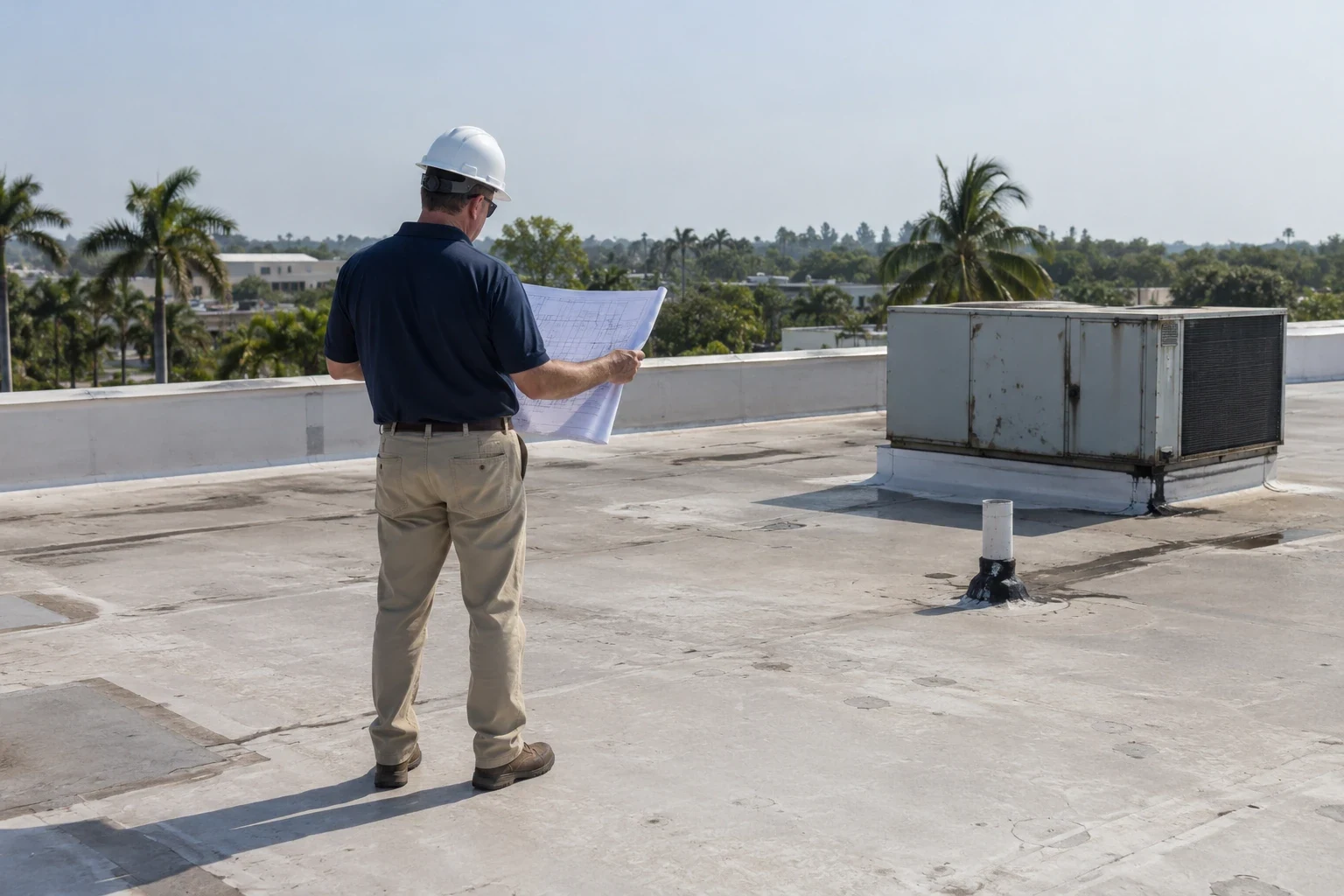
Winchester Road runs through one of Temecula's major commercial shopping areas. The corridor includes several centers, including Winchester Meadows, Temecula Commons and Rancho Temecula Town Center. Retail and service buildings along the route have different roof systems, access conditions and operating hours, so a district name cannot set a repair scope. We inspect your roof, trace water at seams, drains and wall flashings, then compare the repair with restoration or replacement where the roof can support those choices.
Traffic is heavy along parts of the road, and deliveries share driveways with customers. That makes staging, lift placement and protected entrances part of the job plan. A reflective coating can lower heat gain on the right roof, but it will not fix a clogged drain or an open seam. We check where the water goes, what condition the existing layers are in and when the store can tolerate work before proposing a coating. Ynez Road commercial roofing and Uptown Jefferson roof coordination are separate projects. Here each estimate ties what we found on the roof to its repair cost, access limits and a realistic work window.
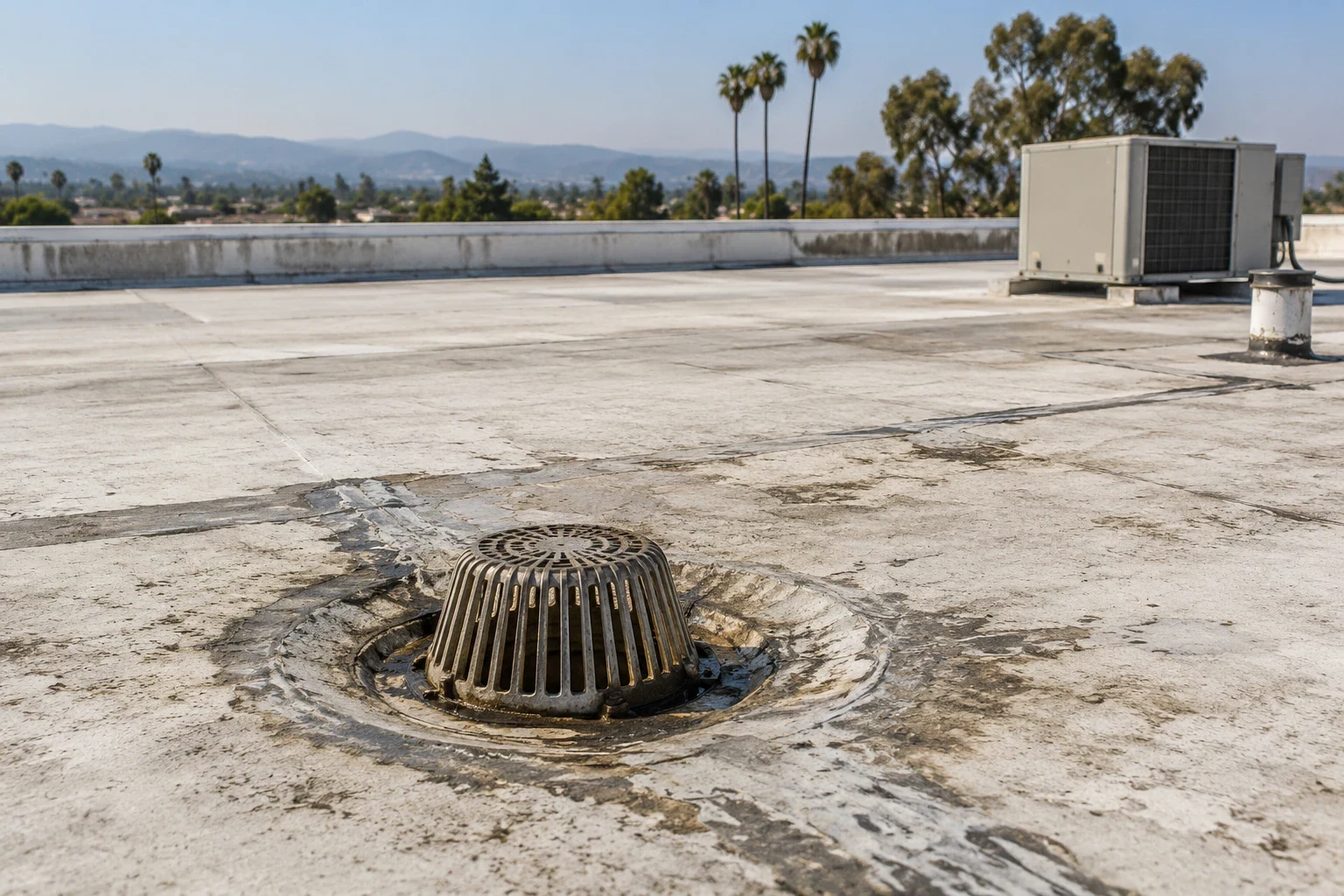
When a drain sits lower than a thick patch around it, water can pool next to the drain instead of running into it. Extra roof layers added over the years can raise the surface right at the outlet. We inspect the drain bowl, how the membrane ties into it and the slope leading toward it. A clear strainer is good, but it does not prove the roof is draining properly or that the pipe below is sound.
A lasting fix depends on whether the problem is the slope or a failed seal. Resealing the membrane at the drain can stop a leak without fixing a low spot nearby. Building up the area around a drain can improve flow but leave a cracked bowl in place. We tell you which problem we found and what the repair will change. Roof drain and scupper correction needs that kind of clear scope, and a plumber or engineer joins in when the problem goes past the roof itself.
Any coating comes after the drainage is fixed. Its prep and detailing depend on the existing roof and the product chosen. Coating the roof before a drain is rebuilt means tearing up new work later. Setting the order of work by what depends on what saves you from paying for the same area twice.
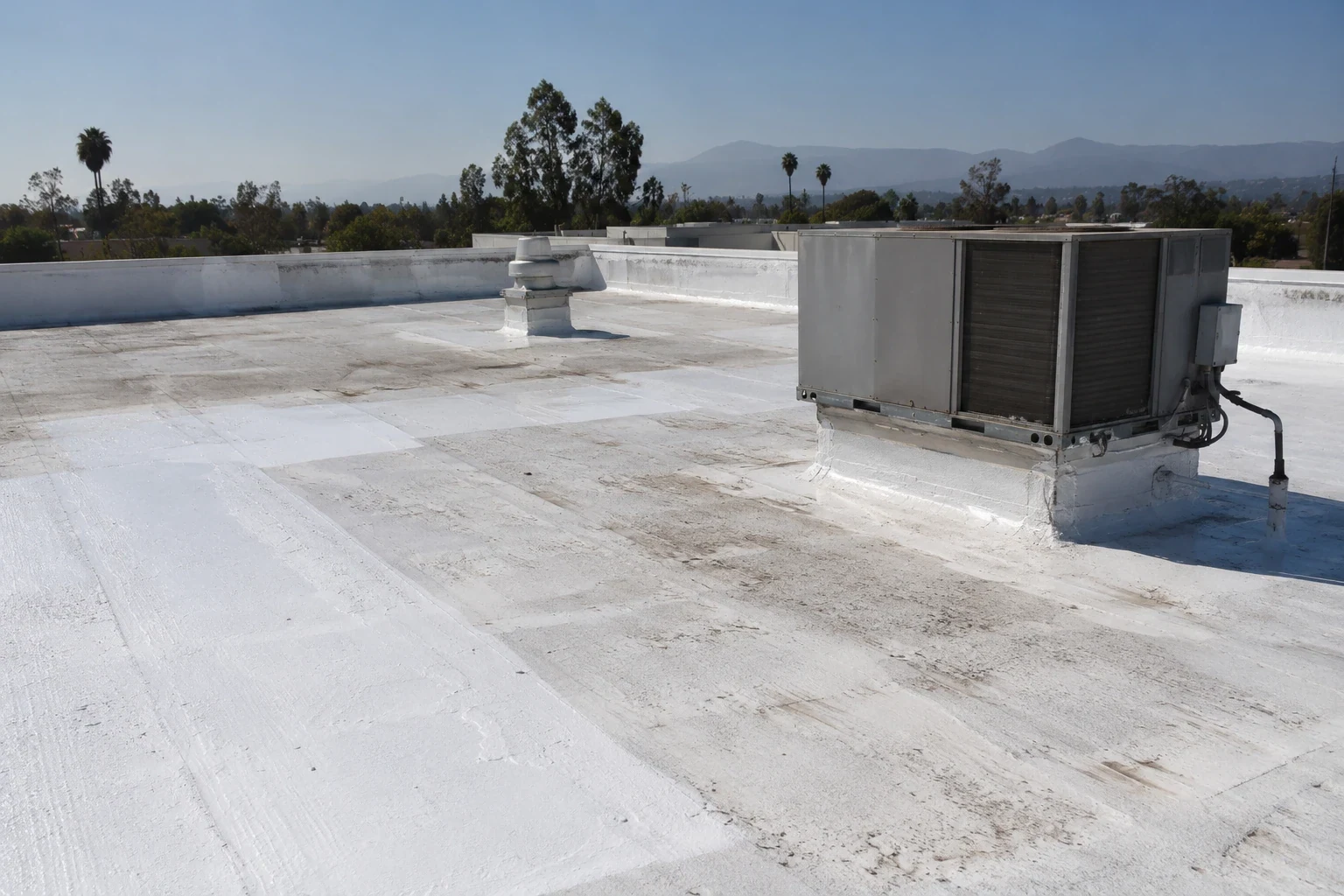
A dark roof soaks up sunlight and turns it into heat. A reflective surface cuts that down, but how much cooler the store gets also depends on insulation, how the space is used and the HVAC. We look at those factors before recommending a new surface. A fresh white roof should not hide wet insulation or bad seams that stay under it.
A roof coating restoration can be a good choice when the existing roof can be cleaned, prepped and coated with a solid bond. Seams, flashings and drains still need repair as part of that job. We spell out the prep, how drains will be detailed and what stays in place. That gives your purchasing team a fair comparison against repair or replacement, rather than a price that assumes the old roof is in good shape.
Water around a drain can soak insulation well past the visible leak. We check for that before deciding where a permanent repair should tie into the roof. Small test cuts are made only with your approval and are sealed the same day. Our photos show the layers we looked at and what we kept. An estimate based only on the top surface cannot tell how much wet material is hiding below, especially where water has been getting in for a long time.
We list the confirmed repair area separately from anything still unknown. A unit price or allowance can cover extra wet material found once the roof is opened. You should know what kind of finding would change the quantity and how that change gets approved. That keeps a reasonable starting budget from becoming an excuse to leave wet material under the new repair.
Those findings also matter if you are thinking about a recover. The existing layers, how they are fastened, the drainage and the heights at walls and doors all have to work with the new roof. A roof recover evaluation checks those limits before another layer goes on. Raising the roof around a drain without fixing its height can make ponding worse, so the savings from skipping a tear-off have to be weighed against the extra detail work.
A lift or material staging area can block a store entrance even when the roof work is on the other side of the building. We sort out those conflicts with your property manager before scheduling deliveries. They tell us which customer paths and delivery routes need to stay open. We explain exactly what the roof work involves on those routes, so the restrictions come from real tasks rather than a vague promise of minimal disruption.
Each day's roof area has to be small enough to tear off, replace and seal before the crew leaves. A tricky drain or unexpected wet insulation can shrink that area. We set a stopping point and tell you how the plan changes if we run into those problems. Any temporary seal has a set method and someone responsible for checking it, including over a weekend.
Roof loads matter too. Pallets of material and equipment cannot be stacked wherever there seems to be room. We plan where they go and bring in an engineer when needed. You can then check the whole plan against your store calendar, with staging, daily close-up and detail work already in the schedule instead of sorted out later.
A good closeout package links the original drain problem to the repair we made and the roof layers that stayed. We list other concerns by location with a recommended next step, so a finished drain repair does not get buried in a general note that the roof was improved. That matters when the next budget cycle looks at restoration or replacement, because you need to know which problems are already solved.
Follow-up visits should check whether the repair did its job. A new leak may come from a different spot, while ponding that comes back may need another look at slope or drainage. We explain those possibilities based on what we actually found. Your next roof capital decision can then rest on the roof's real condition and the cost of living with what is still unfixed, with heat gain weighed alongside the drainage work.
No. If the drain fix will change the roof surface around it, do the drain first. Rebuilding a drain later means cutting into a new coating. The coating job should then include prep and detailing around the repaired drain. If we only find a small problem, you can decide on a wider coating after that repair is done.
It can. New layers raise the roof surface and can leave the drain sitting high. We check those heights before recommending a recover. It can still work if the drains and wall flashings can be adjusted. The estimate should include that work instead of assuming the least tear-off is always the cheapest project.
We check the area around the leaking drain with small test cuts when the answer changes the repair or the budget. An agreed unit price covers extra wet insulation found once the roof is open. The permanent repair should tie into dry, solid roofing, not stop at a quantity guessed before anyone looked.
Usually, yes, with planning. Where we stage the lift and hoist materials matters as much as where the roof work is. We review the affected entrance with your property manager and plan the protection. Some jobs can keep a separate path open; others need a short closure. You will see that plan before you approve the schedule.
When the existing roof is in decent shape and has several problems that can be fixed in one job. We compare that with the issues a small repair would leave and the service calls it could lead to later. Drainage and wet insulation are part of the decision. A reflective finish adds a possible heat benefit, but it does not replace a proper inspection.
Schedule a roof review for your Winchester Road property. Tell us where the problem is, how crews can reach the roof and when the store can tolerate work. We will explain the drain or seam issue, compare options and lay out the order of work before crews arrive.
Request a Roof Assessment