A Temecula owner may love the daylight a skylight brings and worry about summer heat, but a leaking skylight still needs each part of it checked before money goes into a repair. Skylight and penetration flashing in Temecula, CA, deals with the roof flashing around the opening, while the skylight, curb or equipment itself is checked separately. A manufacturing roof penetration repair should include any insulation work under the flashing and who handles the skylight or equipment, instead of assuming a coating can seal every hidden or hard-to-reach joint.
In an occupied Temecula building, we confirm which opening is leaking and who runs the building before equipment shutdowns or room access shape the plan. A water stain below a penetration does not tell you whether the roof flashing failed or the skylight or unit itself is leaking. The repair decision follows what we find at the opening, with temporary protection, any skylight or equipment review and a full flashing rebuild all spelled out while you weigh the building's operating limits.
We check the membrane flashing and the top termination around the skylight or penetration, noting any visible separation without assuming the parts around it are sound. The frame, a glass seal, a unit connection or the roof flashing could each be the problem, and each may need a different trade. The ceiling stain may not point to the actual leak. Leak investigation around roof openings sorts that out before a patch is sold as a permanent fix.
Photos identify the specific opening and what we saw, and anything blocked or hidden is listed as unresolved. Where it is safe to get close, we compare the roof flashing with the condition of the skylight or unit instead of guessing one from the other. That keeps you from paying for a thin flashing patch that leaves a cracked skylight or an unreachable top joint as it was. The estimate can then put the roof work next to any specialist task, with separate scopes but one sequence to finish the opening.
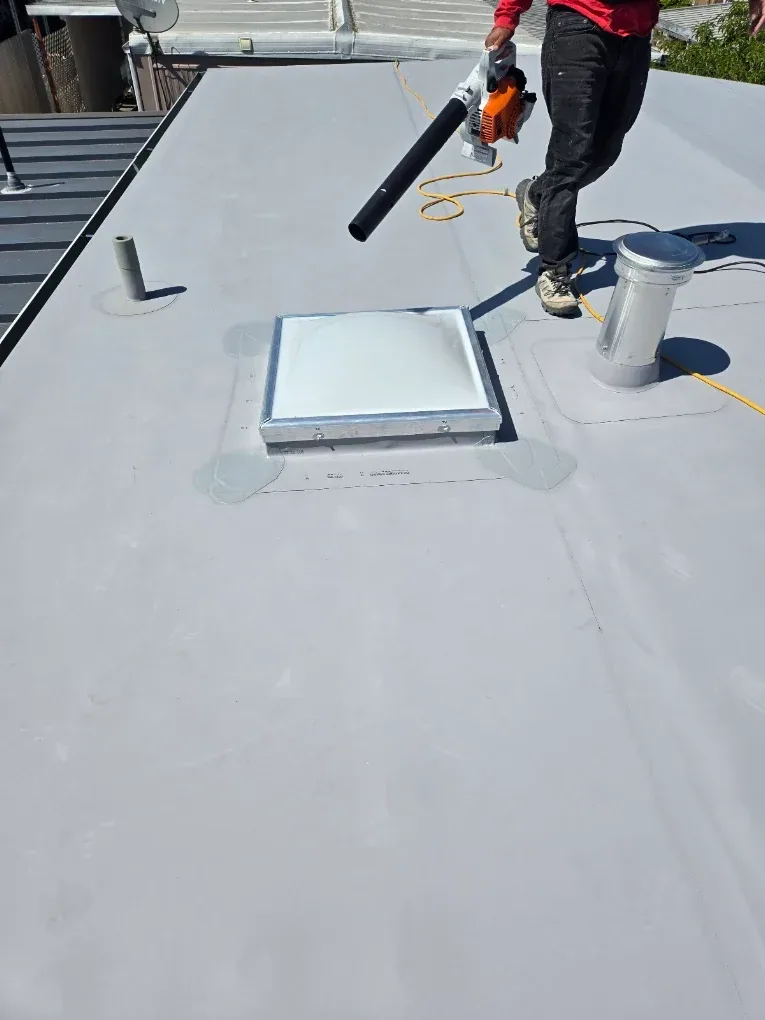
A lasting flashing repair needs solid insulation and a stable base around the opening. Pulling back the membrane may reveal wet insulation, damaged board or loose material, so the price should allow for checking and replacing it, with your approval. Insulation repair around a penetration covers that work without assuming that a good-looking flashing means the layers below can be reused.
The tear-out stays tied to the detail being rebuilt, with protection in place while we check what is underneath. A new patch on top can leave a problem underneath when the proposal only deals with the visible split, and tearing out too much adds cost without a reason. Compare options that finish the same detail, with solid insulation, matching flashing and a proper top termination included. That explains why one estimate includes insulation work and another offers only a surface patch, rather than treating them as the same repair.
Before choosing a repair, we look at the opening as a set of connected pieces: the roof membrane, the curb or penetration base, the top termination, the sealant joints and any part that moves on its own. A stain near a skylight does not pinpoint the leak, so we check each joint we can reach and note where water could travel before showing up inside. If the flashing has to come off to check the insulation, we plan a temporary seal and a decision point for whatever we find. That keeps a membrane repair from leaving a mismatched top joint or rotten base hidden behind a clean finish.
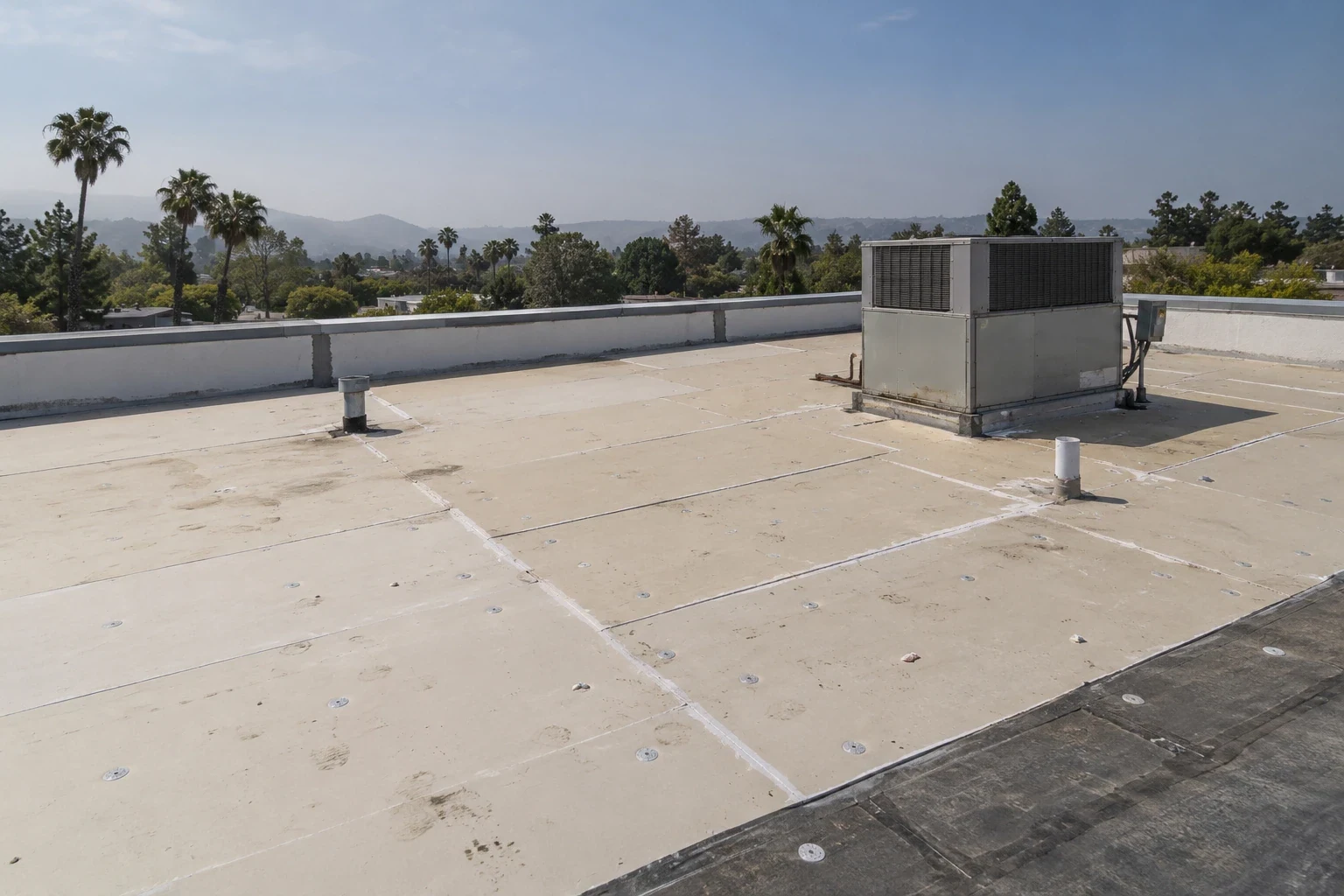
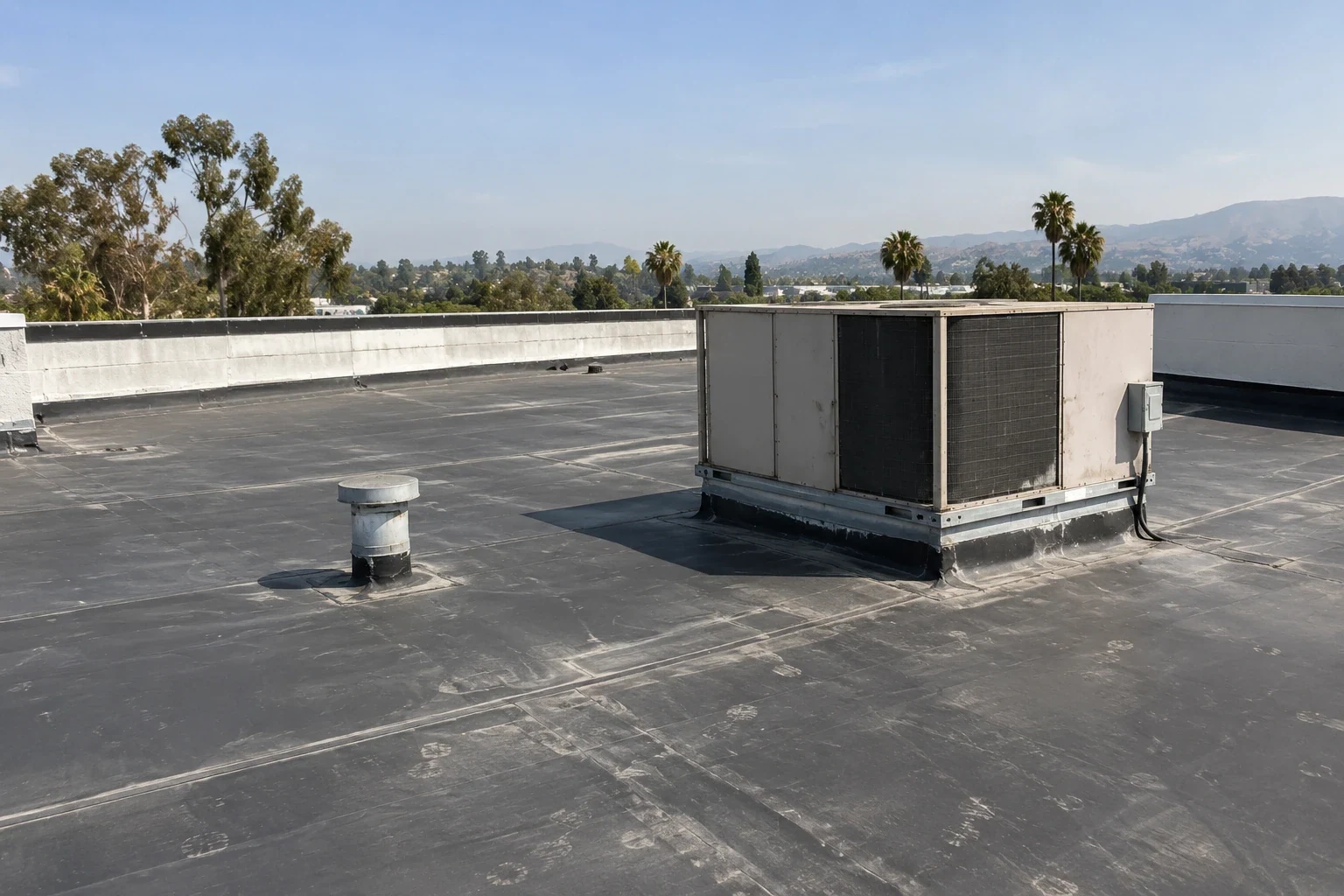
The flashing has to suit both the roof membrane and the specific penetration, especially where new repair material meets old roofing. An EPDM penetration flashing follows that system's own requirements rather than copying a heat-welded detail from a TPO or PVC roof because the finished shape looks the same. The exact prep and installation steps come from the products used and the project requirements, so a generic repair description cannot settle them.
The proposal should name the detail being rebuilt and the existing material it ties into, including cleaning, insulation prep and whether any skylight or boot needs replacing. A permanent flashing and a brushed-on surface treatment are different jobs, so they are priced separately and compared on what it takes to stop the leak. Summer heat matters for the roof surface and for scheduling, but it does not decide adhesive compatibility or make a cracked skylight acceptable. The order of repairs is clearer when the actual details drive the choice, not a broad promise attached to one type of material.
Some flashings cannot be finished while a unit or skylight is in the way. The equipment move, skylight removal or specialist check needs to be set before we open the roof, with putting things back in service planned next to the waterproofing. An office skylight repair also has to plan room access and interior protection, since being able to reach the roof does not mean the whole opening is ready to fix.
The proposal should show these steps even when another contractor handles the skylight or unit. You need to see which detail stays open until that work happens, how the open roof will be protected and who confirms the equipment can run again. Comparing only roofing labor hours can hide those costs and disruptions. A complete option ties the other trade's work to the roof flashing, so you can plan the real disruption without treating a membrane delivery or an inspection visit as proof every detail can be finished.
At closeout, the record names the specific skylight or penetration, the repaired roof flashing and the building contact. Requests around Old Town Temecula skylight and penetration repairs get an opening-by-opening account as well, so a repair at one detail is not read as proof that every penetration on the building is sound.
You get photos of insulation repairs and finished flashings, with any skylight part or blocked detail outside our work clearly listed. Temporary protection is kept separate from permanent flashing, and responsibility for later changes to the skylight or unit is noted. Future inspections can then compare the repaired opening with its history, while broader roof decisions follow their own findings. For a building in the Vincent Moraga and Via Industria industrial area, we confirm the actual opening, the roof around it and the building contact; the area name alone tells us nothing about the roof.
Where the water actually gets in. We check the roof flashing and the skylight itself separately, and you get a repair scope for each. Replacing a skylight and rebuilding its roof flashing fix different problems, so you want to know which one is leaking before spending.
When cores or a test cut show the insulation around the opening is wet or soft. We agree on how hidden damage gets approved and keep the roof sealed meanwhile, then compare options with the same insulation work rather than assuming a top patch fixes wet layers.
The equipment move or skylight work, the right roofing materials and access to the building all need to be lined up. Temporary protection and restarting the unit are part of the sequence, so a blocked flashing is never left unfinished after the roof around it is done.
Compare what it can actually fix with the full repair the detail needs. Ask for separate findings on the insulation and the skylight or boot, and confirm the product works with your roof, because a surface treatment cannot fix hidden damage or a flashing that needs rebuilding.
Tell us which skylight or penetration is leaking, send any photos you have and let us know about equipment limits. We will inspect it and explain the permanent roof repair, including any insulation and skylight or unit work it needs.
Request a Roof Assessment