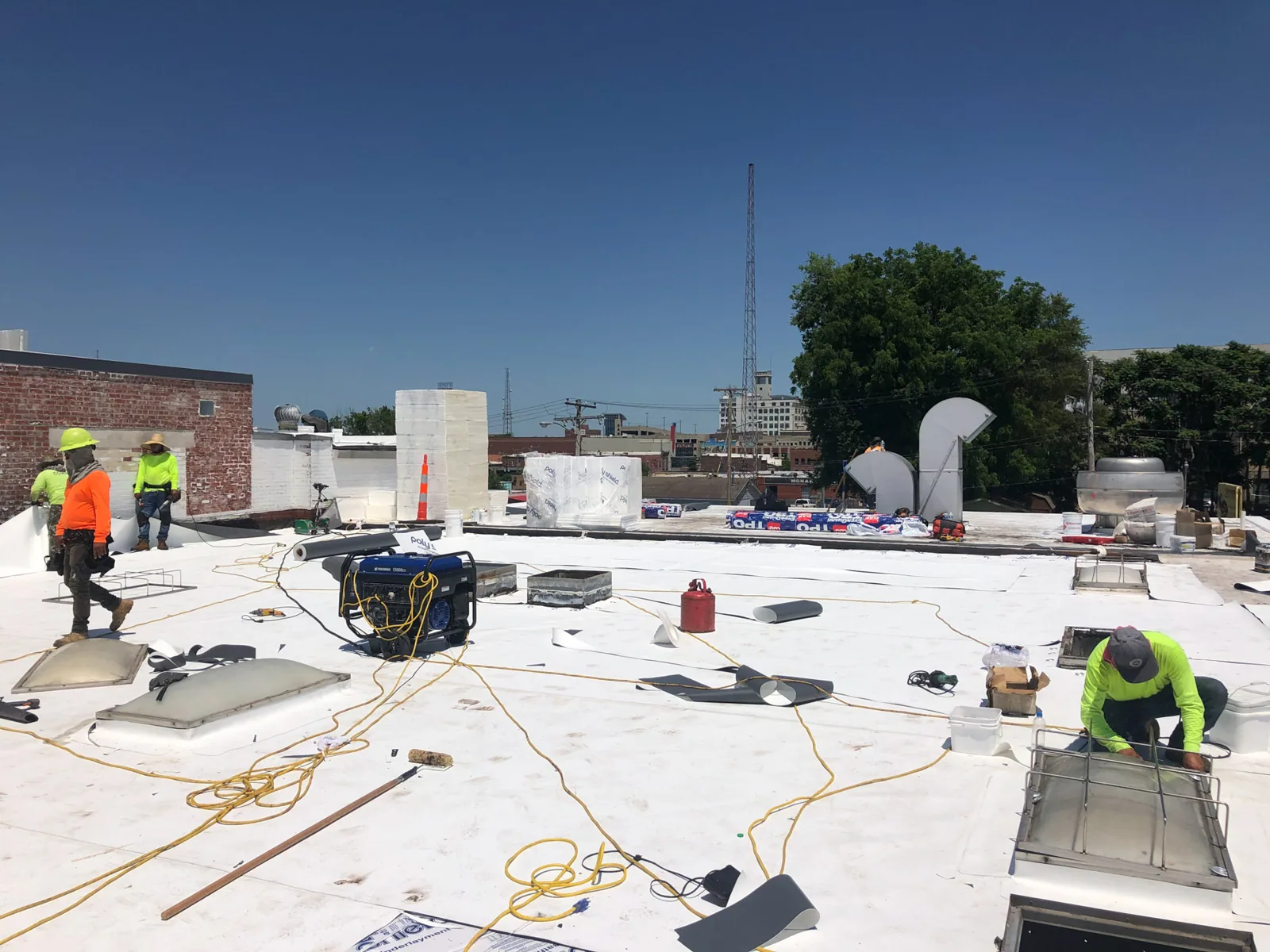
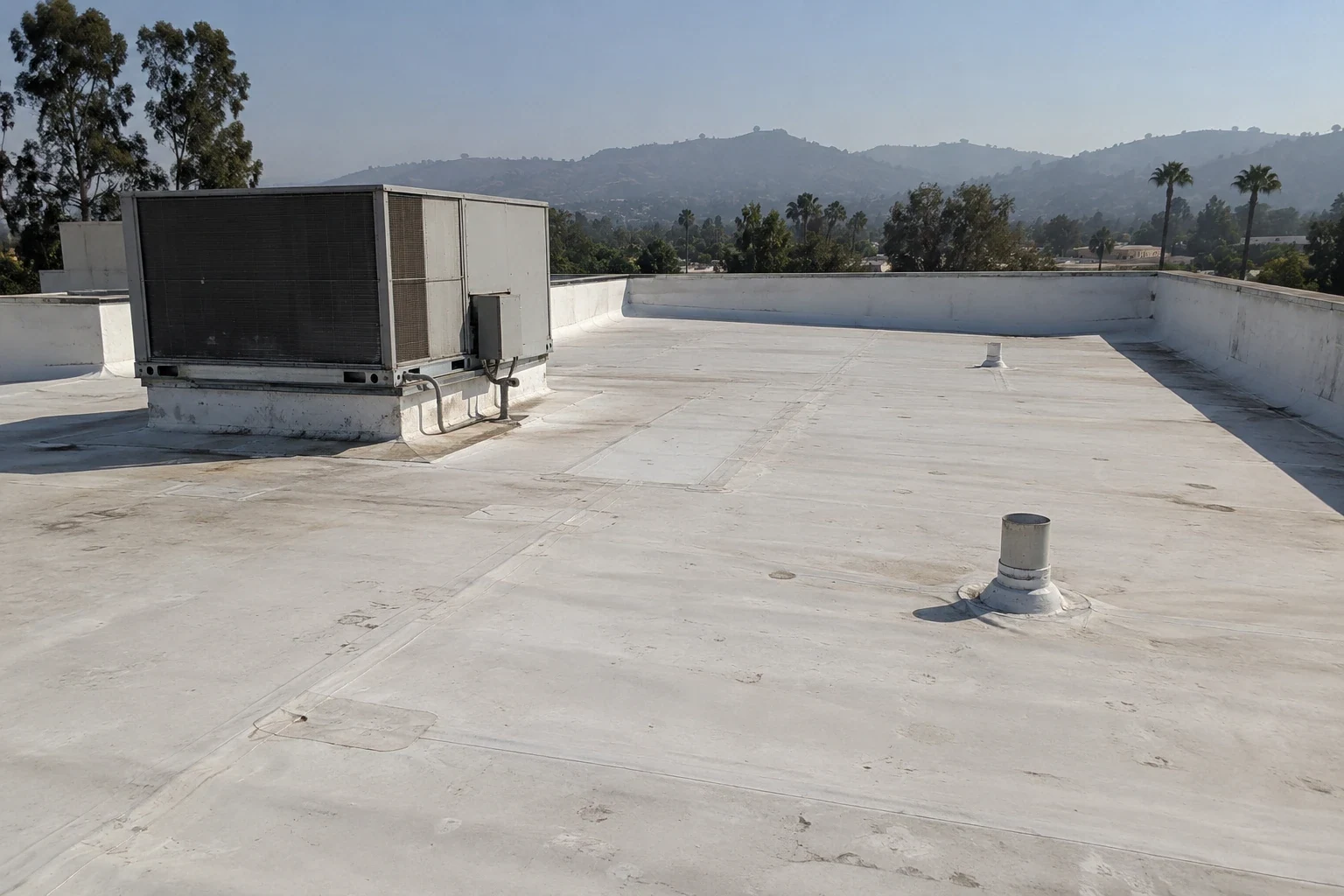
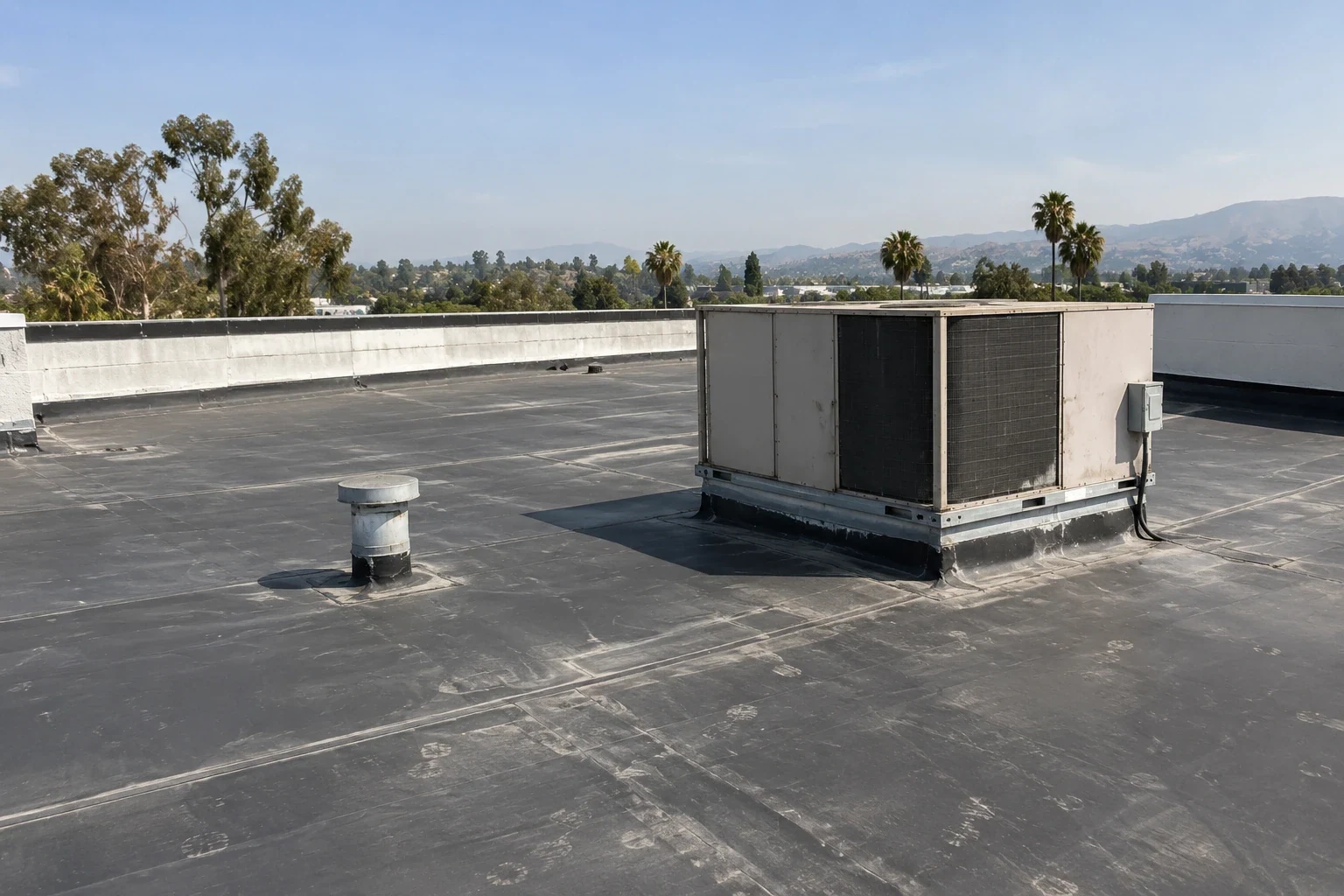
Temecula's summer heat is one concern for a warehouse owner; whether the insulation under the roof is wet is a separate one, and it needs an answer before money is spent. An infrared moisture survey in Temecula, CA, separates what the thermal camera suggests from what core samples actually confirm, and the report states which roof areas were scanned and where the scan had limits. A warehouse roof moisture survey also has to plan around rooftop equipment and operating hours. We compare any roof records with the question you are trying to answer, because a warm spot on the scan does not tell you exactly how much material has to come out, and a clean scan does not prove the rest of the roof is dry. On a property along the Murrieta Hot Springs Road corridor, the scan helps us decide where to cut cores. We mark the suspect areas and the building's access window, then confirm any keep-or-remove decision with the right test for that roof. Roof records and the details we can see are kept with the scan results, along with any open questions about the insulation. The method follows the roof and the question, and the final recommendation waits on those confirmations before tear-off or recover quantities are ordered.
A recover, a spot repair and a tear-off each need different information about the layers that would stay, so it helps to know which decision you are facing before calling the survey done. We agree on the roof area and the questions the survey should answer, and note any areas we could not scan. You get scan readings kept separate from conditions confirmed with cores, since a suspect area does not identify every wet layer. Different questions may need different tests, and the report explains what still needs answering before quantities depend on it.
A roof inspection alongside the infrared scan compares any roof records with the decision at hand. We note the membrane and flashing condition we can see next to what we could not reach, and keep wet insulation separate from fastening problems, since each needs its own check. A smooth membrane does not prove the roof is sound, and a thermal pattern does not clear every layer. You can then compare what is confirmed while open quantities stay clearly marked. The recommendation is based on the full inspection, not just on the word infrared.
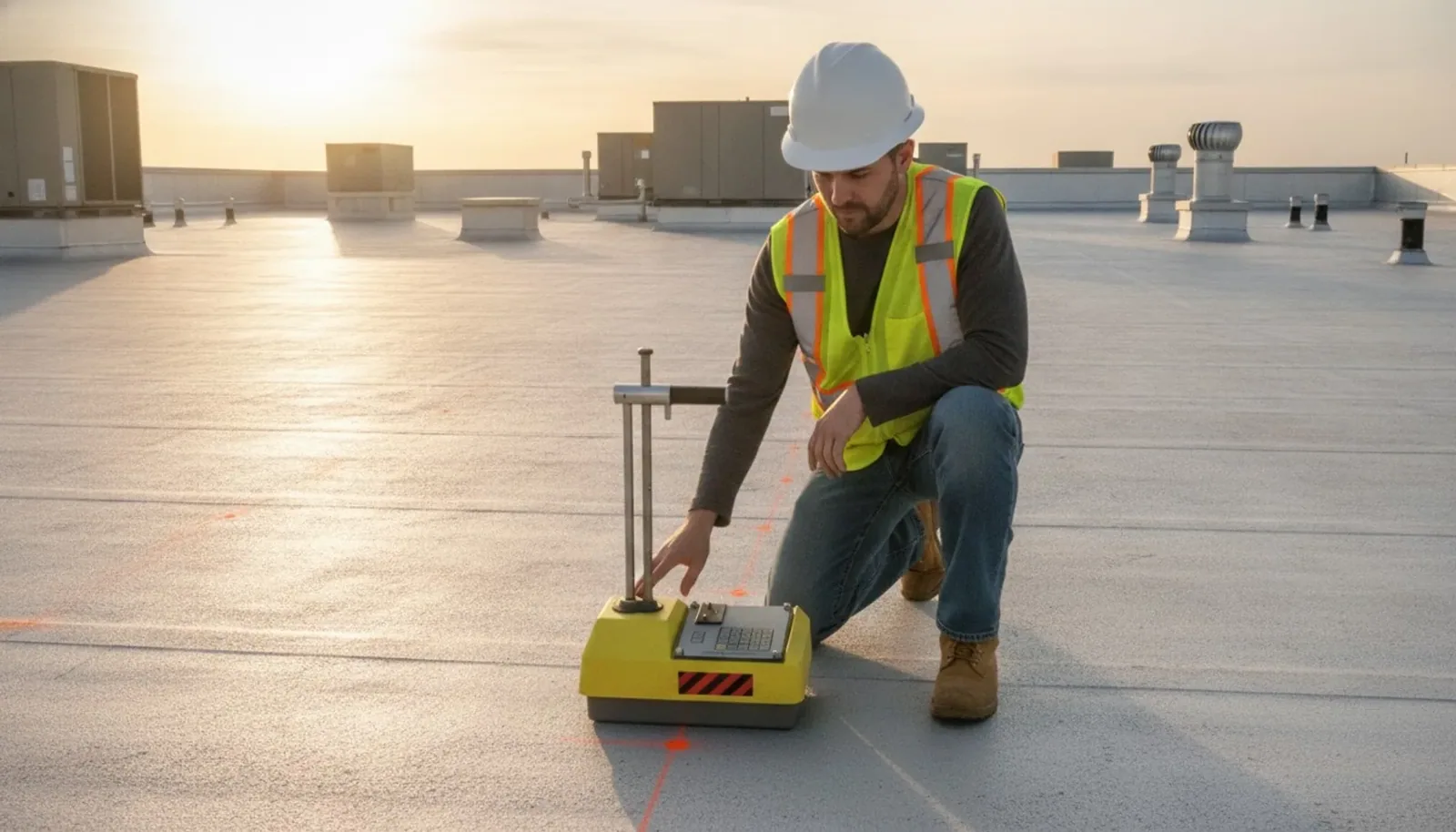
A temperature difference on the scan marks an area that needs interpreting and checking with cores. The roof materials, how the roof is built and the conditions on the night of the scan all affect what the image means. We note those limits with the results rather than turning them into a blanket statement about every hidden layer. Suspect areas stay separate from confirmed wet material, because tear-off needs physical proof. The scan tells us where to look; it does not set the full replacement quantity or prove that unscanned areas are dry.
A recover decision based on moisture findings needs the remaining insulation confirmed sound before a new roof goes over it. We price the confirmed wet areas for replacement and note any quantities still open where more cores are needed. A new membrane on top cannot dry out wet insulation left underneath. Skipping tear-off saves money when the existing layers are dry and solid, but that savings has to come from what we confirm, not from assuming everything outside the warm spots is fine. The recommendation defines exactly where the work ends.
Confirmed wet or crushed insulation sets the tear-off and replacement quantity, and areas that might extend further stay separate until cores answer the question. Disposal and new insulation are included in the recommendation rather than letting a broad warm area on the scan set every quantity. If more wet material turns up once the roof is open, you review and approve it, and the roof stays sealed in the meantime. Patching the surface does not dry out wet insulation, and a ceiling stain does not show the full hidden extent. The repair follows what we confirm for the new roof section.
A full tear-off option compared with keeping the roof should cover the same roof area and the same finished edges and flashings. We compare the confirmed insulation repairs with each option's full scope, and keep flashing prep and HVAC coordination the same in both. A cheaper keep-the-roof option may leave different insulation questions open, while a full tear-off has its own insulation and parts. A fair comparison explains what each option actually delivers, rather than turning suspect areas straight into a whole-roof number.
Each membrane needs a sound surface under it and matching flashing details, so the system choice should follow what the moisture findings showed. We weigh the roof records and product requirements alongside the roof's layout, and keep seam testing separate from insulation checks. You should compare complete options over the same roof area rather than let a membrane preference decide that the old insulation can stay. Two roofs the same size do not need the same parts or prep, and project review comes before ordering. Every option should properly close up the areas that were opened for testing.
A TPO roof after moisture testing needs its insulation, fastening and flashing materials listed. An EPDM option based on the same findings has its own seam and accessory requirements. We keep the insulation repairs and operating limits the same in both, and explain what changes with the choice. Delivery routes and occupied-room schedules can add handling or setups beyond the square footage. A truckload of membrane does not free up a curb blocked by a unit, so the schedule follows when each section can actually be finished.
For a property in the Uptown Jefferson Business Park Corridor, we look at that roof's condition and access limits on their own. A building near Temecula Parkway gets a separate inspection and its own site sign-off. Requests around Old Town Temecula moisture surveys follow the same approach, with the areas we could not scan listed next to the results. Each suspect area gets confirmed with cores, and any conclusion stays tied to the spots we actually tested. The report makes clear where the survey had limits and what still needs confirming.
You get the scan results marked on a roof plan with notes on how to read them, plus a clear line between areas confirmed by cores and areas still unanswered. Recommended quantities follow the confirmed findings, and any HVAC or other trade work that affects the job is flagged separately. If your roof has a warranty, its inspection and alteration terms should be checked. Areas we did not test stay clearly marked next to what we confirmed. That lets you compare repair options knowing exactly which moisture questions are settled and which still need an answer.
The decision you need to make: repair, keep the roof and recover it, or tear off. That, along with the roof area and any scanning limits, sets the scope. Scan results are paired with the core samples needed before any quantity depends on them, and untested areas stay clearly marked.
No. A thermal image shows where insulation is probably wet, but cores confirm it. We keep suspect areas separate from confirmed wet material, then price tear-out, replacement insulation and any approved changes in the repair plan.
Those areas still need a reason to be trusted. We check roof records and take cores where needed before a new roof goes over the old one, because an area that looked normal on the scan is not automatically dry or well fastened.
A roof plan with the scan results and their limits, the core locations and what each core showed. Repair quantities, the membrane type and any HVAC work affecting the job should be tied to that plan, so you can tell confirmed findings from open questions.
Send us any roof records and tell us whether you are weighing a repair, a recover or a tear-off. We will plan the scan and explain what it shows and which areas need cores before you decide.
Request a Roof Assessment