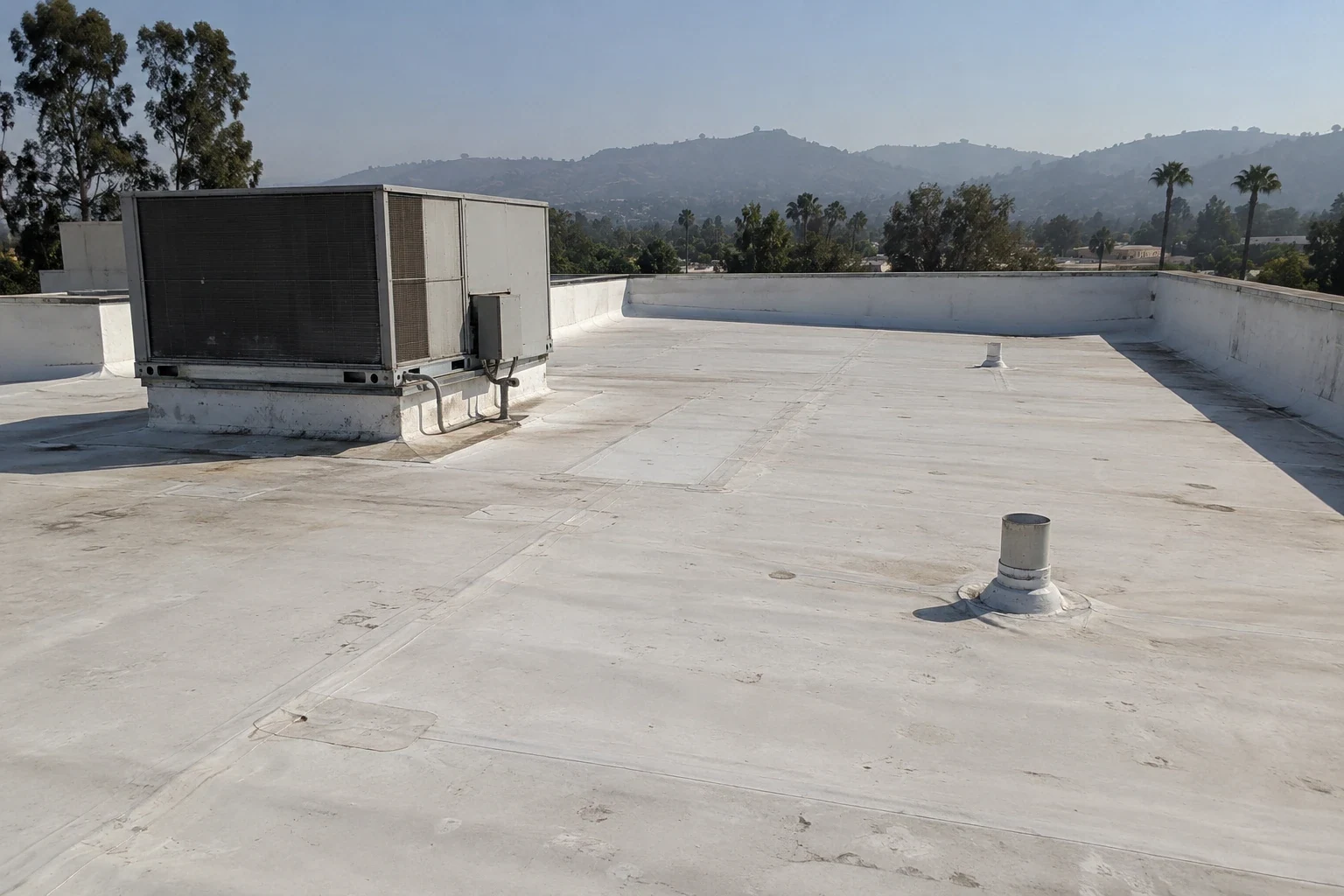
Built-up roofing, often called BUR or tar-and-gravel, is made from alternating layers of asphalt and reinforcing felt, usually topped with gravel or a reflective surface. It is still common on older Temecula warehouses, offices and retail buildings. Heat is a real concern here, and owners often ask about a reflective surface, but a built-up roof decision starts with the condition of the plies and what is under them. For a warehouse roof, the estimate needs to cover tear-off, insulation repairs and work around rooftop equipment, not just a price per square. Because a built-up roof has several plies, any repair has to show which layers are staying and how new material will bond to them. We inspect blisters, splits, bare spots and edge details before recommending a patch, a partial tear-off or a full replacement. Old drawings and repair records help, but what we find on the roof decides the plan. Heat alone does not tell us how many plies you need or whether the insulation is dry. Fix what is failing first, then weigh a surface upgrade.
Every built-up roof is a specific combination of felts, asphalt and surfacing, and the product system and project specs determine how it is installed. A proper commercial roof inspection before choosing BUR tells us what is up there now, where the problem areas are and whether the existing roof is worth keeping or should come off.
Ask for a written description of the roof that will be installed, not a vague promise of a certain number of plies. The manufacturer's system and the project requirements determine what goes on. If old repairs or surface coatings make it unclear whether new material will bond, that needs to be checked before materials are ordered. A good proposal explains the preparation and flashing work for the system being installed, and the inspection findings explain any insulation or deck repairs. A simple square-foot price for the field of the roof leaves out the details where most leaks start.
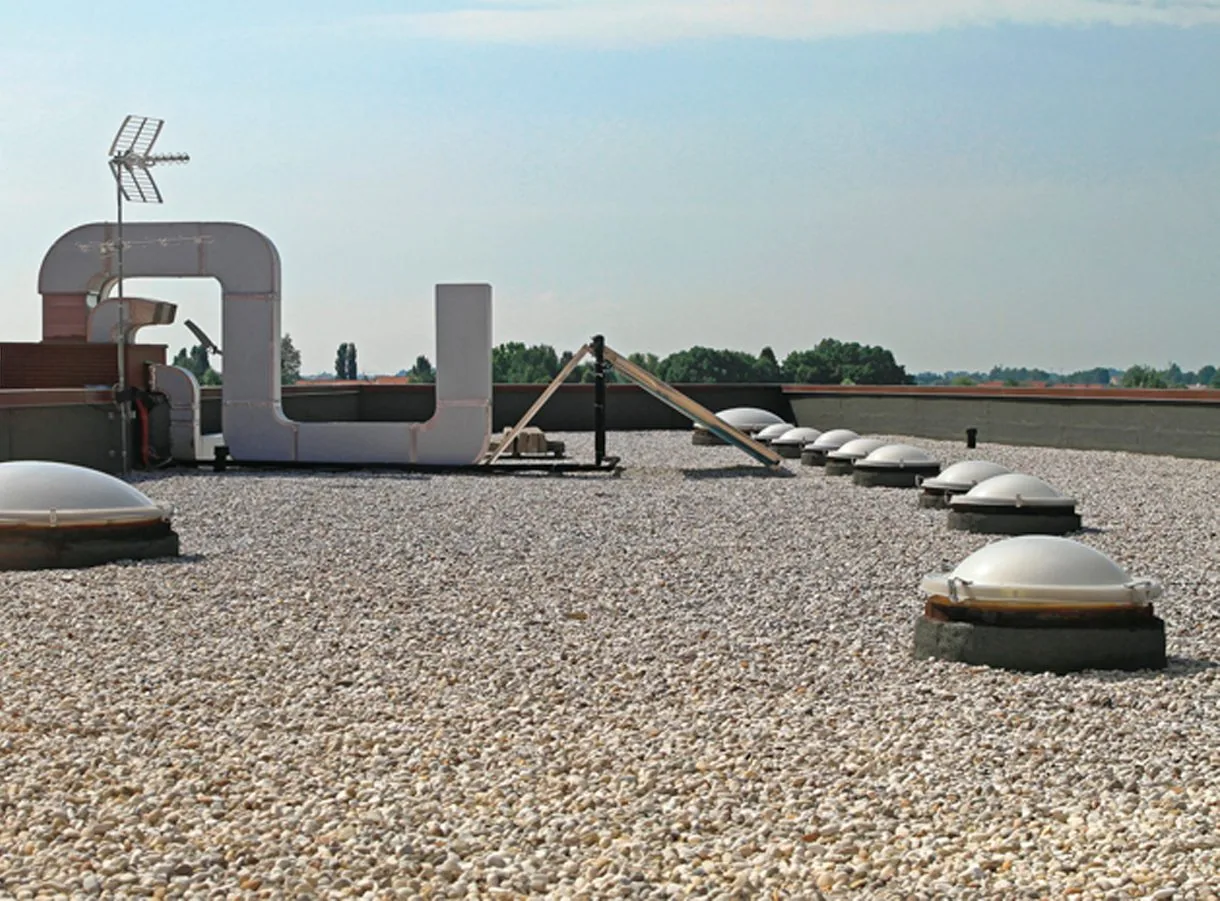
New plies need a sound, dry base. If the plan is to keep the existing insulation, we need to confirm its condition first, because a built-up roof can look solid on top while the board underneath is wet. Where repairs are needed, roof insulation and cover board replacement becomes part of the roofing scope, and the estimate shows which areas are being kept and which are being replaced.
If we tear off a section and find more damage than expected, we show you the area, measure the extra work and get your approval before continuing, and we keep the roof watertight at the end of each day. Two bids with the same roof area can include very different amounts of insulation work, so compare that line carefully. Adding more layers on top does not make wet insulation acceptable. The final scope should include all needed insulation replacement and flashing work, based on what we find rather than on the assumption that any roof can take another layer. Ply counts should match the actual construction, and if tear-off reveals a different roof than expected, we confirm the new plan before going further.
Most leaks on a built-up roof start at the edges and openings: walls, drains, curbs and pipe penetrations. Those details have to be built correctly along with the field plies. A modified bitumen roof is a common alternative, but it uses rolled sheets and has its own installation requirements. Two systems covering the same area will not have the same accessories or labor, so compare them on the same finished scope before deciding on price.
If a curb or wall flashing needs to be rebuilt, the estimate should include the blocking or framing behind it and note any equipment that another contractor has to move or disconnect first. The crew can finish the field of the roof, but they cannot complete a curb flashing while a unit is still sitting on it. Having the right material on site does not mean the insulation underneath has been fixed. Look for an estimate that describes each detail and what it will take to finish it, so you are comparing complete roofs and not just field prices.
Before work starts, we need to know the building's limits: when noise and odor are a problem, where deliveries can be staged and where materials can be hoisted. Built-up roofing uses hot asphalt in many cases, which makes scheduling around occupants important. We also identify which rooftop units need to be shut down or moved, and who is responsible for that. A TPO roof is the other option many owners consider; it has different attachment and seam work, but the same occupied-space and insulation issues apply to both.
Limited work windows can add setup, material handling and protection time, and that belongs in the price rather than being assumed away. You should know which details are waiting on another trade and how open areas will be protected while those questions are settled. Having the felts and asphalt on site does not solve the scheduling or equipment issues. The job goes smoothly when the deck is sound, the details are planned and the other trades are lined up, and that is the only fair way to compare a built-up roof with an alternative.
At a Rainbow building with a built-up roof, we check the gravel or surface coating, the condition of the plies and the flashings before recommending a repair. A building in Lake Elsinore gets its own inspection before we give it a price or a schedule. The same goes for buildings in Old Town Temecula: every scope is based on that roof's existing layers and what the inspection shows.
When the work is complete, you receive photos of any insulation replacement and the finished flashings, plus a record of the products used and the areas covered. You will know which old layers were kept, which areas were replaced and any equipment or other-trade work still outstanding. If a warranty is offered, review its requirements for your specific roof system. That record gives future maintenance crews a clear starting point when a new problem shows up, and it keeps the question of a reflective surface separate from the repairs that actually kept the roof dry.
It should describe the felts, asphalt and surfacing being installed, the preparation of the existing roof, any insulation repairs and the flashing details at walls, drains and curbs. A general price per square without those details leaves too much open.
No. If the insulation underneath is wet or damaged, new plies on top will not fix it. We confirm the condition of the insulation first, replace what is damaged, and get your approval if we find more than expected once the roof is opened.
Compare them with the same insulation repairs and the same wall, drain and curb details included, then look at the differences in materials and installation. Both have to be scheduled around equipment shutdowns, so make sure each bid accounts.
Keep the product information, a map of what was replaced and what was kept, and photos of the insulation and flashing work. List any outstanding items for other trades. That makes later inspections and repairs much easier to compare against the original work.
Send us what you know about the existing roof and any equipment or access issues. We will inspect it and give you a built-up roofing option with insulation, flashing and preparation included, along with an alternative system where it makes sense.
Request a Roof Assessment