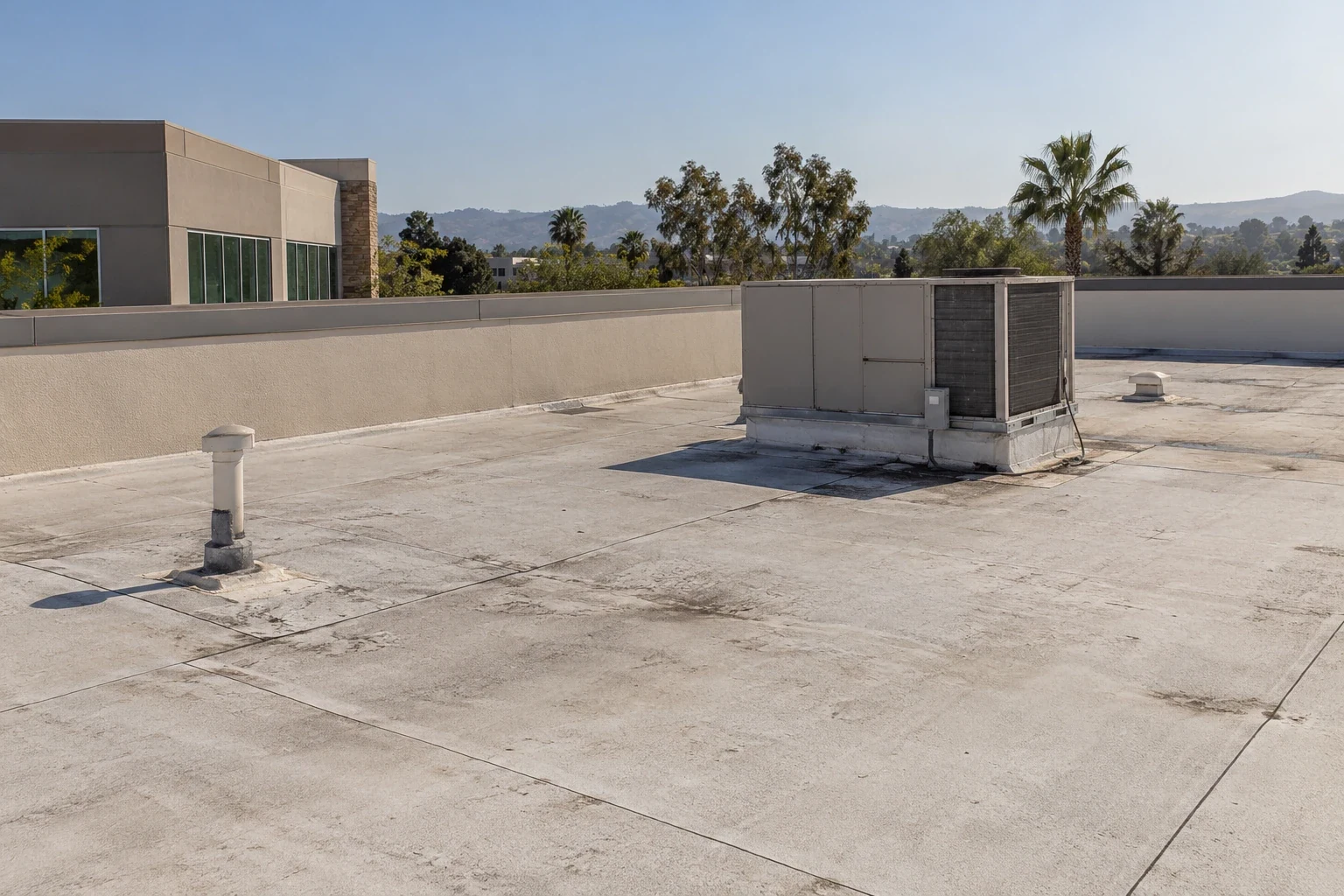
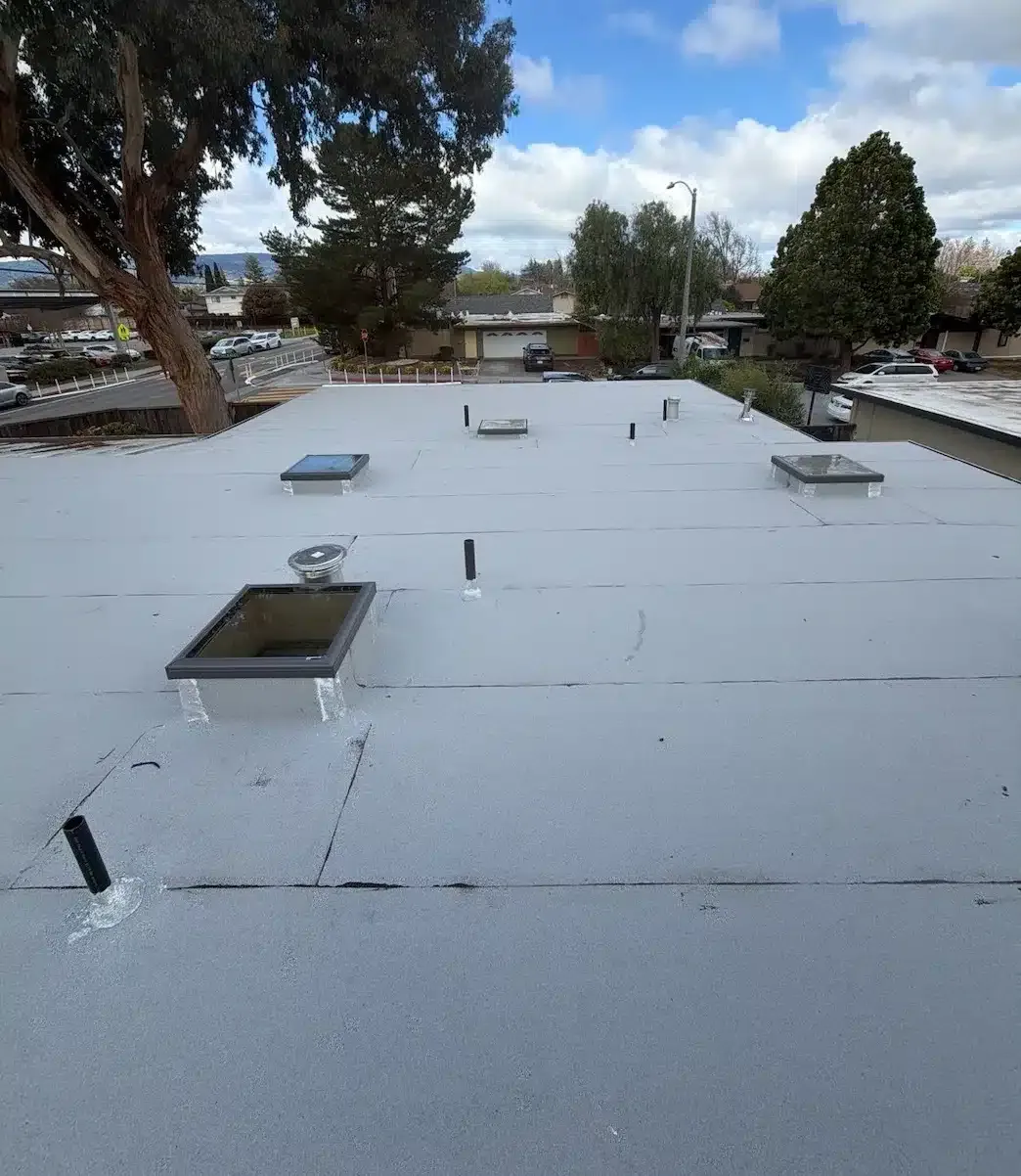
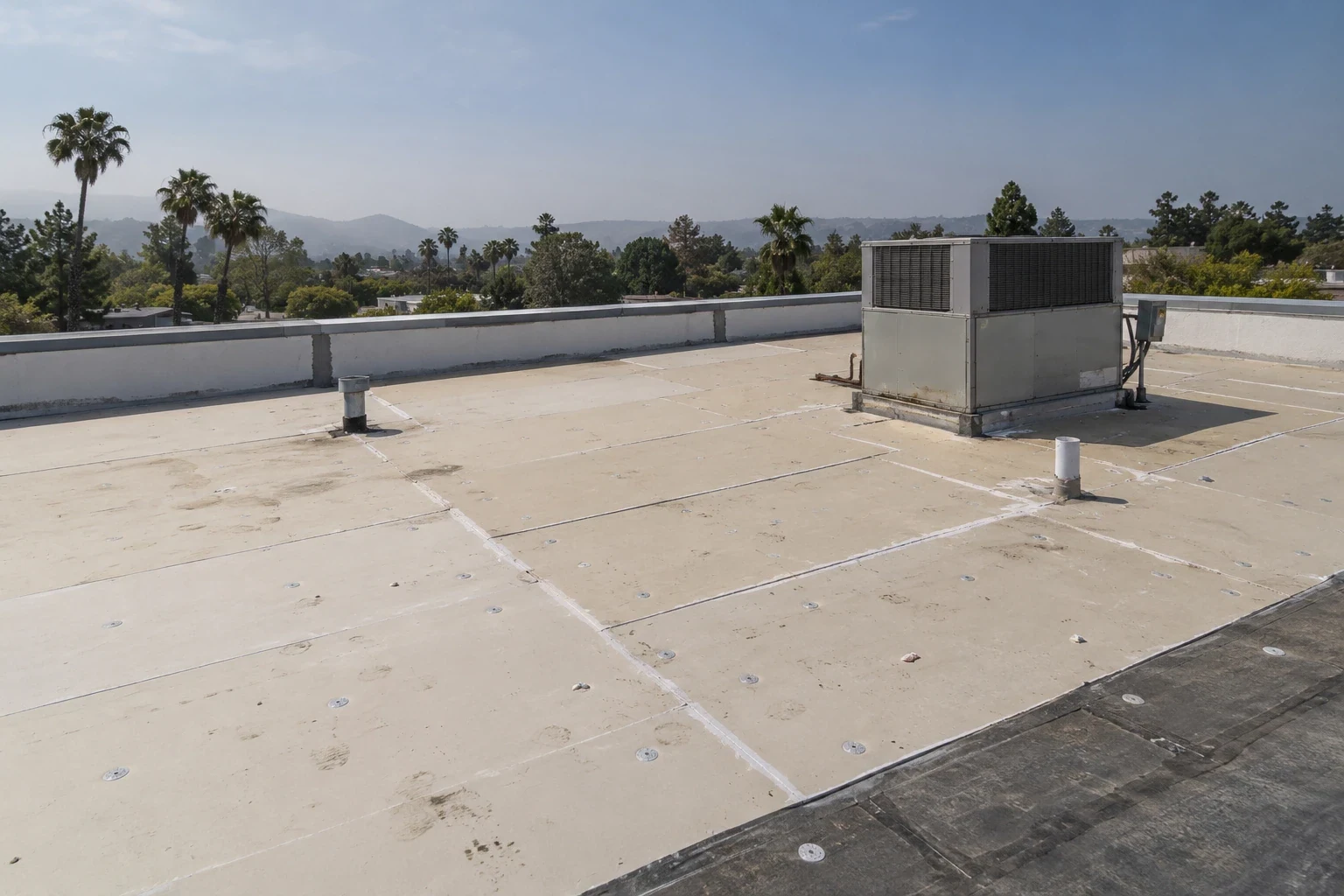
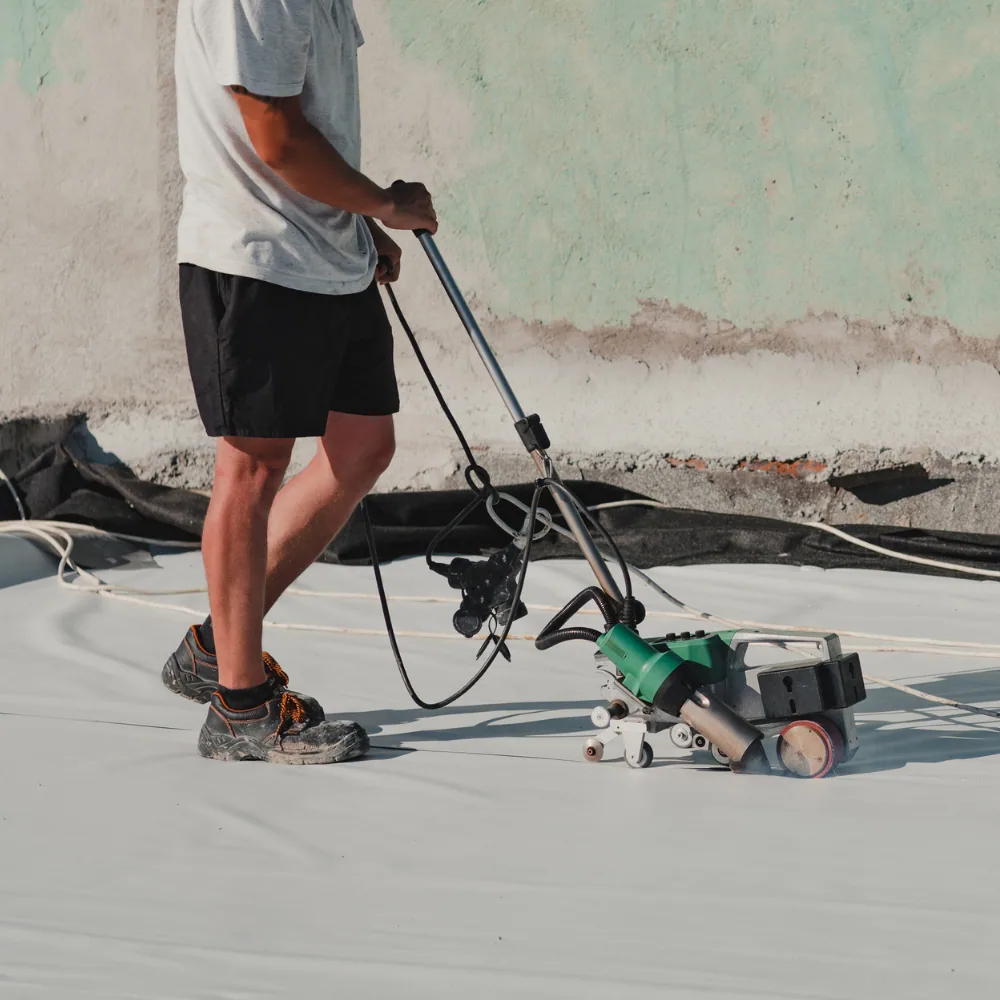
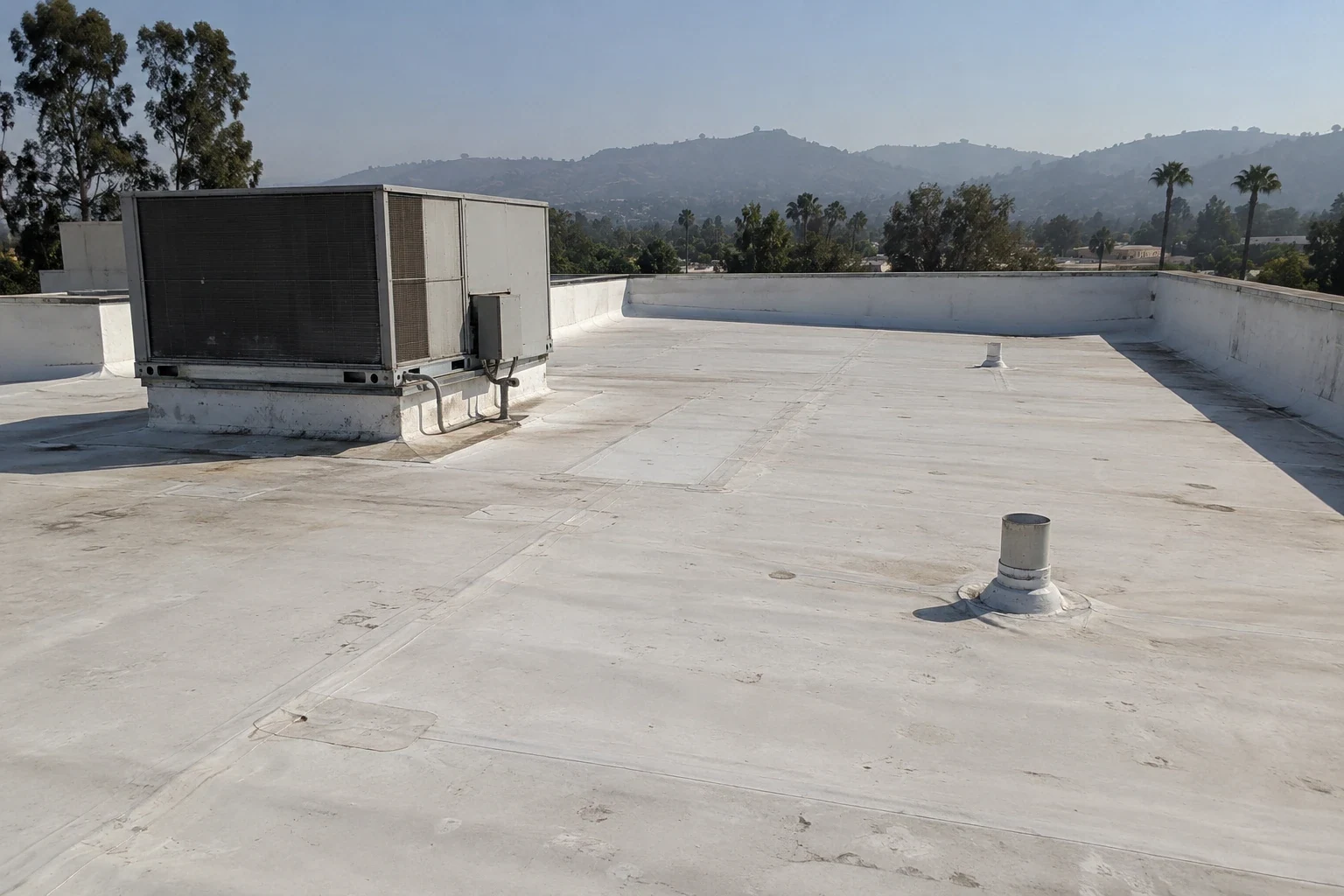
KEE (ketone ethylene ester) membranes are a premium heat-welded single-ply roof, valued for chemical resistance and long-term flexibility. For a Temecula medical office, a KEE proposal should start with the specific membrane being offered and the roof it will go over. We look at the product, its accessories, the insulation and the flashing details together, and we plan around rooftop equipment and patient areas below. A medical office roof needs that whole picture; the membrane name alone does not tell you whether the layers underneath are sound.
For a building along Temecula Parkway or in Uptown Jefferson, we confirm the roof records and access rules with the property manager before any material is ordered. The manufacturer's documentation and the project requirements decide the final roof system. Temecula's summer heat is a reasonable reason to want a reflective membrane, but it does not prove a product is right for your roof or promise a specific energy saving. The order of work is simple: fix the insulation and the details first, then choose the surface.
Not every membrane marketed as KEE has the same makeup or accessories. IB ChemGuard, for example, is a PVC-based membrane that uses KEE, and other products are built differently. The membrane proposed for your roof should be named specifically, with its accessories. A commercial roof inspection before choosing KEE tells us what the existing roof is made of and whether there are questions about the insulation or deck that need answering first.
Ask for the specific membrane, accessories and installation method alongside the full roof scope. One product's data sheet does not make every KEE-labeled sheet interchangeable, and it does not mean every detail on your roof can be built the same way. A good proposal tells you exactly what will be installed, what has to be repaired underneath and which flashings depend on the chosen accessories. A product category should never cover up uncertainty about what is actually going on the roof, and it should not be sold as a guarantee of performance across the whole building.
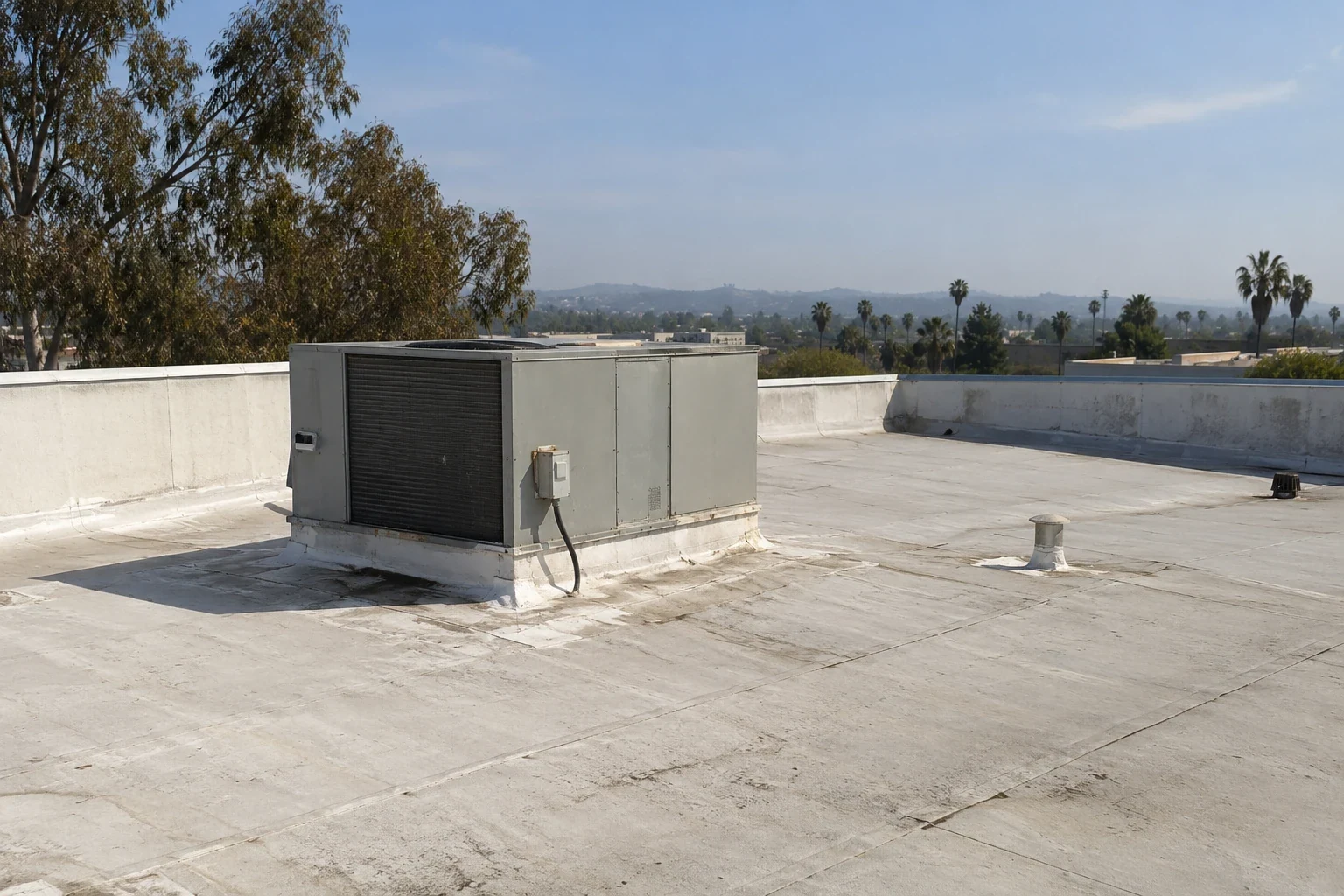
A KEE membrane is only as good as what is under it. The roof can look fine on top while the insulation is wet or poorly attached, and those problems have to be found and fixed before the new membrane goes down. Where repairs are needed, roof insulation and cover board replacement is part of the KEE scope, and the estimate shows which areas stay and which get replaced.
If tear-off reveals more damage, we show you the location and the added quantity, get your approval, and keep the roof sealed at the end of each day. A cheaper membrane bid should not skip that insulation work or assume unchecked areas are fine just because a new layer is going on top. Compare options with the same insulation repairs and the same finished details. Choosing the membrane and checking the insulation are two separate questions, and a good product does not answer the second one. We also keep the installation details with the product documentation, including how seams, edges and penetrations were completed, because future repairs depend on knowing exactly what was installed.
New KEE membrane and its flashings have to bond to whatever they meet: existing patches, coatings, old curb flashings and equipment supports. Each of those has to be identified before welding or adhering is planned. A PVC roof is the closest alternative, and it needs its own compatibility check rather than assuming accessories will work because the roofs look alike.
The proposal should tie each wall, drain and curb repair to the finished roof, with sound insulation and the manufacturer's requirements spelled out together. One good weld does not prove the insulation underneath is dry, and a compatible membrane cannot be finished at a curb while a unit is still sitting there. Laying these details out before comparing prices helps you see which costs change with the membrane and which repairs are needed either way.
To compare roof options fairly, each one has to cover the same area and the same details, including insulation repairs, preparation and scheduling. A TPO roof is a lower-cost alternative to KEE with different attachment and seam methods, and its accessories are not interchangeable. The same roof area does not mean the same labor, and neither system is automatically approved for your building.
Tear-off, material deliveries and equipment shutdowns belong in both bids, especially if work windows are limited and crews have to set up more than once. Material on the roof does not free up a blocked curb or settle the project approval, so the job is only ready when the insulation, accessories and other trades are all lined up. Heat is still a fair consideration in choosing a membrane, but it is separate from the insulation and flashing decisions. A price difference only means something when both bids include the full job.
Look at a KEE membrane as part of a complete roof system, not a product swap. The scope should cover preparation of the existing roof, how the membrane is attached, seam and edge details, penetrations, drains and tie-ins to any roof that is staying. Ask which existing layers have been confirmed sound and which are still unknown until the roof is opened, because that can change the scope. Keep the product documentation with the chosen system; the membrane name does not prove the drains, supports or edges are ready.
For each KEE project in Temecula, we confirm the roof area and the on-site contact before any inspection or work in occupied space. Projects in Old Town Temecula follow the same process, with the scope based on that building's existing roof and our findings there.
When the job is done, you get photos of the insulation repairs and the finished roof details, with the actual products used listed rather than just "KEE." You will see which layers stayed, what was replaced and any detail still waiting on another trade. If a warranty is offered, check its installation and alteration requirements against your roof before relying on it. That record makes future inspections and repairs much easier, and it keeps project approvals, insulation findings and completed details clear when you plan your next roof budget.
It should name the specific membrane, its accessories and the installation method, along with the full roof scope: insulation repairs, flashing at walls, drains and curbs, and how existing conditions will be handled. The KEE label alone does not tell you whether the product suits your roof.
No. Some KEE products are PVC-based, such as IB ChemGuard, but formulations vary between manufacturers. The membrane proposed for your roof should be reviewed on its own, along with its accessories and installation requirements.
We use moisture scans and core samples to find wet or damaged insulation and replace only what fails. Areas we cannot confirm stay flagged, and if we find more once the roof is open, we show you and get approval before doing the extra work.
Make sure both options include the same insulation repairs and finished details, then compare the differences in preparation, attachment and accessories. Both should account for equipment shutdowns and scheduling so the price difference reflects the whole job.
Send us your roof records and anything that affects access or operations. We will inspect the roof and explain a KEE option with insulation, flashing and preparation included, along with an alternative membrane for comparison.
Request a Roof Assessment