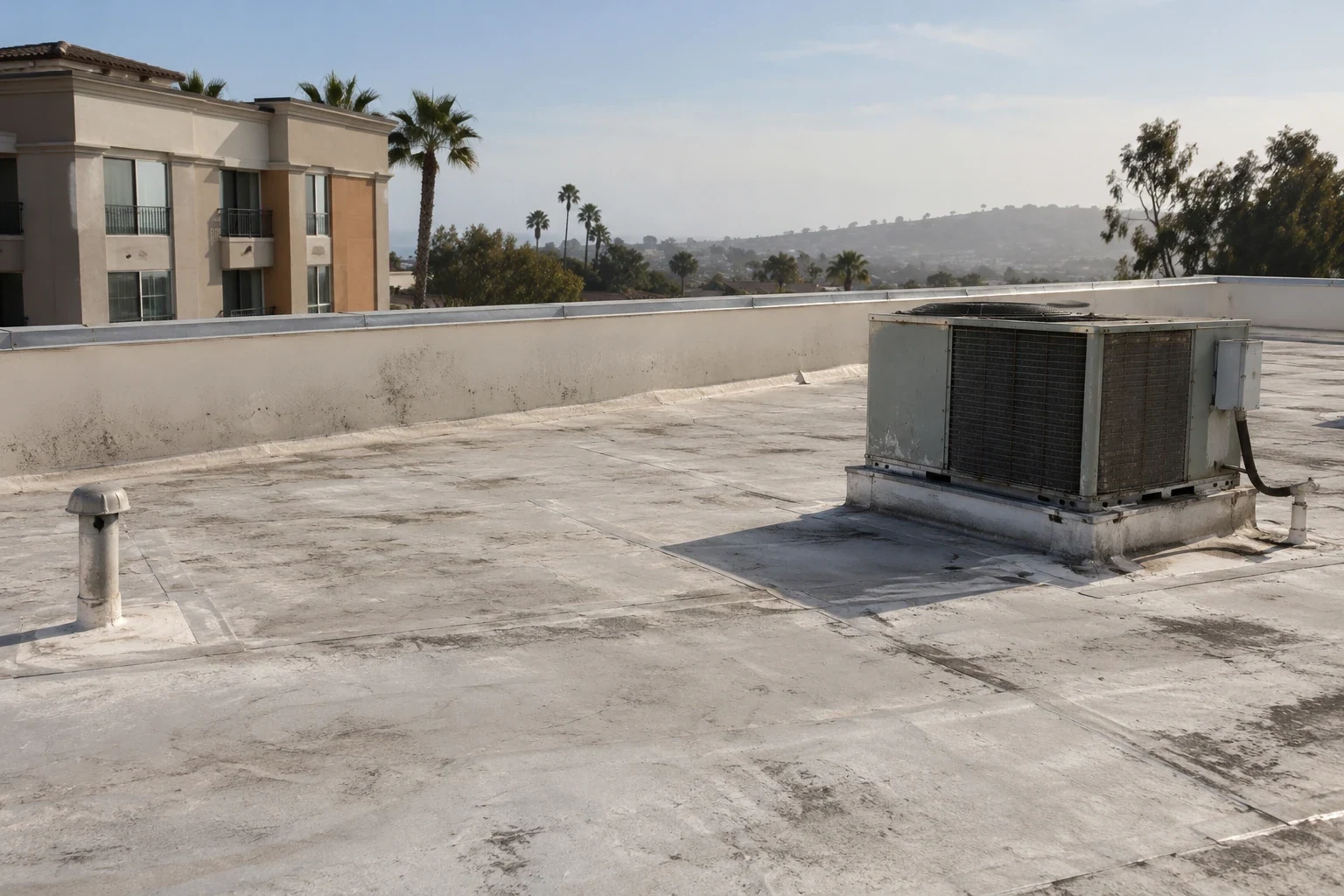
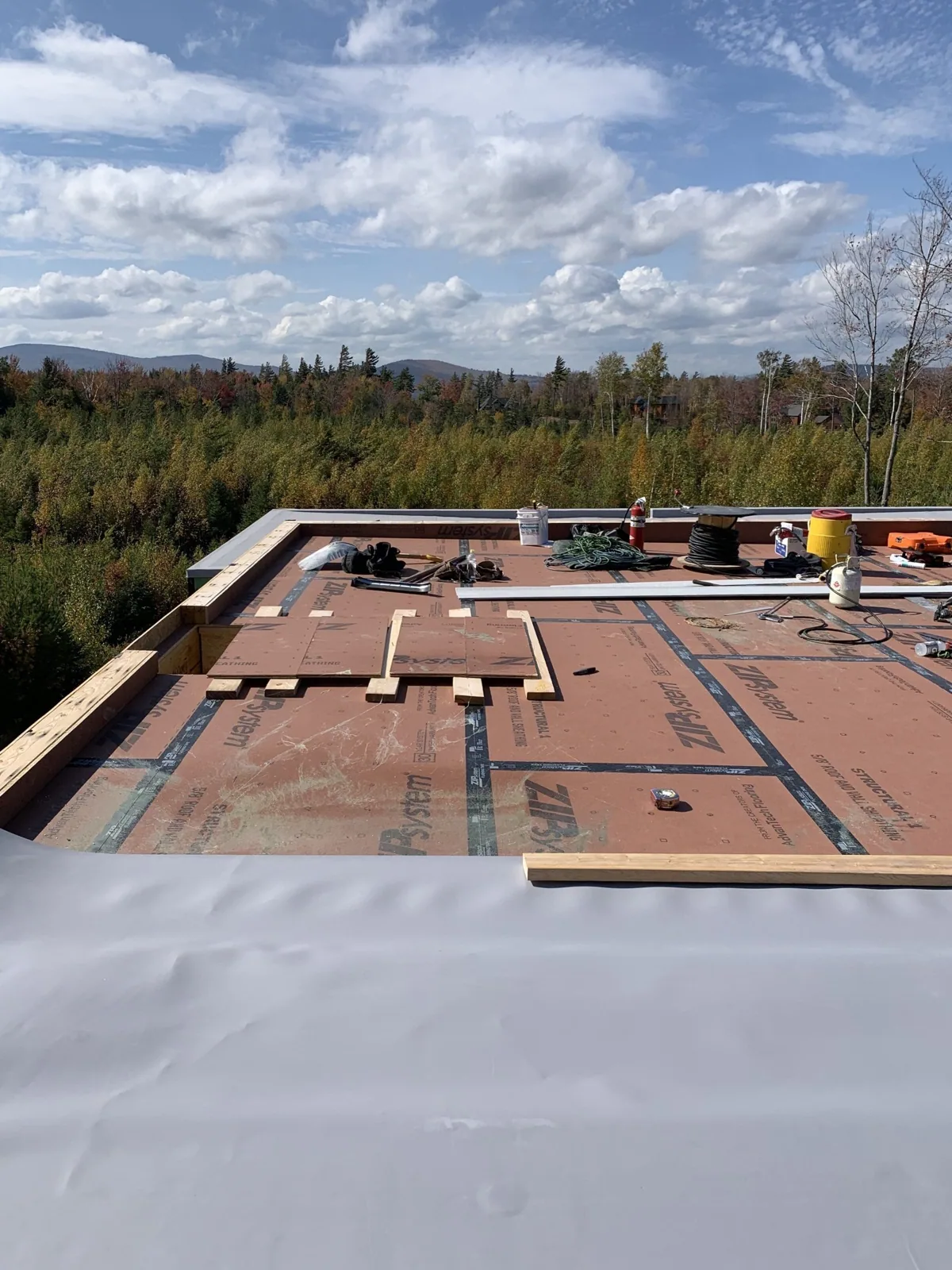
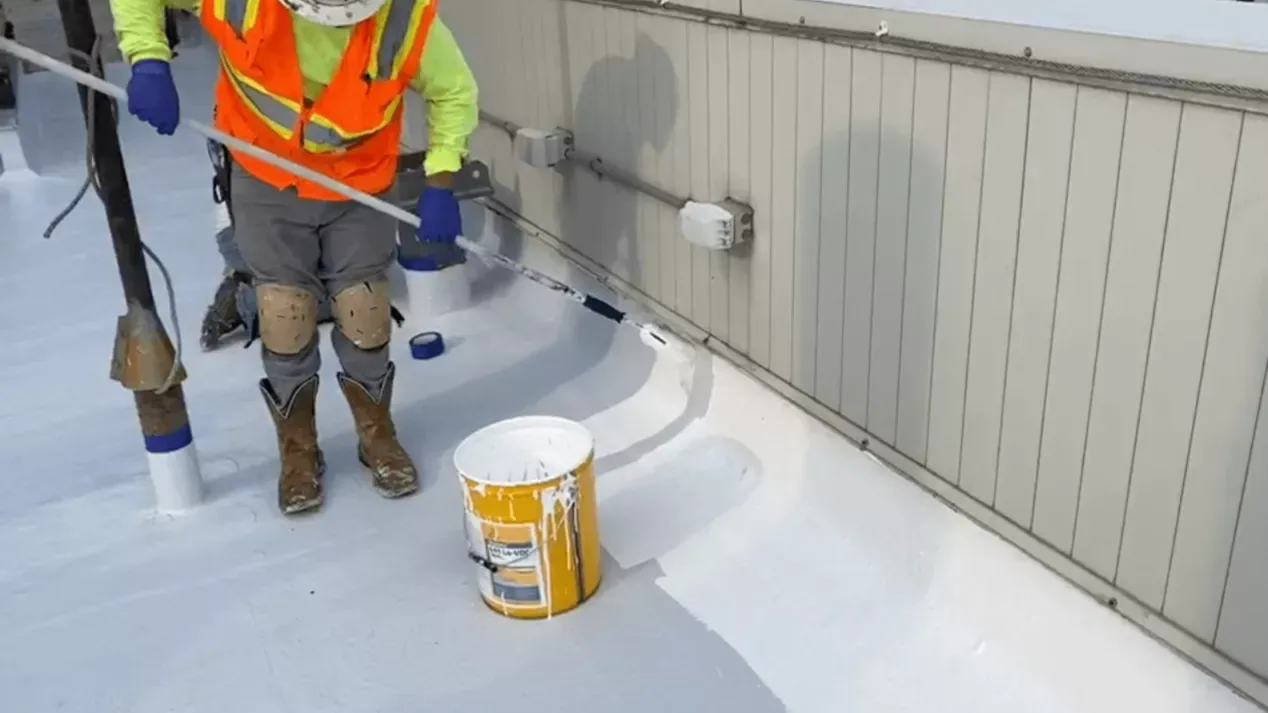
Temecula summers get hot enough that the city lists extreme heat as one of its emergency hazards, and that is often what gets a building owner thinking about a new roof. Holcim Elevate makes EPDM, TPO and PVC membranes, and any of the three can be a good fit for a commercial roof here. The membrane is only the top layer, though. What decides whether the job goes well is the deck, the insulation and the flashing details underneath and around it. On a hotel roof, for example, we look at rooftop equipment, guest areas below and access rules before we recommend a product, so the estimate does not quietly leave out the wet insulation or the rusted curb that has to be fixed first. A building off Murrieta Hot Springs Road and one along Winchester Road can have completely different roofs, so each one gets its own inspection and its own material list. Heat is a reason to consider a reflective membrane, but it tells us nothing about whether the insulation is dry or the edges are sound. We check those first, then pick the product.
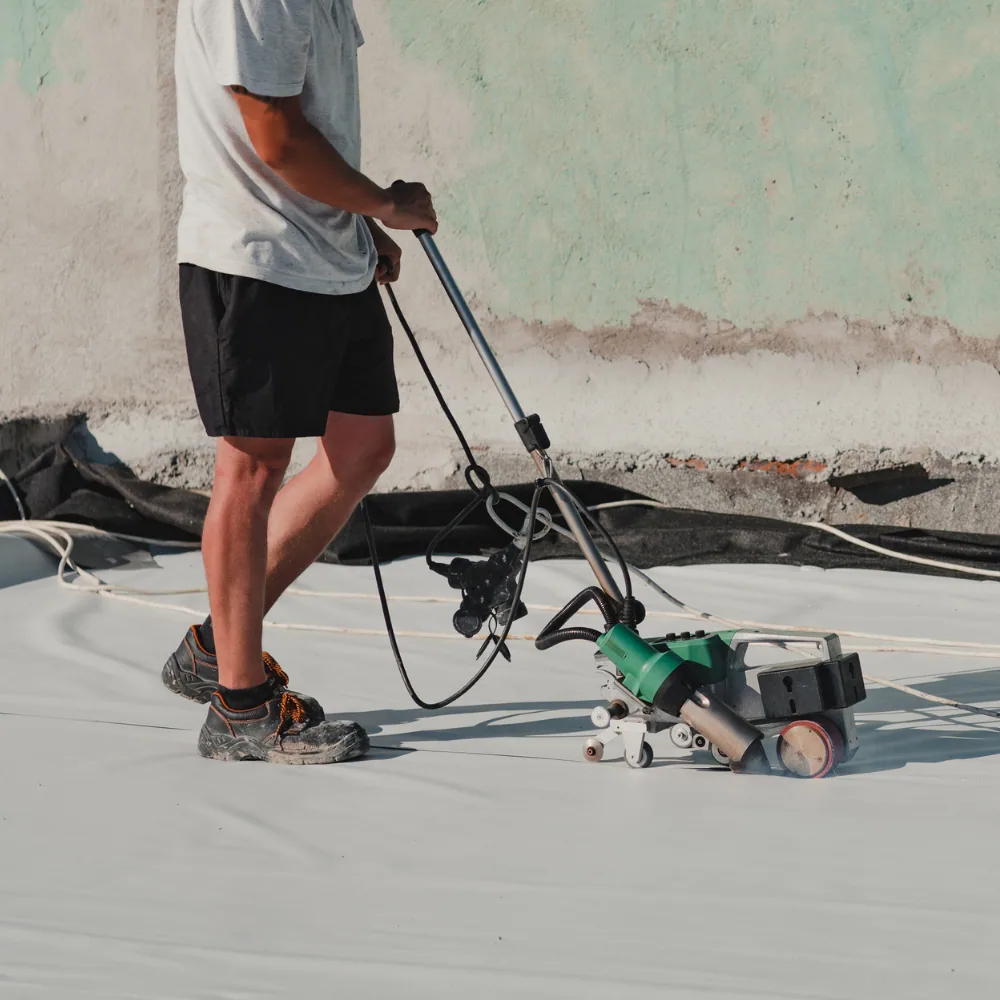
Holcim Elevate sells three commercial membrane families: EPDM, TPO and PVC. Each one has its own seaming method, its own flashing accessories and its own installation rules, and those rules come from the specific product, not the family name. A PVC roof is heat-welded at the seams; EPDM is typically taped or adhered. That changes labor, detailing and how the roof handles rooftop grease or chemicals.
Before we price a membrane, we write down exactly which products we plan to use, which accessories go with them, and what existing materials the new roof will tie into: parapet walls, curbs, drains and edge metal. Two membranes can look alike from the ground and still need different prep and different flashing parts. Switching from one family to another can change the installation work, but it does not change what is under the roof. A soft deck or wet insulation stays a problem no matter which membrane goes on top. Our recommendation spells out how the membrane will be attached and how it will be sealed at every edge and penetration, so you are comparing real roofs, not brochure categories.
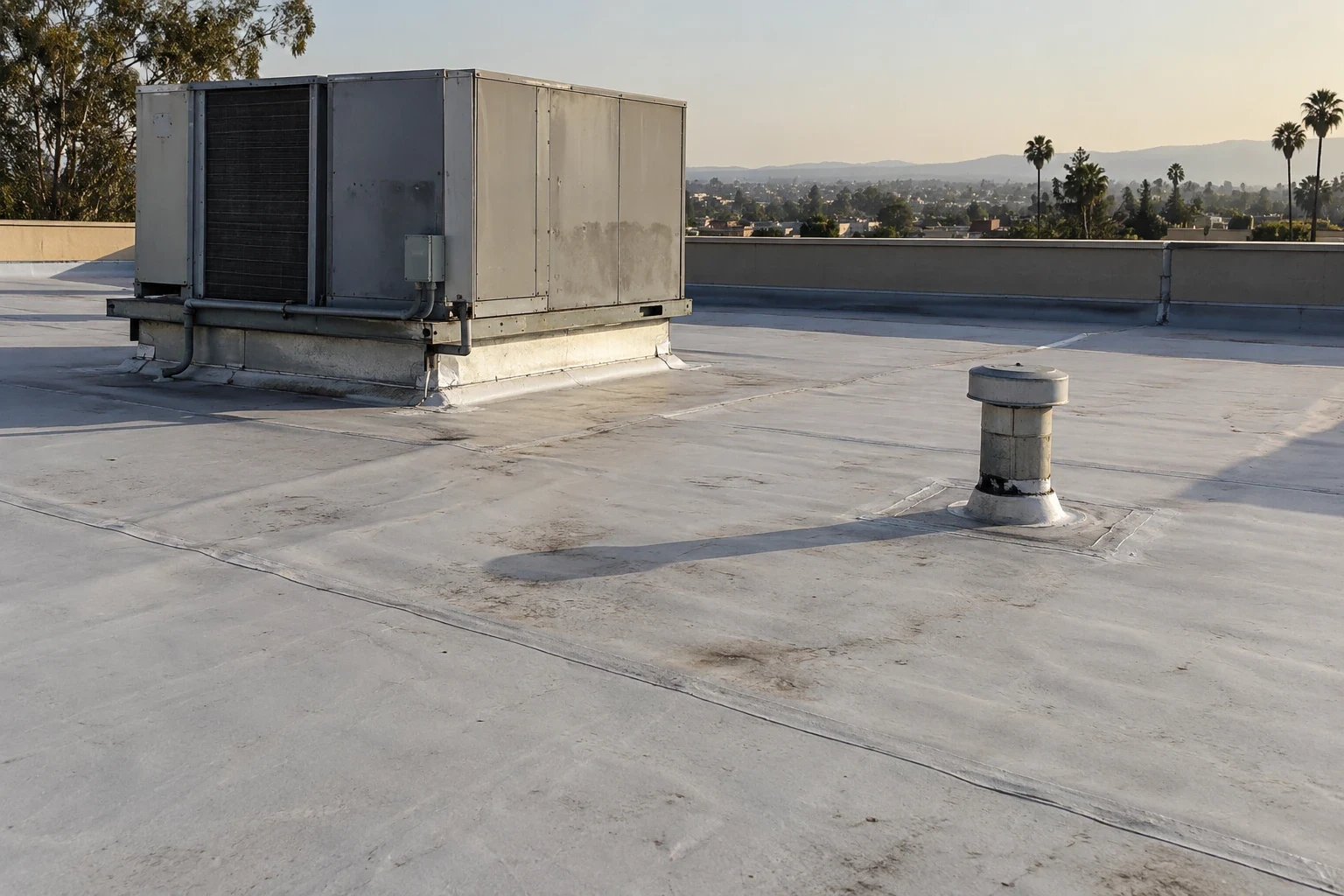
Most of the cost on a roof replacement is decided by what is under the membrane. Looking at the surface will not tell you whether the insulation is wet or the fasteners are holding. We take cores and, when it makes sense, run a moisture survey to find out. We mark which areas we actually checked and which ones we could not reach, so you know where the estimate is based on evidence and where it is based on an assumption.
If we find wet or crushed insulation, we measure it and put its removal and replacement into the price alongside the new membrane. If tear-off uncovers more damage than expected, such as rotted decking or a hidden leak path, we stop, show you, get your approval for the added work and keep the roof watertight in the meantime. We do not assume an area is fine just because a premium membrane is going on top of it, and we do not leave it out to hit a lower number. The goal is a price for a roof that can actually be finished, not a membrane price with the repair work left for later.
If you are also looking at a Carlisle roof, that bid should be built on the same inspection and the same repair scope as the Holcim Elevate bid. Brands that sell similar membranes still use different accessories and installation steps, and their parts usually are not interchangeable. A fair comparison shows you what changes because of the product and what stays the same no matter which brand you pick, such as replacing wet insulation or rebuilding a damaged curb.
Pay close attention to drains, walls and rooftop equipment. One bid might include re-flashing every curb and raising a low wall flashing, while another assumes the HVAC contractor or someone else will handle it. The field square footage can match exactly and the bids can still describe very different amounts of work. We line those details up before you look at price. When every bid carries the same drains, walls and equipment details through to a finished, sealed roof, the lower number really is the lower number, and you are not discovering missing work halfway through the job.
Before we lock in a Holcim Elevate system, we compare the specified membrane with the existing deck, the attachment method and the details at curbs and walls. Any deck repair and any manufacturer installation requirements that affect the work go in writing. A roof in the Ynez Road commercial corridor gets its own review; we do not copy a spec from a nearby building. If you are weighing a Sika Sarnafil system instead, the same building rules apply, such as equipment shutdowns, quiet hours or areas that cannot be opened, while the product details get checked separately.
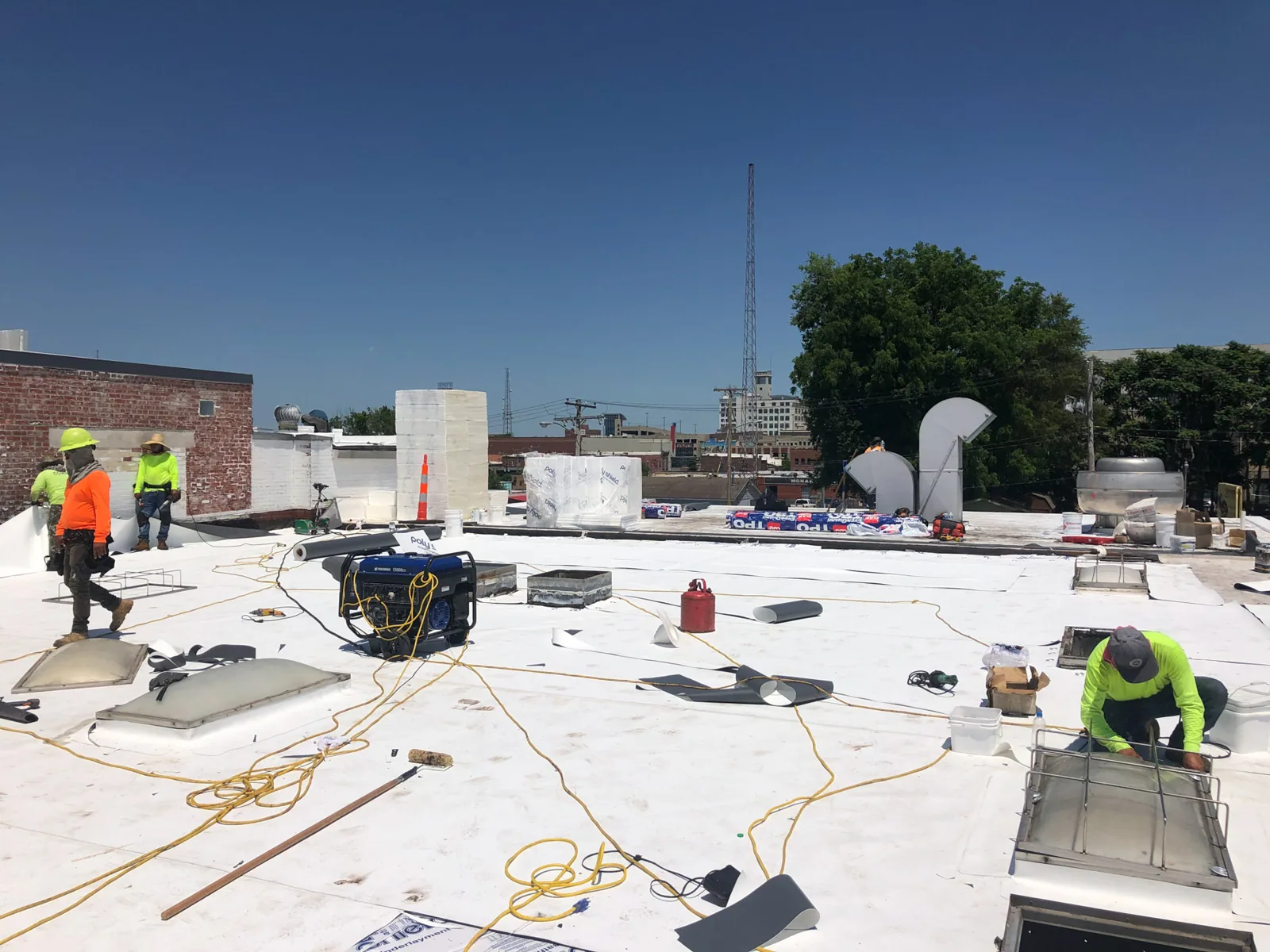
Some flashing can only be finished when a rooftop unit is shut down or lifted, which usually means your mechanical contractor has to be on site. If parts of the roof can only be worked on at different times, that adds setup days, temporary tie-ins and extra protection, and those costs belong in the bid from the start. We tell you which details are waiting on someone else and who that is. That way the schedule follows the work that has to happen, instead of assuming that delivering the membrane means every curb and unit is ready.
On a building in Old Town Temecula or anywhere else, we keep a record of the products installed and where we replaced insulation or decking. Photos show finished flashing at curbs, walls and drains, along with any old material we left in place and any equipment work that still needs another trade. When you plan maintenance or a rooftop change later, you can see what is actually on the roof instead of assuming every section got the same treatment.
If a manufacturer warranty is offered, read its eligibility, installation and alteration terms against the system that was actually installed before you count on it. If an accessory or detail does not match the warranty requirements, ask the manufacturer or the issuing contractor to sort it out and keep their answer with your roof records. The point of the record is simple: what was installed, what was left alone, and what still needs attention from someone else. That makes future repair or equipment decisions easier and keeps your Holcim Elevate roof tied to the real work done on it.
It should name the exact membrane and accessories, how the roof will be attached, what deck or insulation repair is included, and how each curb, wall and drain will be flashed. If those items are missing, you are looking at a material price, not a roof price.
No. Only cores or a moisture survey can tell you that. We note what we tested and what we could not reach, price the wet areas we find, and get your approval before adding work uncovered during tear-off.
Have both bids priced on the same inspection and the same repair scope, then look at what actually differs: attachment, seaming and accessories. Make sure both include the same drain, wall and equipment flashing so one bid is not cheaper because it leaves work out.
Find out which products are installed where and which flashing details the new work will disturb. Read the warranty's alteration terms and contact the issuer before another trade cuts into the roof, and keep their approval with your roof records.
Send us any roof drawings or past repair records and tell us about rooftop equipment or access limits. We will inspect the roof, recommend the right Holcim Elevate membrane and show the repair work that needs to be done with it.
Request a Roof Assessment