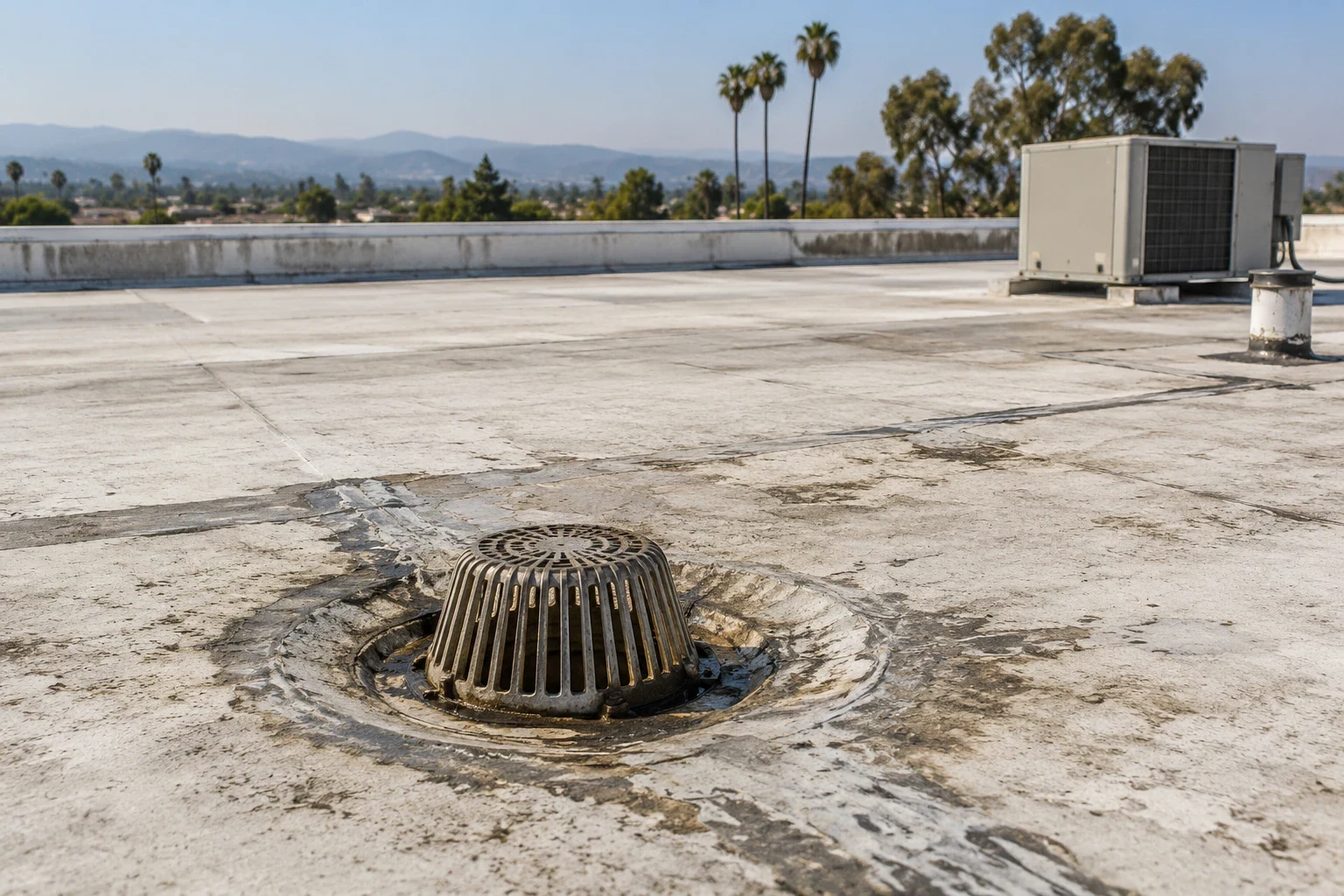
Drainage on a French Valley commercial roof should be resolved before solar heat becomes the reason for a new finish. We inspect outlet elevation, the path to each drain and the condition of retained material before comparing localized correction, recover or replacement. Standing water beside an outlet calls for examination of its connection and surrounding assembly; the visible pool alone cannot show whether backing is wet or outlet geometry is insufficient. The proposal identifies what needs correction, which investigation remains open and how water will be controlled while the roof is exposed.
French Valley is part of the broader local service area between Temecula, Murrieta and Winchester, but each roof has its own drainage routes and operating conditions. We confirm the worksite, operator and material access before scheduling. A reflective treatment can reduce absorbed sunlight on a suitable roof, but it cannot correct an outlet or make unsound retained layers suitable. The spending sequence should put drainage and supporting conditions first, with finish selection considered after the assembly can receive it.
A clean drain bowl may sit above the surrounding roof surface, leaving water behind even after debris is removed. We inspect the bowl, nearby levels and the path leading into it, then distinguish an obstruction from a geometry problem. The connection between the roof membrane and outlet also matters, because a flowing drain can still leak through a poorly formed transition. These observations establish whether cleaning, a detail repair or a change to the surrounding assembly deserves a price.
With drain and scupper corrections, the work boundary should match the reason water remains. Changes to elevations or the drainage arrangement need suitable design review where required, especially when they affect outlets or supporting construction. We make those dependencies visible before pricing a surface repair. An owner then compares an actual drainage correction with a maintenance task instead of treating both as equivalent ways to resolve the same pool.
A damp underside or softened roof area near standing water can change the economics of a retained-assembly option. We assess the surface and relevant underlying material, using appropriate testing and selected openings where needed to distinguish sound layers from confirmed moisture. The visible pool does not provide a complete removal quantity. That quantity should follow inspection evidence, because underestimating the affected area can shift cost into an allowance during construction.
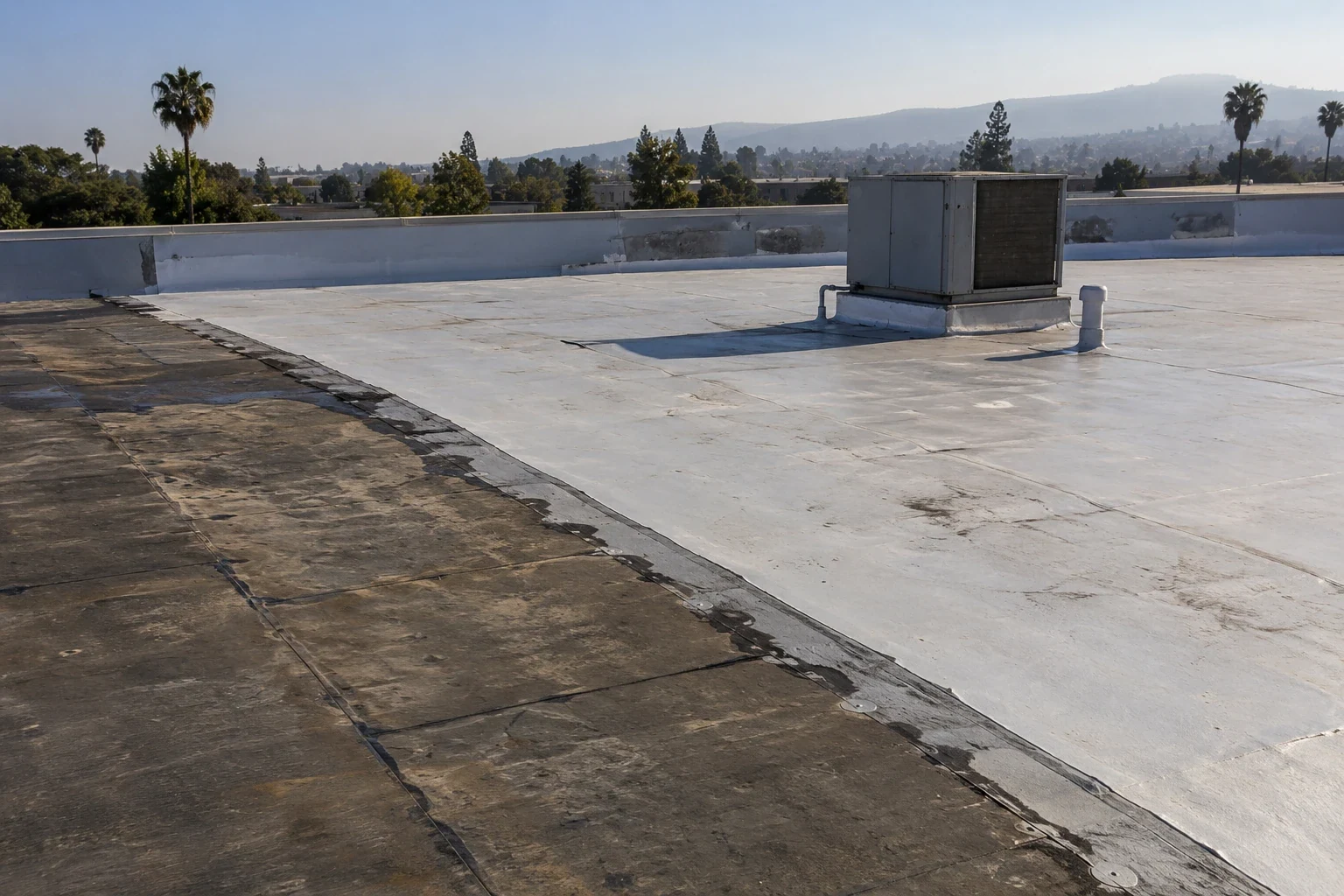
We compare a roof recover option with removal using the retained material, loading, attachment and drainage requirements for the actual assembly. Recovery is not a general permission to cover defects. The work may need localized removal or a different option entirely where the supporting material is unsuitable. We explain those conditions before an owner relies on a lower initial price, including the effect of future work that might disturb a newly installed layer.
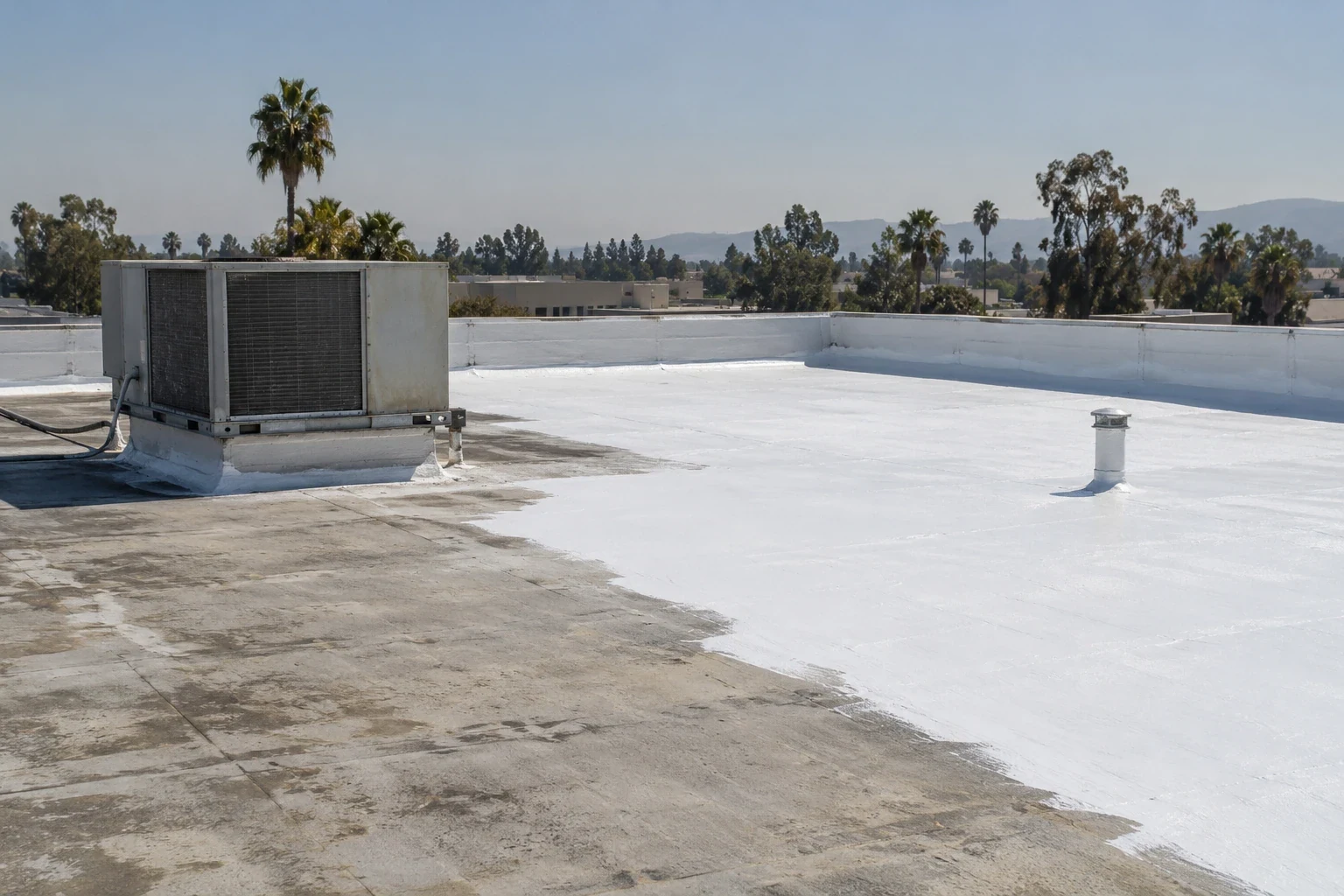
A weathered surface may need cleaning, adhesion testing and detail repair before it can accept a coating. Those tasks contribute to the treatment cost and determine whether a reflective finish is a practical alternative to replacement. We examine the existing materials rather than assuming one preparation method suits every roof. Ponding areas and failed outlet details remain separate items in the scope, with any proposed product’s requirements considered for the actual condition.
A suitable silicone coating system can be part of that comparison, but material choice alone does not answer substrate or drainage questions. Reduced solar absorption may help limit the heat transmitted through the roof, with the building’s insulation and cooling operation affecting the outcome. We keep the energy argument proportional to those conditions. Spending on a new surface makes more sense after the supporting assembly and water path have a defined correction.
A roof opening above a public-service room requires attention to the room below, the debris route and the daily closure plan. For a French Valley building, establish the affected room and permitted material route with the responsible representative before determining how much work can proceed at once. We connect the proposed opening with the room restrictions and permitted material route. Material deliveries and temporary storage need their own approved route.
Our public-building roofing work connects those constraints with the construction phase. A smaller removal area can reduce interference while adding repeated setup and protection effort. We describe the difference in the proposal so it can be weighed against a larger phase. Drainage improvements also need to remain effective during the work; temporary protection should not divert water into an adjacent occupied area or leave a partly completed outlet vulnerable to rain.
A comparison with an assigned roof in the Rancho California Road Corridor area should begin with each roof’s drainage and retained-material findings. A shared procurement date can be useful, but it should not convert different defects into a single treatment. One roof may need an outlet correction while another needs removal of wet layers. We identify those differences before combining their construction schedules or describing a common surface specification.
A building in Winchester can be included in the same investment discussion with its own evidence and work boundaries. We establish immediate water control, the permanent drainage action and the condition of material proposed to remain. The finish follows those decisions. This order lets an owner commit funds to work that changes the physical cause, then compare restoration and replacement without carrying the same unresolved drainage expense into the next project.
French Valley's position between several growing communities means commercial owners may coordinate work across municipal and school-district boundaries. Confirm which owner or property manager can authorize access and whether the building operates on a separate campus schedule. At roof level, map the drain network and equipment curbs by section; growth nearby does not establish how a particular roof was built. A useful repair plan describes the observed water path and the steps needed to protect the occupied area below, with any concealed-layer investigation priced only after approval.
Cleaning is appropriate when debris is the obstruction, but a high outlet or unsuitable surrounding levels needs a different correction. We inspect the water path and membrane connection before recommending the work. The proposal then distinguishes a maintenance task from a geometry change, including any design review needed for the latter.
The proposed assembly must have a suitable drainage arrangement and material fit to retain. We recommend establishing the pool’s cause and confirming the affected layers before comparing recovery with removal. Covering a wet or weak area without addressing it can carry an unresolved problem into the new system and complicate later work.
Preparation and necessary repairs deserve attention before the price of the finish alone. We identify cleaning, adhesion checks, outlet work and any material that cannot remain. A coating comparison becomes useful once those requirements are included, because a small application price can omit the work that makes the treatment suitable.
Its protection requirement defines the practical daily opening. We establish debris control, temporary closure and the material route with the responsible representative, then compare phase sizes. A restricted phase may add setup cost while keeping interference manageable, and we show that trade-off before the owner selects the construction schedule.
Matching physical causes can support a common detail, but nearby addresses do not establish matching conditions. We inspect outlet elevations, connections and retained material separately. Our recommendation can coordinate purchasing while keeping each roof’s repair boundaries clear, so the shared plan does not conceal differences that will change construction cost.
Provide the French Valley address and describe where water remains after rain. We can assess the outlet, surrounding layers and surface options, then explain the spending order for the required correction.
Request a Roof Assessment