Blisters on a sun-baked Vista roof can make a coating a poor investment, even if a lighter, cooler roof is the goal. Working out of Temecula, CA, we inspect, repair, restore and replace commercial roofs, and we look at both the blister and what is underneath it before writing a scope. On a Vista building, that means understanding the roof layers, how much might need to come off and what interior space needs protecting before anyone cuts into a bubble. The size of the blister on the surface does not tell you how much roof needs fixing.
A blister usually means layers in the roof have separated, but the bubble alone does not tell you why or what to do about it. We check the roof around it and decide whether a test cut is worth making before we cut or cover anything. The estimate keeps three options separate: a defined repair, prep for a coating, and a larger tear-off. Any energy savings from a reflective coating stay a side question until the roof underneath and its flashings and drains can actually hold up a permanent fix.
A blister has to be read in the context of the roof system it sits on. We measure how far it runs, check the surface and look at nearby seams and flashings, then decide whether a small cut is needed to see which layer separated and whether anything below is wet. Cutting without that check can let water in or damage material that needs a different repair. The fix follows what the roof is made of and what we find, not just the shape of the bubble.
Our repair of a defined roof area covers the prep and the tie-in to solid roofing around it. Wet or weak insulation can mean the repair runs past the edge of the visible blister, with new material that matches the existing system. We explain where the repair stops and what still needs checking before calling a price final. That way you can compare a spot repair with a bigger removal based on what each one actually involves.
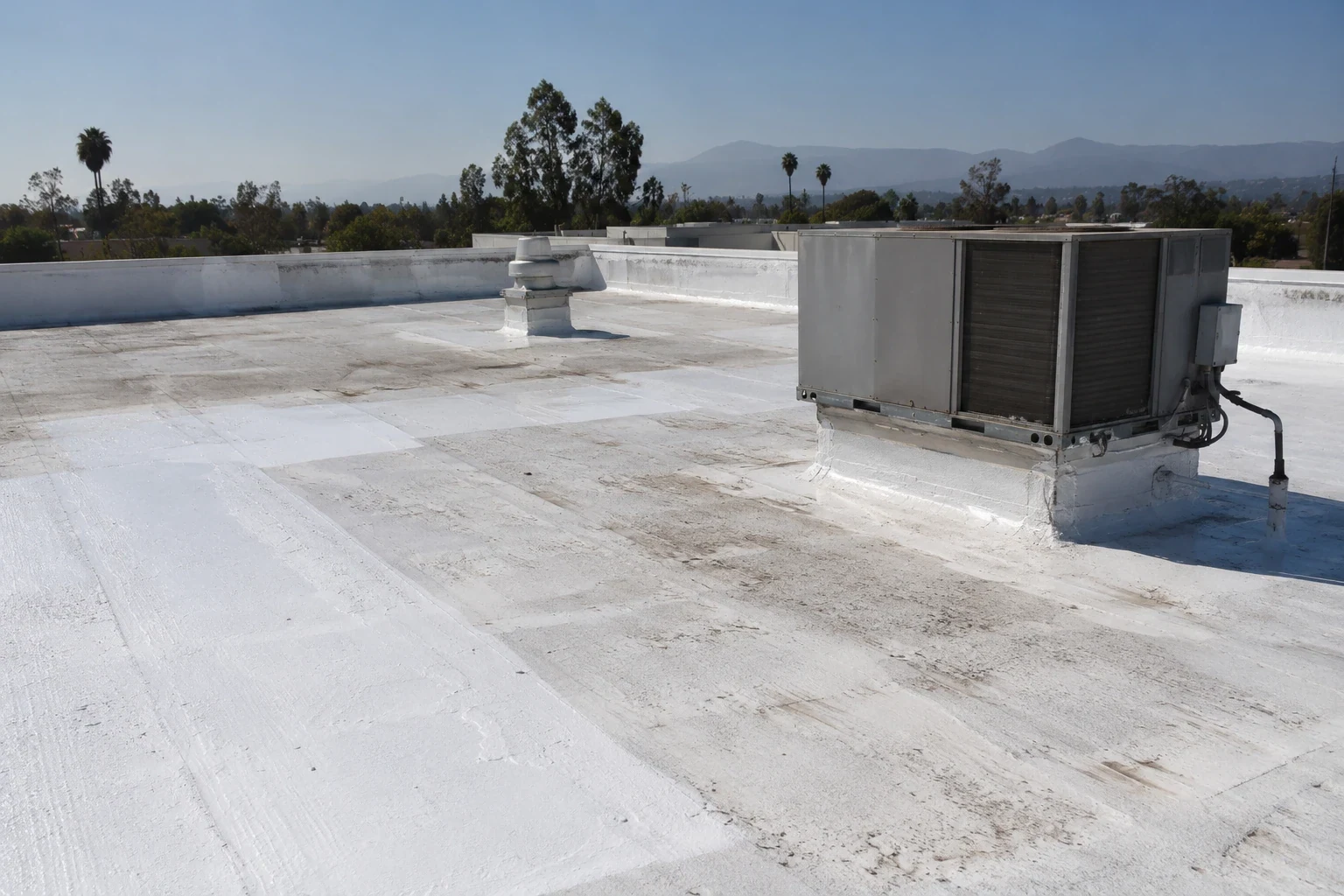
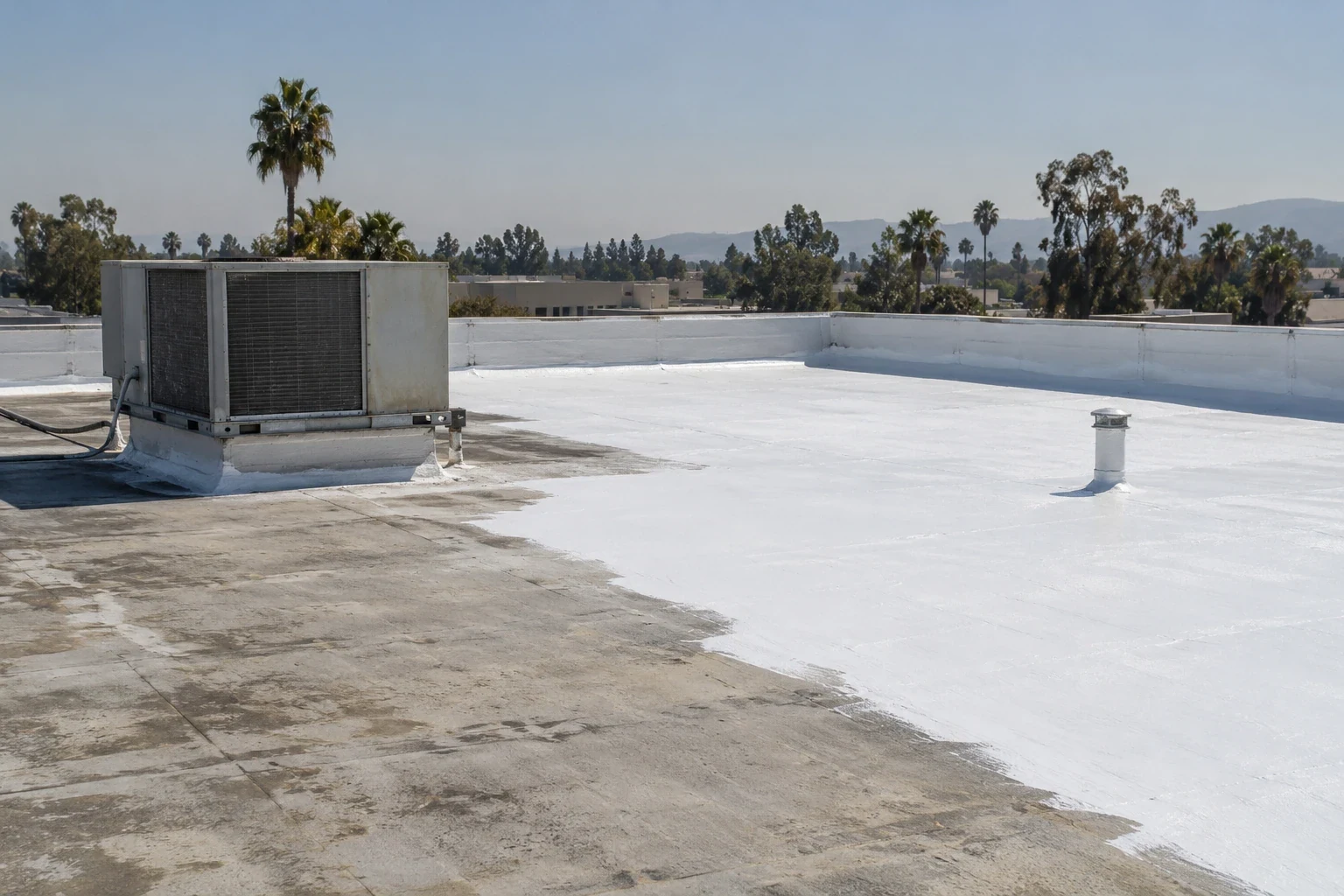
A coating needs a sound surface to bond to, and that includes old patches and any area where the roof layers have separated. We check adhesion and the prep the coating manufacturer requires before recommending a restoration. Cleaning can be enough on a sound roof. Loose or worn-out material may have to be cut out or repaired first. The estimate should include that work so a low per-square-foot coating price does not hide the prep underneath it.
For restoration of suitable roof material, we pick a product that works with your existing roof and the conditions on site. A coating cannot glue a separated layer back together just by covering the blister. We put the needed repairs and prep side by side with a replacement option, showing where keeping the roof still makes sense and where tearing off is the better call. That way the cheaper option is judged on what it sits on, not on how it looks.
A reflective coating reduces the heat a sunny roof absorbs, and insulation and the building's cooling system shape how much difference you feel inside. That can be a fair part of the budget discussion, but nobody can promise a specific savings number for a building that has not been evaluated. Prep, damaged flashings and wet insulation are real costs either way. You should see those costs before a possible energy benefit is used to justify a coating.
Once we know what the roof is made of, a silicone restoration system can be compared fairly with other options. We check the surface against the product's requirements for your roof. Drainage problems get their own repair rather than being treated as a coating choice. That ties the possible reduction in heat gain to a real scope of work, so you can compare restoration and replacement on full prep and protection costs.
Cutting into a blister can affect the room below, even if the rest of the roof is fine. Before we open the roof on a Vista property, we agree with your site contact on which interior space is affected and how crews will get on and off the roof. Each phase needs debris control, temporary protection and a proper patch-back. How much we open at once depends on what we find and on being able to seal it before the end of the day.
Our occupied-building removal planning ties those needs to the repair or replacement you choose. Smaller phases disturb less but add setup and protection time. We explain how each workable schedule changes the cost, without cutting necessary prep. You can then use your occupancy calendar to pick the timing, instead of finding out later that interior protection was left out of the roof estimate.
If you also own a building in Escondido, its roof may show similar blisters for different reasons and need different prep. We inspect each roof before recommending one coating purchase for both. Blisters that look alike do not mean the fix is the same. Buying materials together makes sense once we understand each roof's layers, drains and flashings, and how much has to come off, with each building's protection costs listed on its own.
A roof in Fallbrook can join the same budget with its own inspection. We put active leaks and failing material ahead of an optional coating, then compare the full keep-and-repair and tear-off options. The cooler surface of a reflective coating is one operating factor among several. Working in that order helps you pay for work that actually fixes the roof before buying a coating that later repairs would have to cut through.
Vista has a big manufacturing and craft-business base, and many of those roofs carry a lot of equipment that needs coordination with production. We confirm any shutdown window or sensitive process below before opening a curb or seam. Sun and weather exposure vary with a building's elevation and which way it faces, so we record the actual slope, shade and drainage instead of assuming a general climate. You get a short list of next steps sorted into immediate repairs, routine maintenance and any optional checks of hidden layers.
Not right away. We first look at the blister, the roof around it and what the roof is made of, then decide whether a cut would tell us something useful. Cutting without a reason can let water in. When a test cut is needed, we make it, check what is underneath and seal it so we can price a proper repair.
No. If the layers have separated or the surface is weak, that has to be fixed before coating. We find out which layers are affected and what prep the coating needs. The estimate then includes those repairs and any tear-out, so you can compare the real cost of a coating job against a new roof.
As far as the solid roof around it, plus any wet or weak material we find underneath. We check those before setting a quantity. The repair may run well past the visible blister if insulation is wet, and the scope explains how the new material ties into your existing roof.
It can cut the heat the roof absorbs, while insulation and your cooling system decide how much difference you feel inside. We look at that benefit after the prep and any drain or flashing repairs are priced. Then a coating can be compared with replacement on full cost, without assuming a set energy savings from color alone.
Yes. A separate test opening or spot repair can make sense when it answers a quantity question or stops an urgent leak before you choose a bigger job. We show its protection and patch-back cost and whether the later job would disturb it. You can then compare doing it now against folding it into the larger project.
Send us the Vista building address, where the blisters are and what you are considering. We will inspect the roof and compare repair, prep and tear-off costs before you decide on a coating.
Request a Roof Assessment