A cool roof needs a sound roof under it, and a loose edge on a Temecula warehouse can change the plan before any new surface is considered. Wind damage roof repair in Temecula, CA, looks at the lifted edge, how it was fastened and the wood nailer and insulation behind it. We document what the roof shows and do not claim a particular storm caused it just because of where the building is. You get a repair scope based on the actual opening, along with the prep needed to tie it into the existing roof. A fresh coating in the field cannot replace a missing edge. On a property in Anza, a wind damage scope should cover loose edges, lifted seams and any temporary protection still needed. A building in Moreno Valley gets its own inspection before quantities or timing are set. For warehouse roofs with a loose edge, we confirm the building and any past work records. When you know when the damage was first noticed, along with photos of where it is, we use that to guide the inspection. We compare it with what we see on the roof and note what we still cannot confirm. The permanent repair follows the materials and fastening actually on that roof.
Temecula's emergency planning includes extreme heat, so it is fair to think about heat gain while you are fixing the roof. A reflective surface can reduce how much sun the roof absorbs and how much heat gets inside, depending on the roof and the product. That benefit does nothing for an edge that has pulled loose. We inspect the opening and what is behind it before proposing anything larger. You can then separate the work needed to make the roof watertight again from an upgrade that can wait until the roof is ready for it.
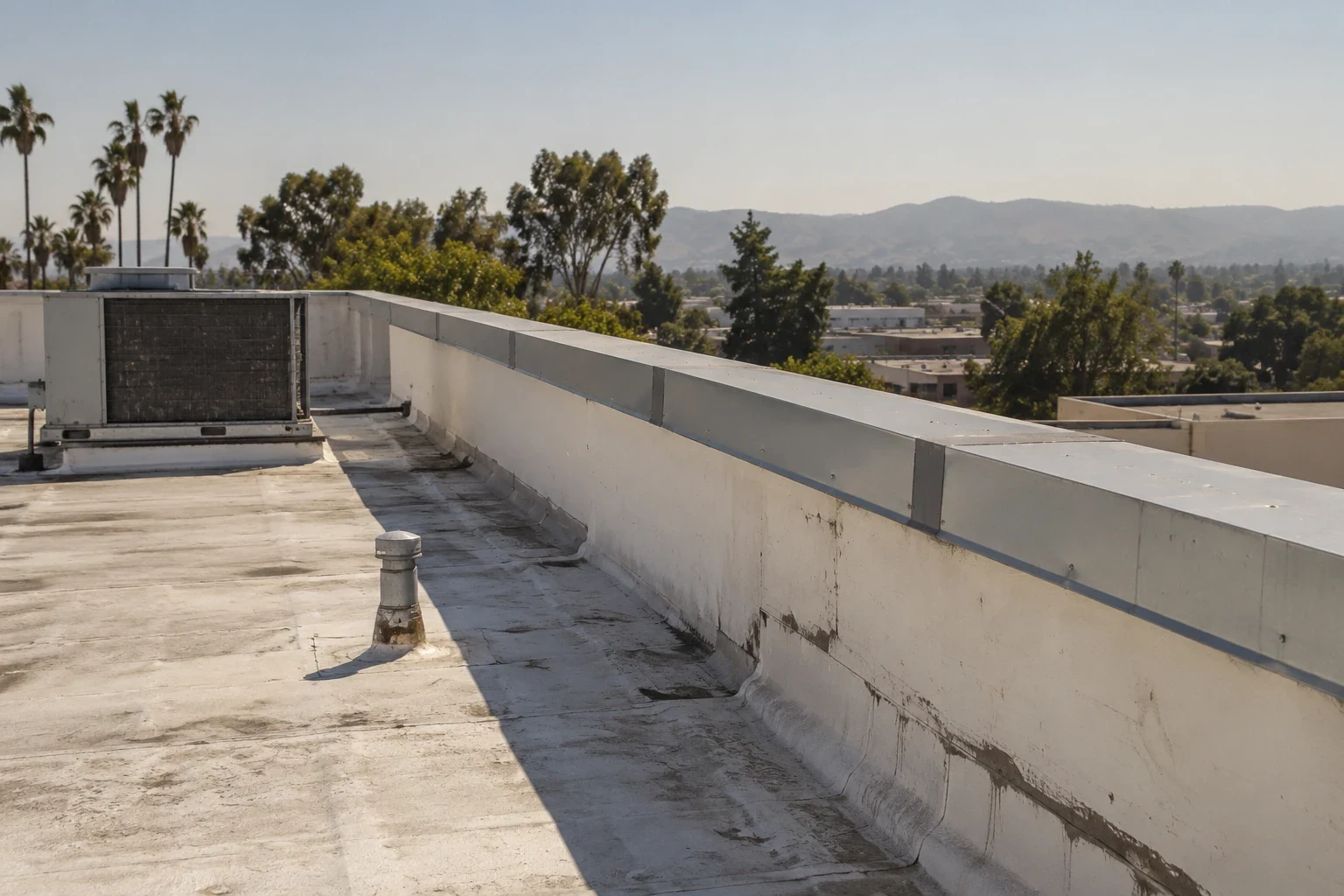
Edge metal, coping and gutter repair includes the fasteners and the membrane that meets the metal. Edge metal that has lifted can leave a loose or rotted nailer behind what looks like a small opening. We note the damage we can see and any further checking needed to set the repair area. A new piece of trim on its own may leave the problem underneath. The proposal covers the prep and the finished edge together, so the price reflects a roof edge that will hold, not just how it looks.
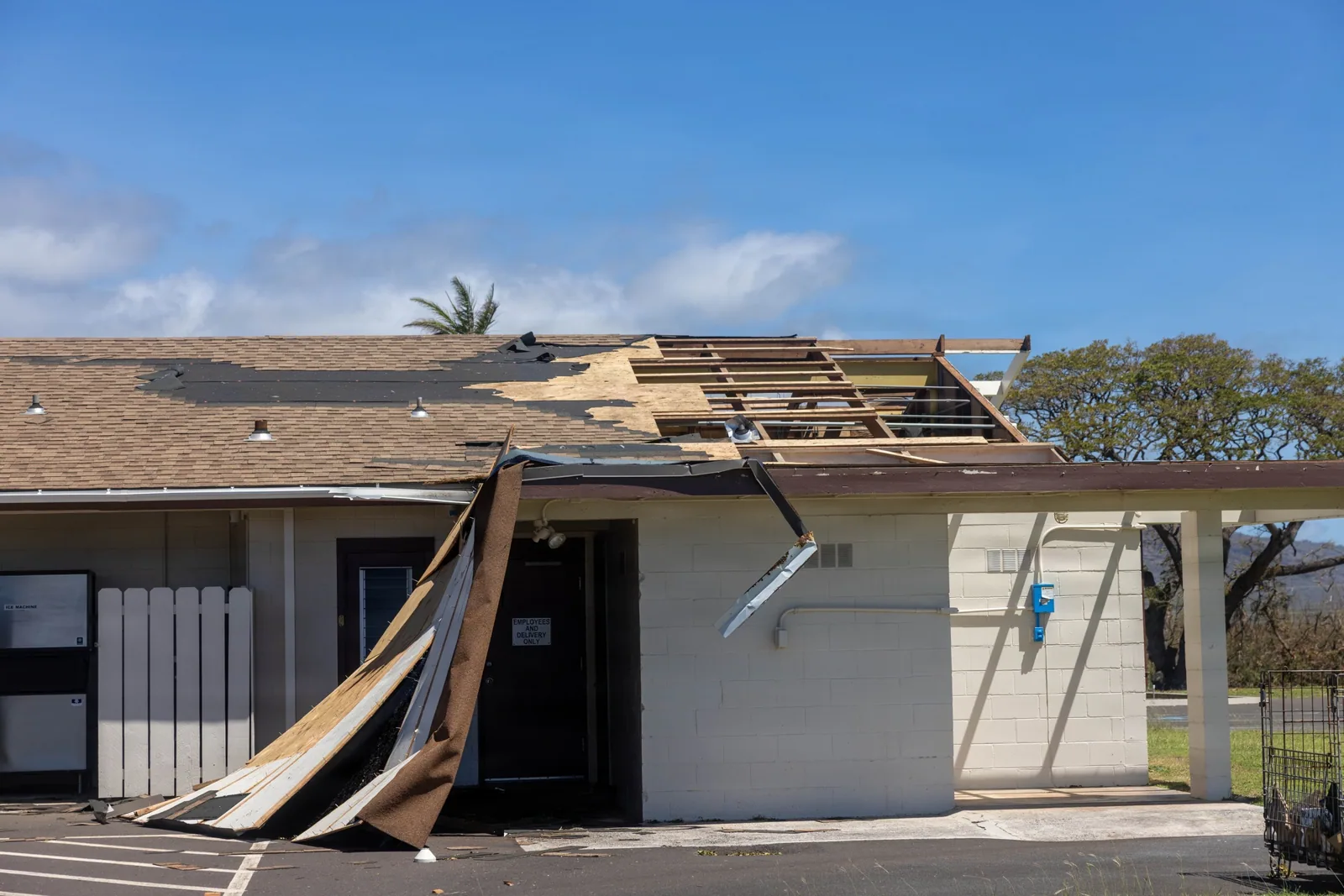
A lifted edge can mean failed fasteners, a rotted wood nailer or membrane that has pulled away. We check the edge we can reach and record which part let go. Where the right fastening pattern is uncertain, a designer or the manufacturer's requirements settle it. A section that looks fine next to the damage still has to be checked before we tie into it. One bad section does not mean every edge on the building is failing. You should see the specific defect, how far we were able to inspect and the reason for the repair we propose.
Checking the membrane flashing at the edge is part of flashing failure repair, so the seal and the metal are handled together. Old mastic or patches can add prep. Seeing the face of the edge may not show a hidden fastener or what is happening on the far side of a parapet. We say when we need to open something up or have equipment moved to finish the permanent work. The repair has to fit the actual surfaces it ties into, and any structural concern goes to an engineer. That gives you a complete answer on the edge without treating our inspection as an engineer's approval.
Water that got in at the loose edge may have reached insulation beyond the visible gap. We test that before setting how much comes off. What we see when we open the edge, backed up by core cuts, sets the quantity. If the damage runs into an area we have not checked, the record says so. You can approve a specific next check instead of guessing the size of the job from a photo. The roof stays temporarily sealed while that decision is made.
Replacing insulation and cover board at a wind-damaged edge includes blending it into the existing roof. The rebuilt height and the shape of the edge can change which metal profiles are needed. We also check how water drains where the repaired section meets the rest of the roof. Any new damage gets documented with its location and how it changes the job. You should have an agreed way to review that change. The revised scope shows the nailer, fastening and membrane together, so any added prep reads as real construction work, not an unexplained extra.
Edge work can affect entrances and rooms below. The building operator tells us which routes and spaces need protection before we pick a phase. Hoisting materials may need different arrangements than we had for the inspection. If a light, sign or other fixture blocks the edge, the right trade needs to be scheduled. We set a daily work area we can seal before we leave. A date on the schedule does not replace missing access or prep, so those requirements are listed next to the start date.
For a roof repair around Old Town Temecula, each building keeps its own roof conditions and access rules. Reroofing over occupied space keeps temporary protection separate from the finished edge. We report which part of the edge is still waiting on something, rather than calling the edge done because most of the field is finished. You can use that status to plan the next step through tear-off, nailer and insulation prep, and final flashing.
The closeout record shows the damaged section, what we found behind it and the finished edge. We note which material stayed and which nailers, insulation and fasteners were replaced. Any equipment or interior work outside our scope is listed separately. If a problem shows up later, we inspect the roof as it is then and use the earlier photos to see what changed. That history helps without blaming every later issue on the original repair. The record explains what our work covered and where it stopped.
A separate seam failure repair on the same warehouse may need a different fix. We keep it apart from the edge repair unless testing shows they are connected. You can rank the rest of the work using what we found and the full cost of each repair. A cool roof upgrade can still be considered where the existing roof and the product's requirements support it. The spending plan keeps the edge repair and any larger option as clear, separate jobs, each with its remaining prep listed.
Not by itself. We document how the edge failed and look at storm dates or other information separately. When the damage was first noticed helps guide the inspection, but the repair is based on the fastening and nailer we find either way.
It should not be. A loose or rotted nailer, or failed fasteners, can stay hidden behind new trim and fail again in the next strong wind. The permanent repair includes the backing, the fastening and the membrane tie-in.
Finding more wet insulation, rotted nailer or failed fastening once the edge is opened. We photograph it, explain how it changes the job and send it through the agreed approval process. The roof stays temporarily sealed while you decide.
No. Fix the loose edge and anything wet behind it first. A cool roof is a separate upgrade that needs a sound roof under it. Compare complete jobs, and do not treat a new coating as a repair for a lifted perimeter.
Send us photos of the damaged edge and the building address. We will go over the prep it needs, how we will work around tenants and where it fits in your roof budget.
Request a Roof Assessment