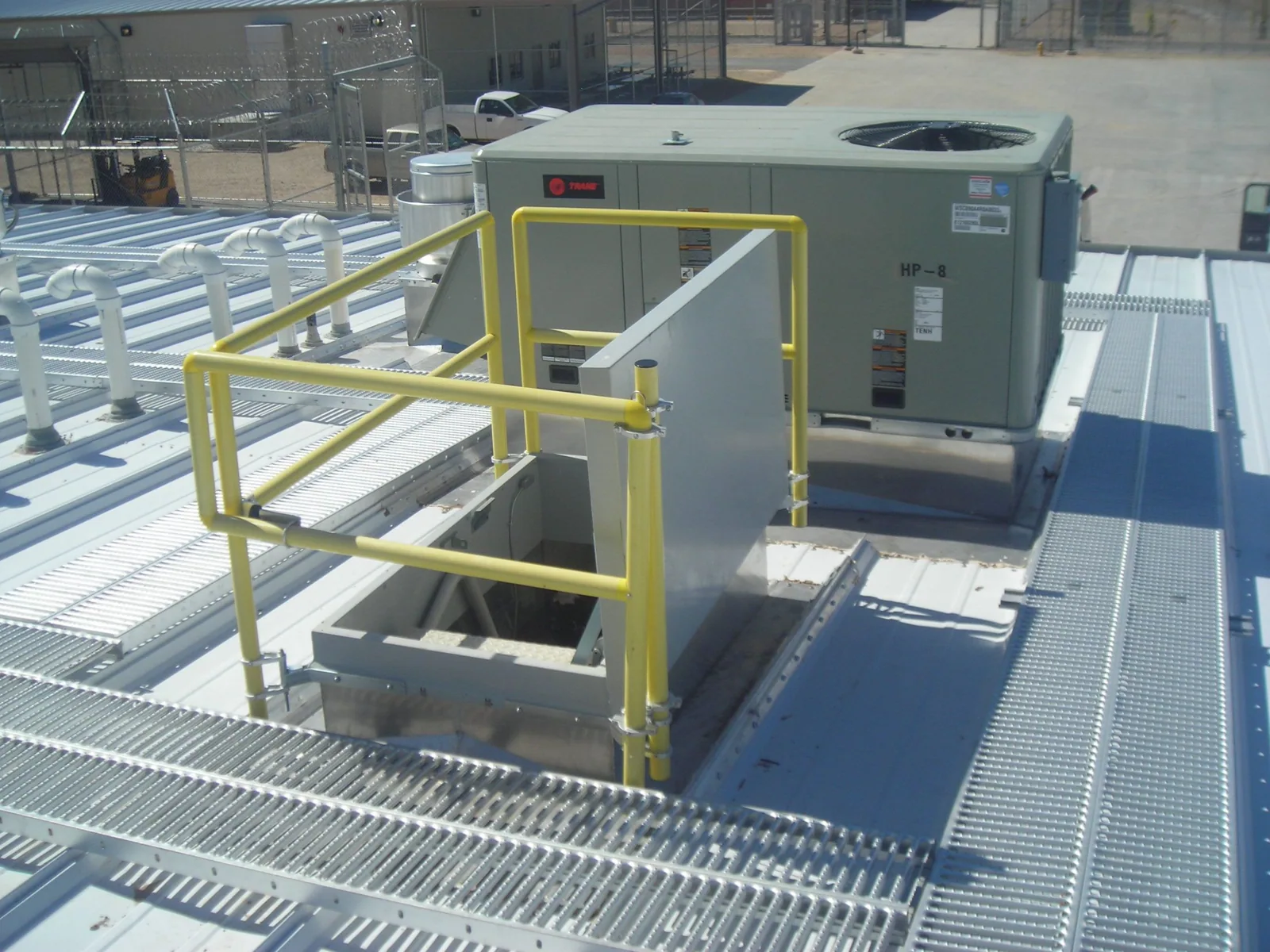
On commercial buildings in Pala, the leak is often right under a piece of rooftop equipment. A support that shifts or presses into the roof can crush the insulation and tear the membrane. We inspect the support, the layers under it and the membrane around it before recommending a local repair or something bigger. Every property gets its own assessment, and we confirm access with the owner or manager before visiting.
A flattened pad or shifted support can mark the roof without showing whether the roof connection, the equipment or the material underneath needs fixing. We look at all three and identify any engineering or trade input needed. The cost comparison includes the permanent repair and the equipment handling that makes it possible. A reflective coating can reduce heat gain where it fits, but it does not make a bad support connection sound by coating the roof next to it.
A rooftop support has to carry its load in a way that suits the building and the roof. The visible pad does not answer that question. We inspect the contact area, the roofing around it and how the support is built. If the load or bearing is in doubt, an engineer or the equipment designer should resolve it before we choose a roofing repair. A bigger pad is not an automatic fix.
Our rooftop equipment curbs and supports assessment separates the roofing work from moving equipment or structural repairs. We explain the preparation and coordination needed before the permanent flashing goes in. You can compare options with each party's responsibilities clear, instead of accepting a surface repair that still depends on an unsolved support problem.
Pressure or movement at a support can damage a small area of roof, while the full extent of crushed or wet material stays hidden underneath. We check what we can reach and choose a test opening that tells us how big the repair needs to be. Confirmed weak or wet layers get replaced before the roof is put back together. The scope should explain how the support will be handled and how the opening will be protected.
A proposal for repairs around equipment supports includes a proper tie-in to sound roof around it. We compare a local repair with wider removal using confirmed preparation, rebuilding and handling costs. A small dent does not mean a quick patch will solve the problem. The quantity you get is based on what we found and the permanent repair, not just the size of the support's footprint.
Fixing a support may require the mechanical contractor to move, disconnect or shut down equipment before roofing can start. We work out that sequence with the other trades and identify what must be isolated, moved or kept clear. A roof repair cannot honestly be priced as complete if another unsolved task blocks access to the area. Engineering input stays part of the plan where the support needs it.
Our occupied building reroofing coordination ties that trade work to temporary sealing and interior protection. For a building along Highway 76, we would agree on the affected rooms and access route with the building's manager. One combined phase can cut repeat setup once the support plan is clear; testing in stages can clarify quantities first, with the sealing and later disturbance costs shown. When another trade has to move a unit, the same schedule shows when it comes off and when it goes back. Roofing can then be built around the actual equipment work, with temporary protection and permanent flashing finished before the unit is back in service. The site contact should also tell us which units need protection, whether service clearances will still work and who can approve a larger opening if the deck is bad. Keeping those decisions separate keeps a roof quantity from implying an equipment change.
Pala's rural setting makes it worth confirming property access and who can approve roof access before a visit. On each building, we inspect the actual membrane, edges and drainage; a nearby property does not tell us anything about this roof's construction or condition. We note what we observed and agree when a follow-up is needed.
These records help the owner compare a finished repair with a future maintenance visit. Photos should show the repaired detail and any remaining concern, and the report should separate what we saw from any hidden area that still needs investigation. A practical next-inspection trigger can be tied to the material or drainage issue we found, rather than to assumptions about the surrounding properties.
Another roof in Bonsall may have different equipment loads and support details. We assess it separately before recommending common materials or coordinated equipment handling. Similar marks under supports do not mean the same fix. Shared purchasing makes sense once each building's support plan, repair work and protection needs are defined.
A building in Temecula needs its own roof inspection and access approval; what we find on one building says nothing about the supports on another. The Pala scope stays tied to that building and its documented conditions.
For a building in Fallbrook, the owner can compare an immediate support repair with broader replacement once the inspection findings are clear. We put the support fix and wet insulation replacement ahead of optional surface upgrades. The proposal shows each trade's responsibilities, removal quantities and the sealing sequence for each option. That gives you a budget decision based on the actual support condition, rather than a square-foot price with the essential equipment and repair work left out.
For properties in Pala, confirm access with the owner or manager before visiting, including any equipment shutdown or interior protection an opening will need. Inspect the roof's membrane, edges, support connections and drainage rather than guessing from nearby buildings. Note wind or rain exposure only when it affects what we actually see on the roof, and set a practical follow-up, such as checking a repaired detail after the next real storm.
Not on its own. The support's load and bearing need to be assessed first, with an engineer's review where needed. The roofing repair should follow the right support solution, with the insulation, flashing and equipment coordination included.
It should say who moves or disconnects the equipment and who prepares and rebuilds the roof around it. Shutdowns, access and temporary sealing should be defined before you compare prices, so an unresolved equipment task does not hold up the permanent roof repair.
Not necessarily. The condition underneath and the extent of sound material around it set the repair size. A test opening can help if the hidden area is uncertain. Wet or crushed layers may make the repair bigger, and the proposal should explain that along with the support handling.
Only if the supports and the roof underneath are sound. Include the coating's preparation and the equipment handling alongside the full tear-off option. Heat reduction is one factor, but the support repair and any future equipment service decide the right order of work.
Weigh what the testing would tell you against the cost of extra setup, protection and later disturbance. Staged testing makes sense when it clears up a support or insulation question before you commit. One phase can work once responsibilities and preparation are defined.
Send us the Pala property address, which support is causing trouble and any information on the equipment. We will inspect the roof under and around it and compare complete repairs with the engineering and trade coordination they need.
Request a Roof Assessment