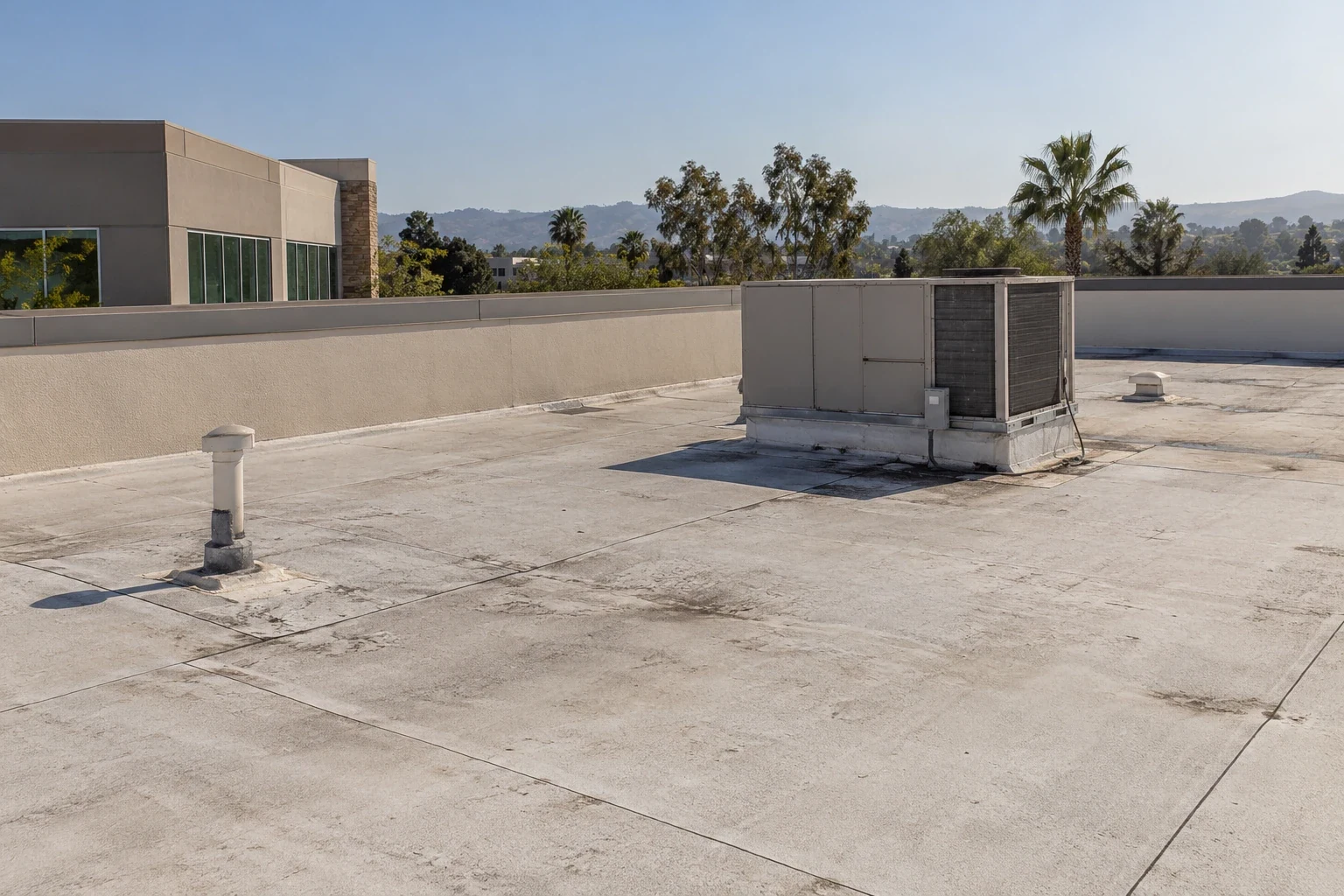
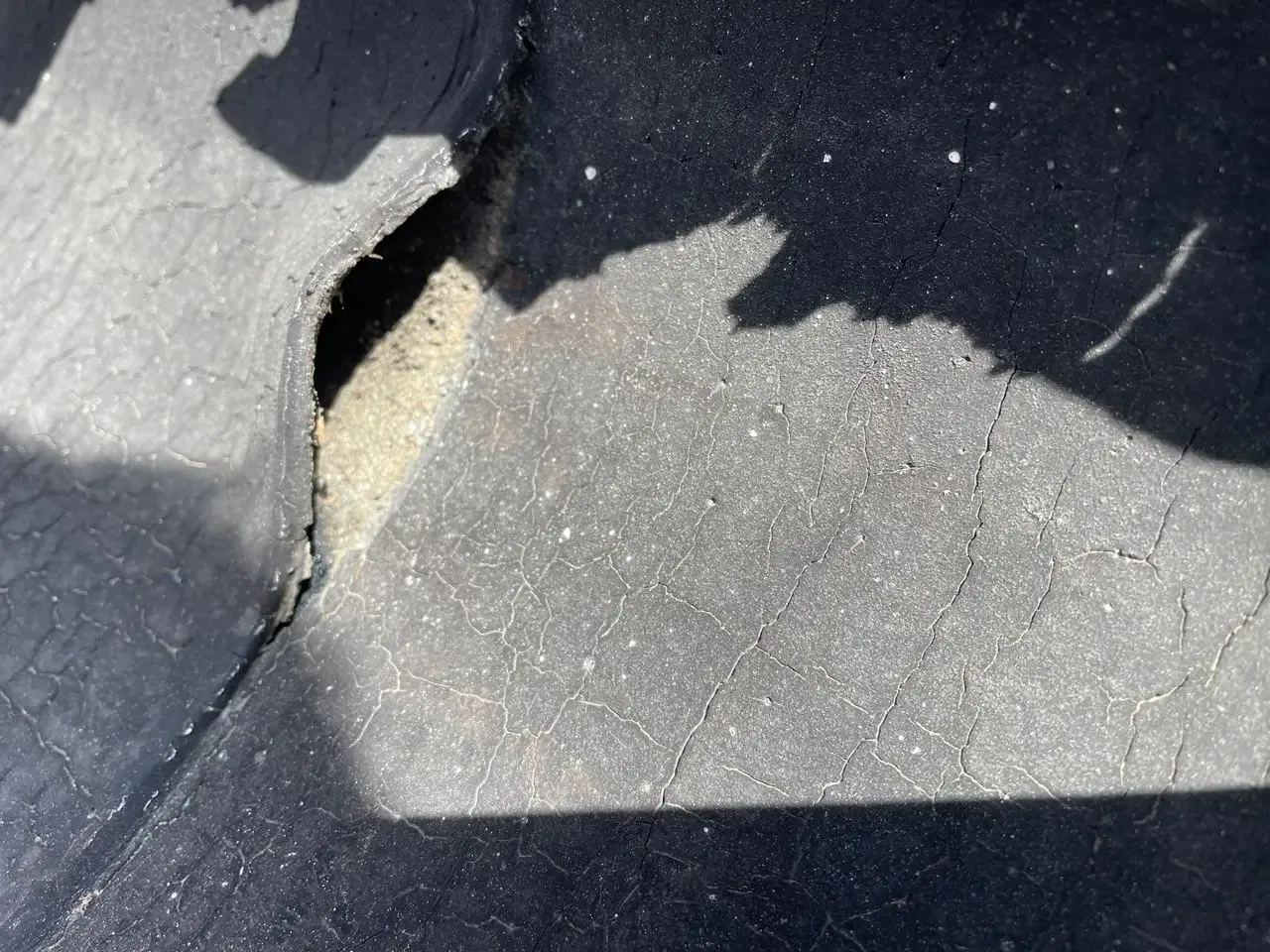
You might be planning a reflective roof for a Temecula medical office when a technician's tool or a dropped part punches a hole in the membrane next to the HVAC units. Now there is a more urgent question. Membrane puncture repair in Temecula, CA, starts with the hole itself and whatever it exposed underneath before we choose a permanent fix. We identify the membrane, the prep needed to get back to sound material and any foot traffic that crosses the area. Then you can put the leak repair next to a cool roof upgrade without mixing up the two jobs. A new surface will not fix wet insulation under the cut. A puncture next to service equipment is often more than the visible hole, so we check the membrane, the fastening nearby and the insulation under the walkway before deciding between a patch and a larger replacement piece. A roof in San Jacinto gets its own material check and its own repair area. For medical office roofs, we confirm the building and where the damage was reported. Service records and photos help when we know when and where they were taken. We compare them with the hole we actually find. A cut in the roof is clear evidence of damage, but it does not always tell us which visit caused it.
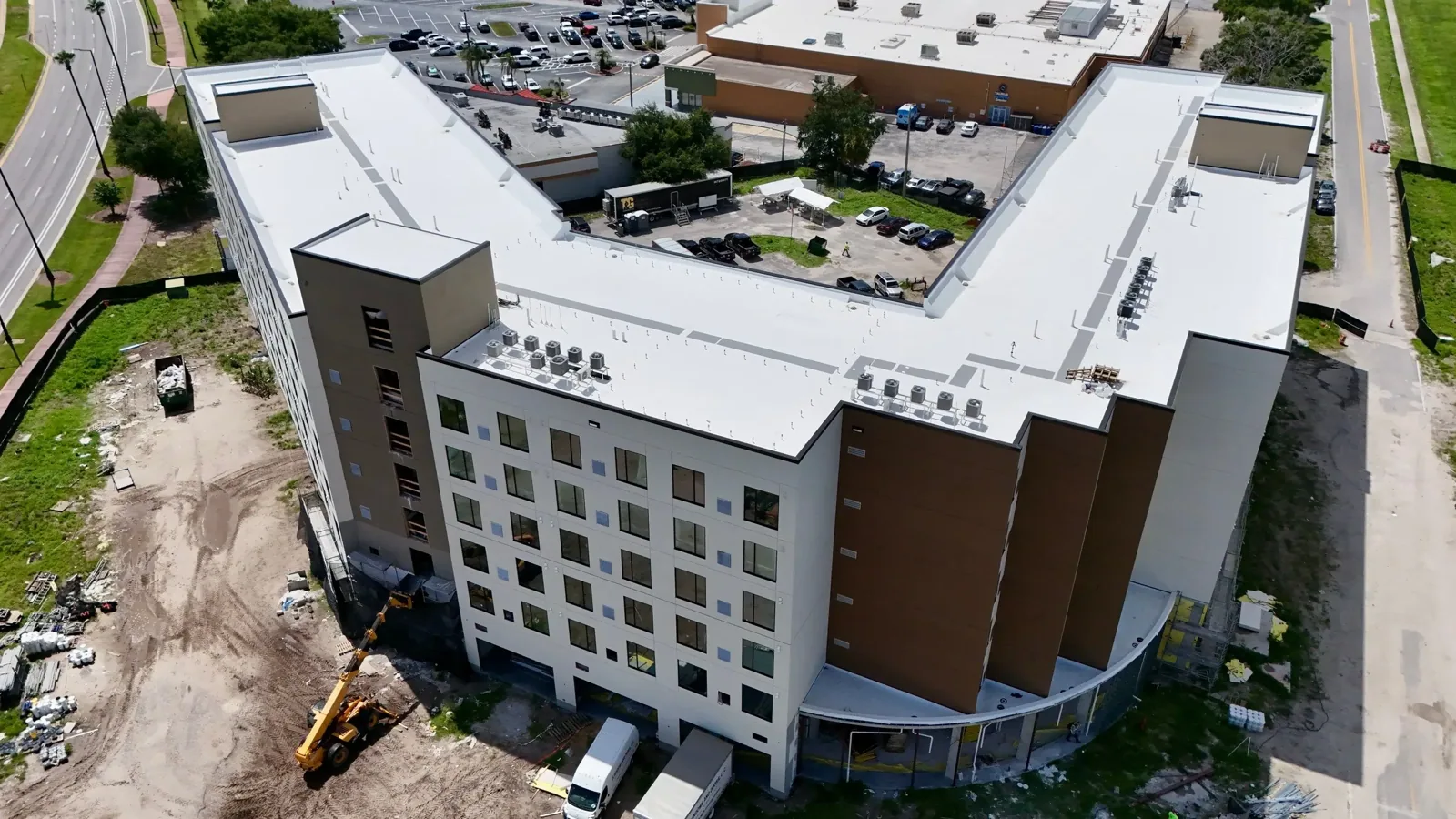
Temecula plans for extreme heat, and a reflective roof can reduce how much sunlight the roof soaks up and how much heat reaches the rooms below, depending on the roof. A punctured membrane still needs its own proper repair before any coating or overlay is ready to go on. We inspect the hole and the membrane around it, then list the prep each surface option would need. Compare what you get at the end, not just square footage. Any cooling-cost estimate should be based on real building data and a proper study.
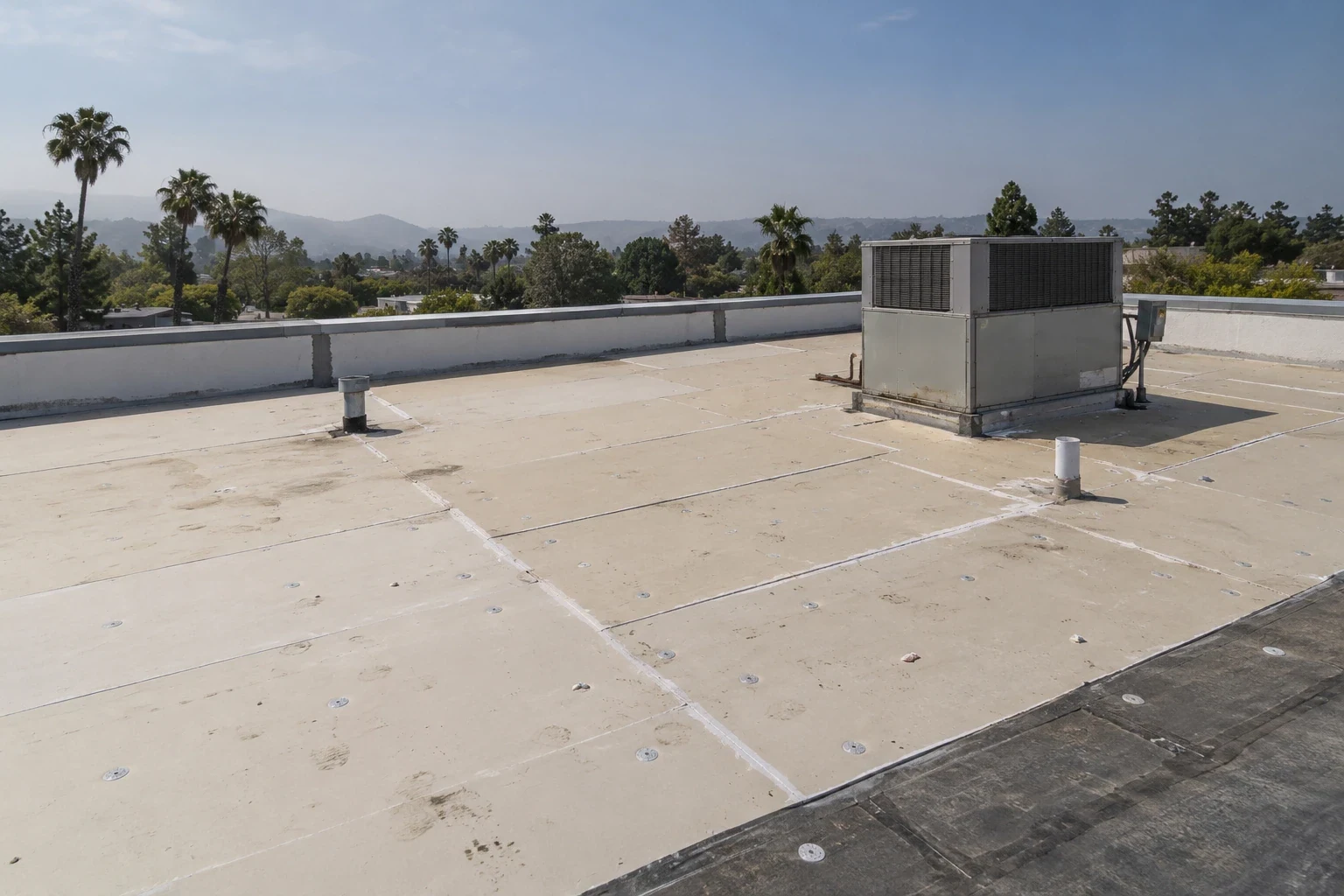
A local commercial roof repair can make sense when the membrane and insulation around the puncture are sound. Old patches or sealants may mean more cleanup to reach a good surface to bond to. The patch has to match the membrane type, whether that is TPO, PVC, EPDM or modified bitumen. A similar color does not mean the same method works. We explain what lets us keep the roof around the repair and what still needs checking. That puts the leak repair clearly next to any upgrade, with both including the detail work they need.
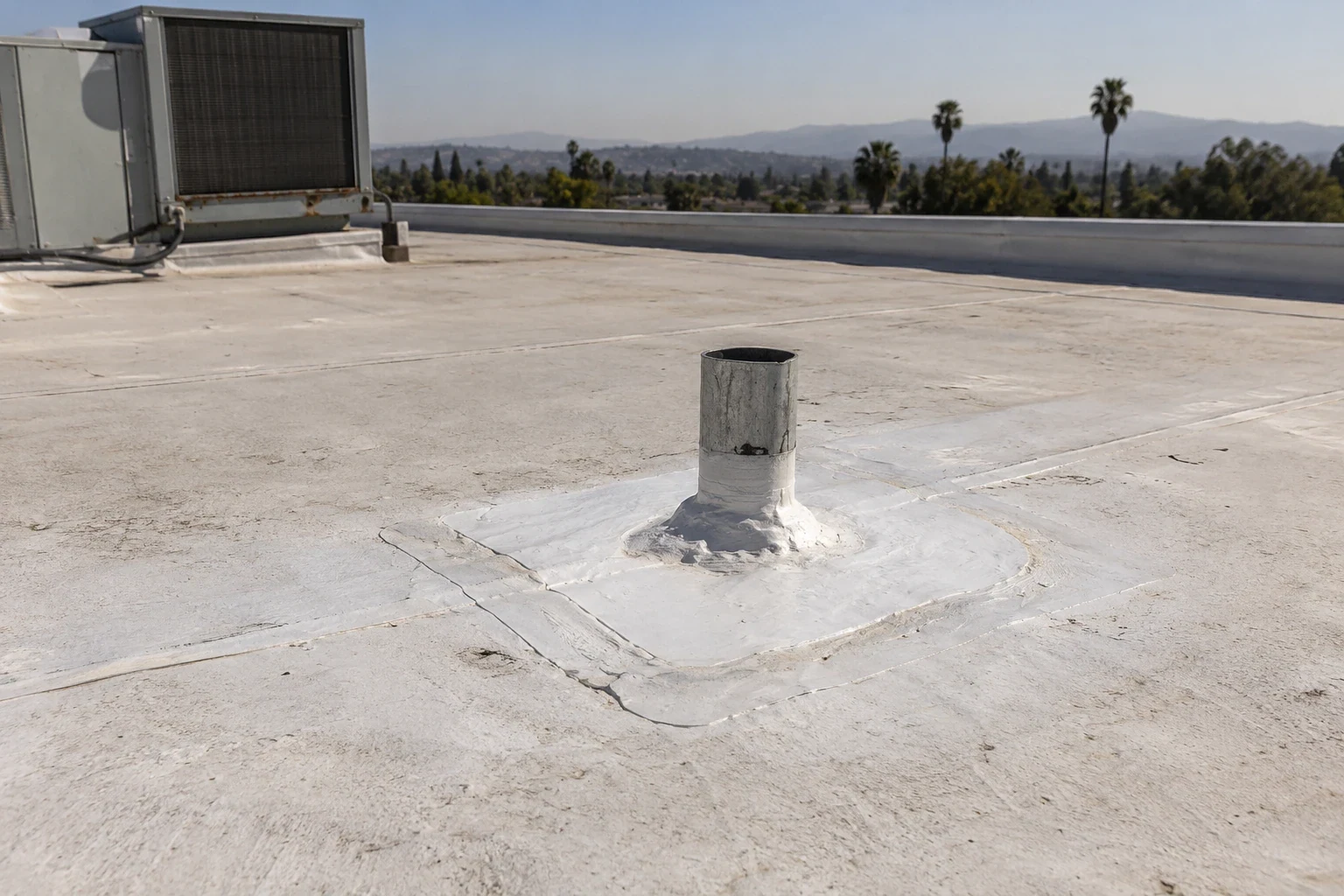
A small cut can go through more than one layer once we open it up. We note where it is in relation to nearby units or roof hatches and check the edges we can reach. Loose membrane, dirt or torn reinforcement can make the repair area bigger. If a unit is in the way, the mechanical contractor has to move or lift it before we can finish the permanent patch. You should know exactly what surface our patch will bond to. Covering the middle of the hole is not the same as sealing the whole damaged area.
A nearby seam failure repair may be a different problem from the puncture. We look at how the two relate before treating them as one job. On some membranes a test weld or adhesion test on a cleaned spot tells us whether the repair will hold. That result applies to the spot we tested, not to everything hidden under the roof. The repair follows the manufacturer's requirements, and we say what we could not inspect. That gives you a clear reason for the method we choose, instead of treating any patch as a permanent fix.
Water that got in through a puncture can spread under the membrane well past the hole. When the insulation's condition decides the repair, we test it. Infrared can show where to look, but it cannot identify every wet board on its own. Core cuts confirm the wet area, and we record where it is and how big it is. Anything next to it we have not tested stays listed as unknown. You get an explanation of what is wet and why the permanent repair may be larger than the hole you can see. The quantity follows what we confirmed.
Replacing wet insulation and cover board around a puncture includes blending into the dry roof around it. If the new section sits higher or lower, it can affect nearby drains or a curb flashing. We check that before ordering any parts that depend on it. Any extra damage gets photographed and sent to the agreed contact as a change request. The roof stays temporarily sealed while the change is reviewed. The finished repair puts the right membrane over dry, solid insulation, and any structural concern goes to a structural engineer.
A puncture next to the units is a good reason to look at how technicians and materials move across the roof. We ask who services what and walk the path, rather than assuming every route needs the same protection. Any walkway pads have to suit the membrane and should not block drainage or access to the equipment. Walkway pads cannot replace wet insulation underneath. You should see the repair and the walkway plan together, with equipment service requirements left to the mechanical contractor.
Roof work over occupied medical space also depends on the protections the operator has confirmed and the routes we can use to bring materials up. A job at a medical building in Temecula keeps its own access arrangements. We open only as much roof as we can seal the same day and keep temporary patches separate from the finished repair. If a unit has to be lifted to reach the full repair area, the mechanical contractor needs to be scheduled for it. That way the building manager plans around real readiness, not just the service calendar.
The closeout record shows the patched hole, the insulation we replaced and how the patch ties into the existing membrane. We photograph any walkway pads separately so it is easy to tell later if they have moved. Equipment or interior work outside our scope stays listed with whoever is responsible. If a new hole shows up, we inspect it where it is reported. The earlier record helps spot what changed without automatically blaming the same cause. You keep a clear record of the repair and the walkway layout around the units.
If water is standing near the repaired walkway, ponding water roof repair is a separate drainage question. We look at the slope and drains rather than assuming another patch will fix it. A wider cool roof proposal may still make sense once the leaks and wet insulation are dealt with. The cost comparison shows what each job changes and what is still open. That lets you rank the leak repair, walkway protection and any surface upgrade as complete jobs, without one new coating standing in for all three.
Not on its own. We document the hole and compare it with service records separately. The timing and location may point to a likely visit, but that is not proof. Either way, the repair is based on the membrane and insulation we find at the hole.
Large enough to reach sound, clean membrane on every side, following the manufacturer's requirements for that membrane. Loose edges, old sealant or wet insulation underneath can make it bigger than the hole. We show you why we picked the size we did.
No. Wet insulation and the damaged membrane get repaired first, then walkway pads go on top to protect the area. We check the actual service path and keep pads clear of drains and equipment access. The pads protect the repair. They do not hide a bad roof.
It should include the puncture repair, any wet insulation replacement and the surface prep around it. A reflective coating only goes on after those are fixed. Compare the full scope of each option, and keep any energy savings estimate separate from the roof findings.
Tell us where the puncture is, what membrane you have and how technicians get to the equipment. We will go over the insulation, the patch size and walkway protection alongside your other roof options.
Request a Roof Assessment