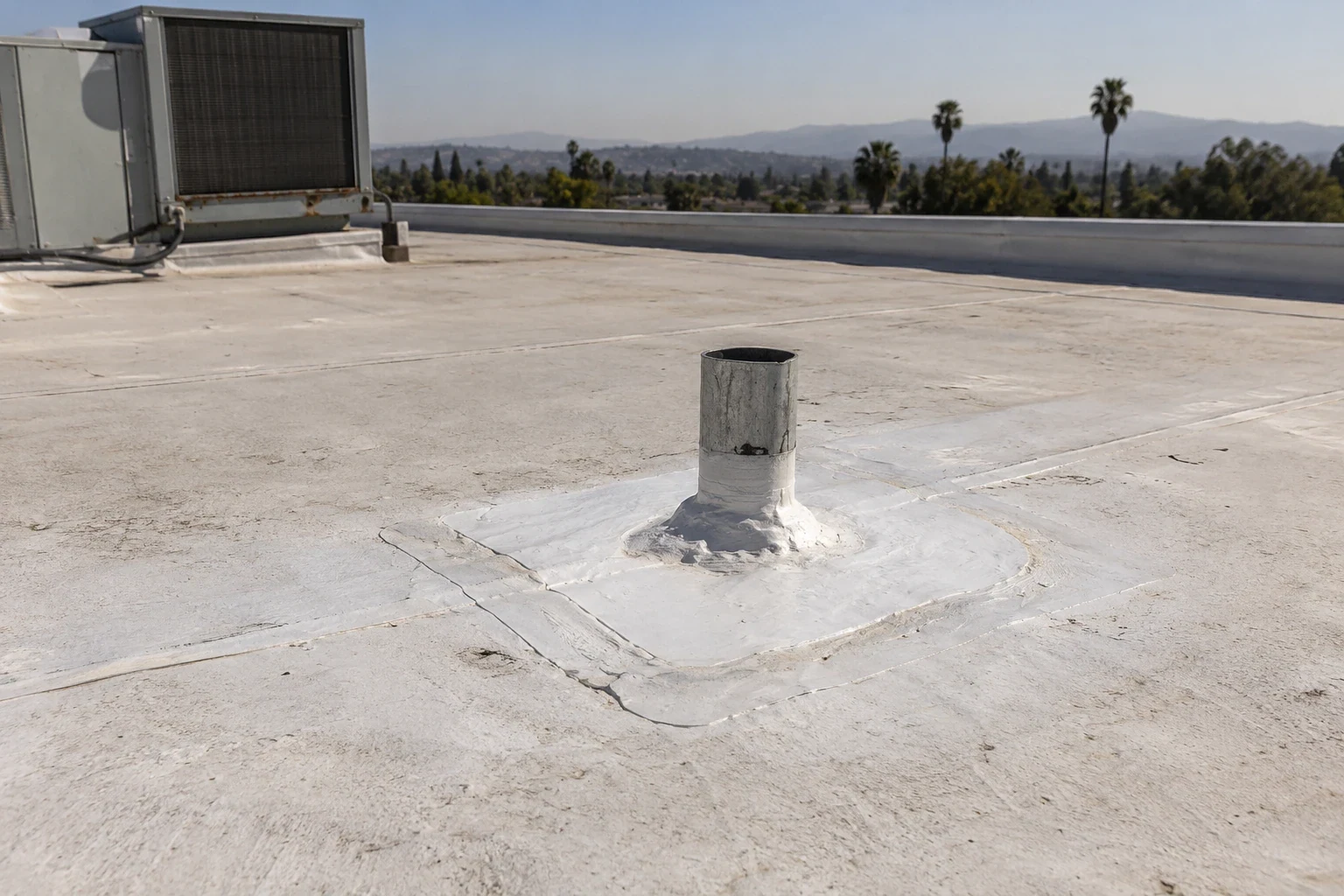
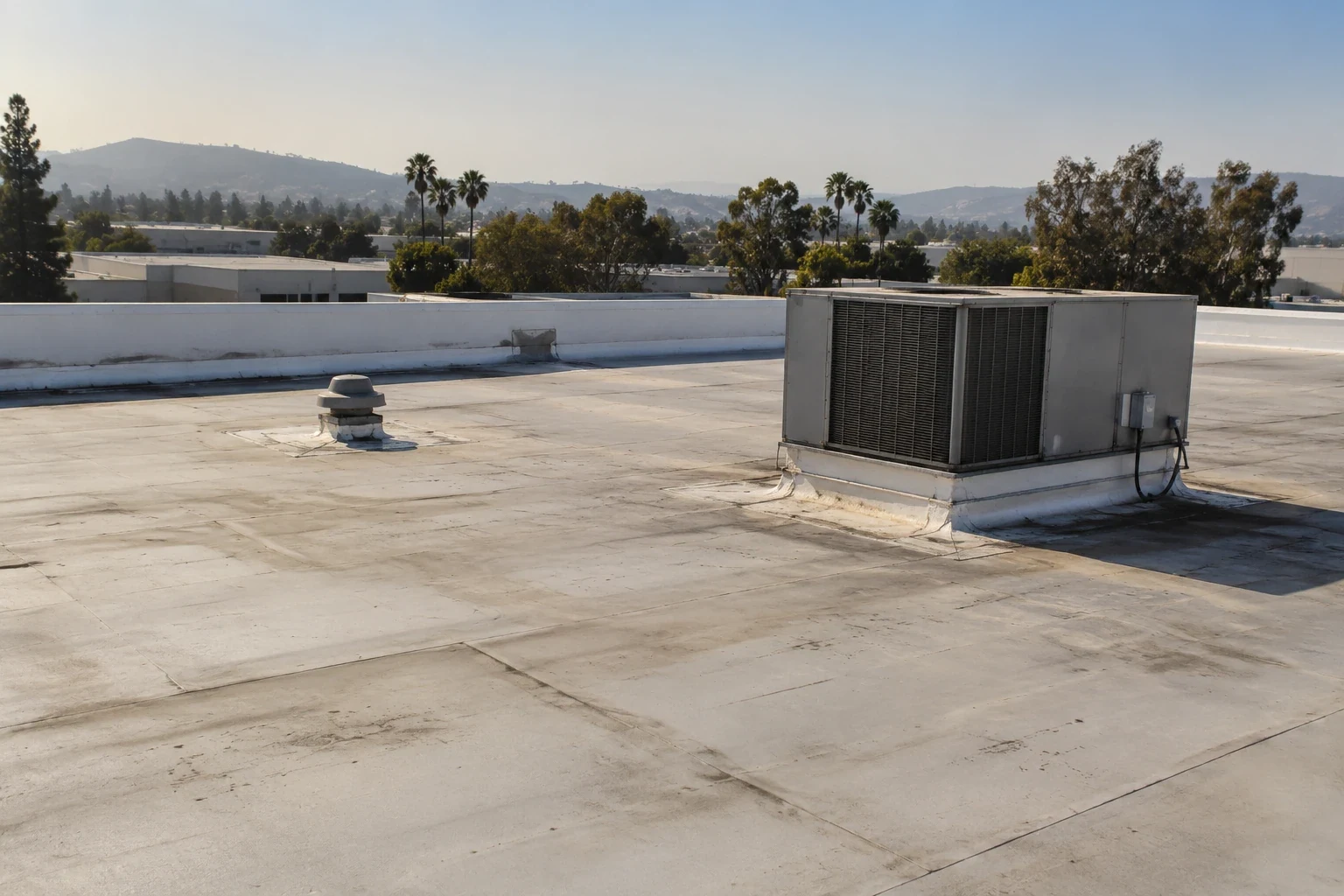
A military warehouse roof discussion in the Temecula area can put a heat-reduction goal right next to a puncture that needs a proper repair now. Temecula lists extreme heat as a local hazard, but each depot building still needs its own roof and operations checked. A reflective surface can reduce the sunlight a roof absorbs and the heat passing into the building, depending on the product and the building. We inspect the membrane around the puncture and the backing needed for a permanent repair, then explain which work supports the local fix and which supports a roof-wide upgrade.
Stored material under the roof can add handling and protection work well beyond the size of the hole. Base facility staff set access and review how stock is arranged, while equipment and electrical work stays with qualified trades. We include patching at every test cut where the condition of the existing roof decides how much can stay. The bid should tie each tear-off quantity to the reason for it and the protection needed to reach it. Then you can compare a proper puncture repair with an optional cool roof, without leaving stock protection or backing work out of either option.
A puncture can have damaged or dirty membrane around its edge, which means more prep before a permanent patch can go on. Membrane puncture repair checks the membrane and the backing for that roof type. TPO and PVC need clean, weldable membrane; other roofs need their own compatible repair. We cut out material that the repair method cannot bond to. That keeps the repair size tied to real prep work, not just a patch measured around the hole first reported.
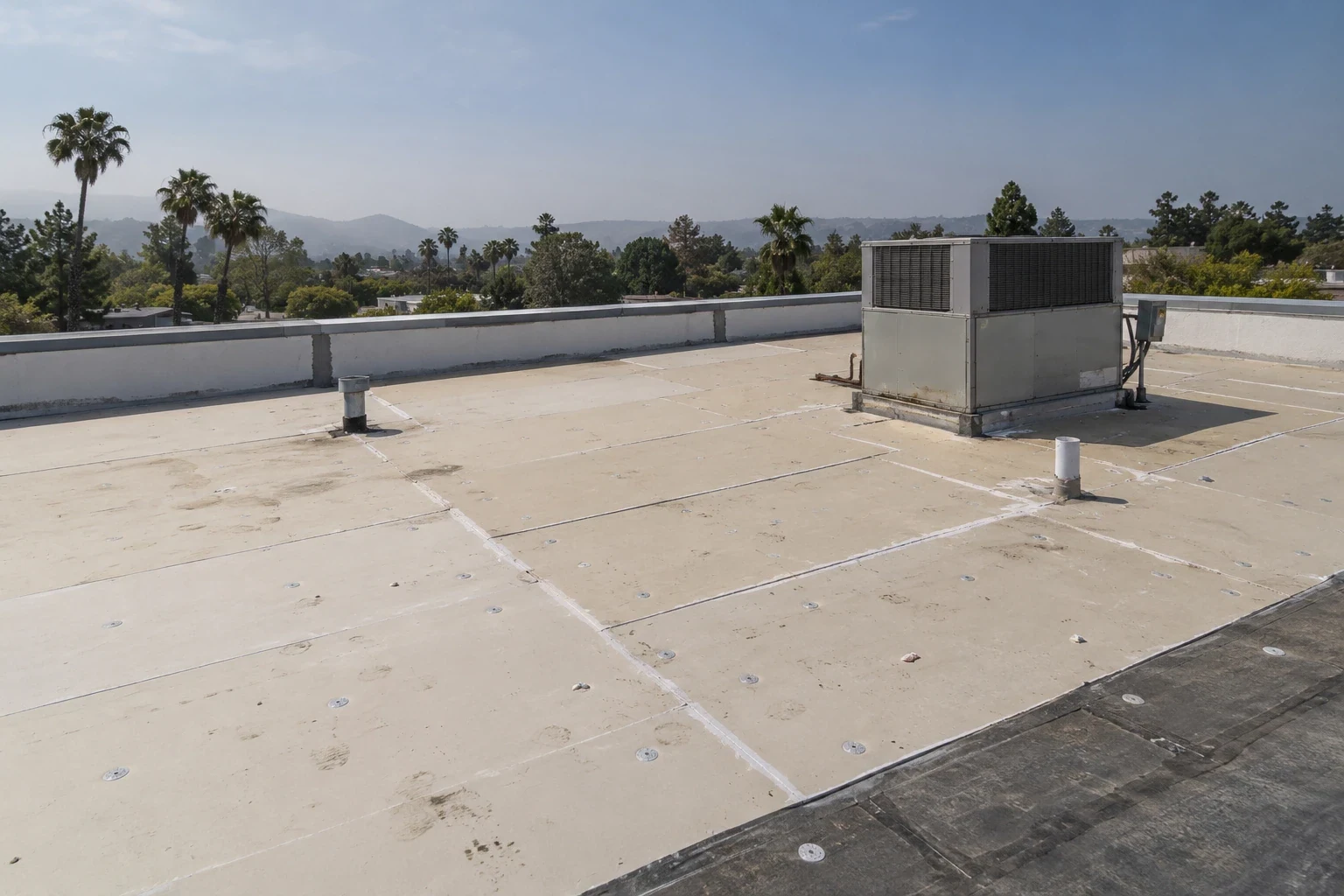
The insulation and cover board under the puncture can also decide how big the repair gets. Roof insulation and cover board work identifies what can stay and where testing is needed. If structural or load questions come up, an engineer handles them. A hole in the membrane cannot tell us the condition of every layer under it. We explain what finding would change where the repair stops, keeping insulation replacement separate from the membrane work while showing how both affect the final repair size.
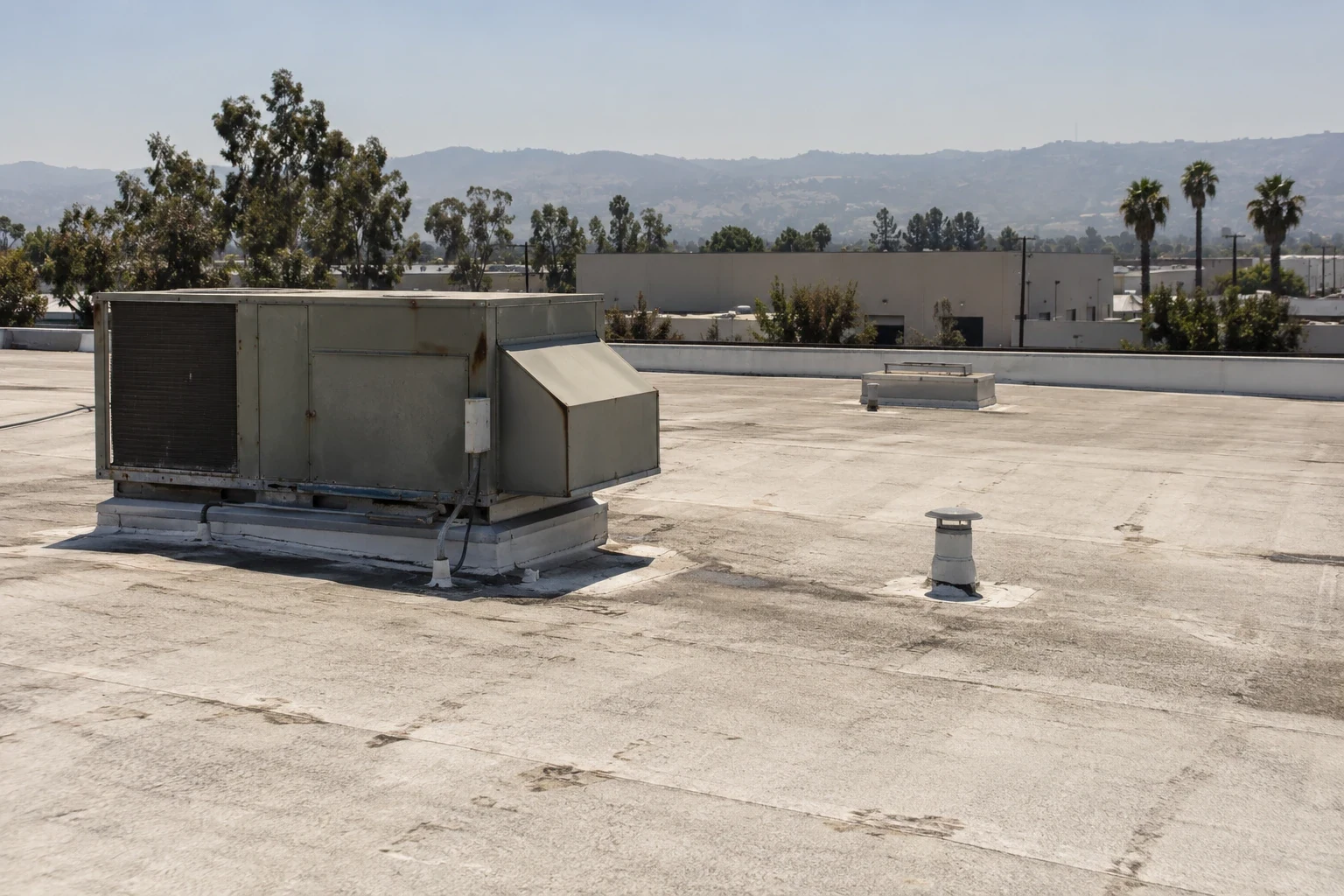
An opening over stored equipment or boxed goods needs different prep than one over an empty aisle. Roofing over occupied buildings lays out roof openings, debris routes and material handling for base facility review. Facility staff decide access and how stock is protected. Equipment and electrical work stays with qualified trades. We include patching at test openings and the effort to reach sound backing, so the proposal reflects real work instead of assuming one protection plan because the building is a warehouse.
If the backing problem grows, another stock area or material route may be added to the work. We explain the larger area before opening more roof and install a temporary seal while design or equipment work is handled. Urgent roof leaks can be handled on weekends, holidays and at night, with access arranged by the base contact. If water reaches electrical equipment, a qualified electrician should check it. Temporary repairs are recorded separately from the permanent puncture repair, so a later budget can go to a specific open item rather than a vague repair allowance.
We connect each roof phase to the depot's actual storage and handling plan. We confirm which inventory areas must be cleared or covered, whether forklifts or loading routes will cross the work area, and who can release those spaces. If a penetration or section of roof has to be opened, we agree on how contents will be protected and what temporary seal is needed at each stop. The finished area and any area held for later access are marked in the closeout record. That makes the owner's handling responsibilities clear alongside the roof quantities and keeps stored goods away from debris and weather.
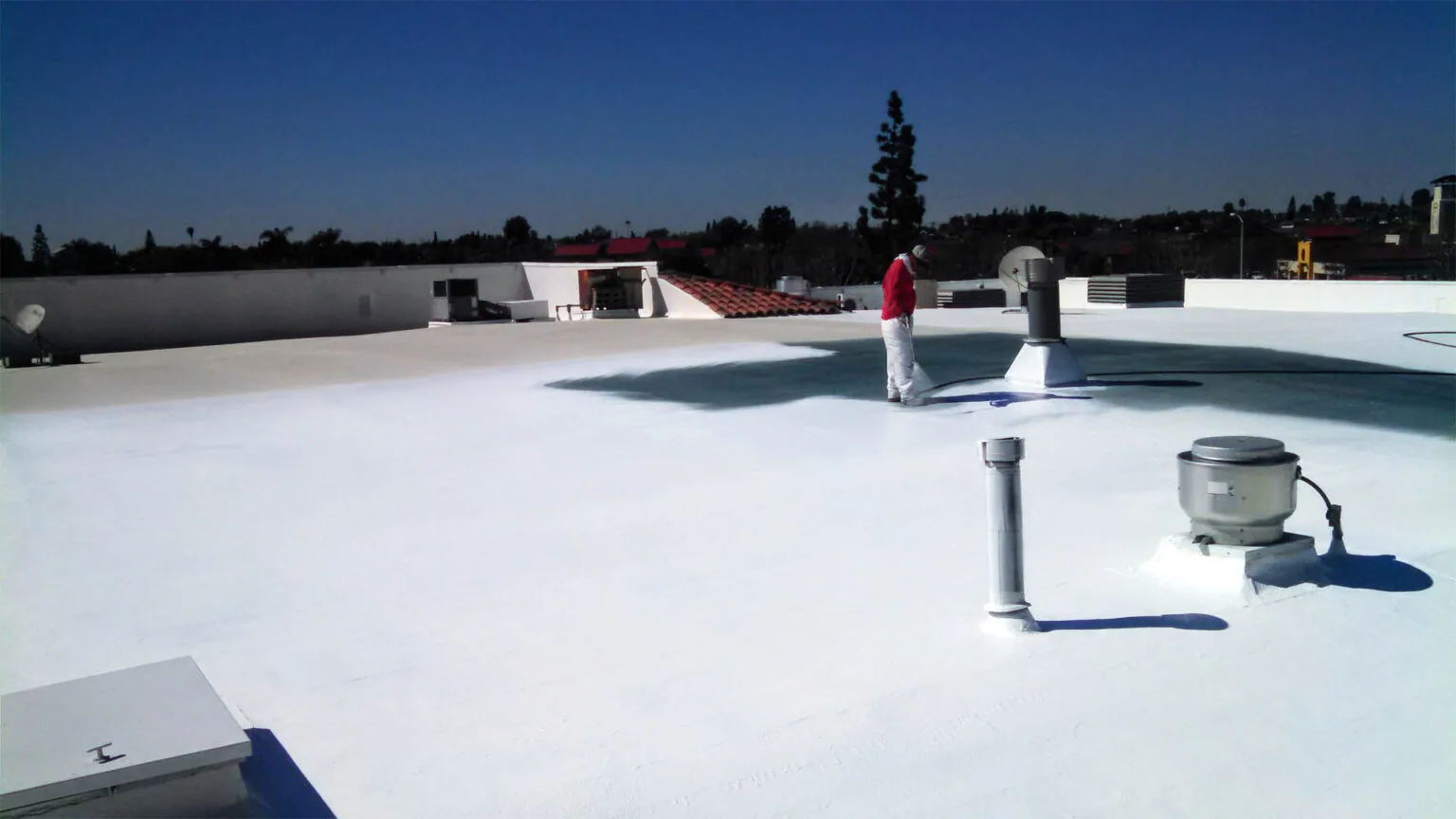
A roof-wide upgrade needs sound existing layers and compatible details alongside the puncture repair. A cool roof comparison checks the product and the prep needed before a heat-reduction goal gets budget priority. A thicker system can change drain heights and equipment clearances, bringing other trades into the project. We identify those spots along with the surface prep. The option only works when its details and the existing layers are part of the comparison, not when it is just a surface quantity that stops next to an unanswered question about the backing.
Equipment information and how the building is used help an energy specialist review the savings. We assess the roofing without promising a fixed benefit for every depot or assuming how it is cooled from its location. Moisture readings are checked against the known roof build-up and the survey conditions, then confirmed with core cuts where keeping the old roof depends on them. Every test cut is patched with stored materials protected. Your ten-year plan can then compare a local repair with a full cool roof, keeping the urgent puncture separate from an optional energy project.
For military warehouse or depot roofing near Fallbrook and Marine Corps Base Camp Pendleton, we need the specific building and the base contact who can approve work. Roof records, the stock involved and any handling needs help guide the inspection. We check the membrane and backing before choosing a permanent repair or a roof-wide option. Facility staff set access and protection, and the price follows the conditions we actually find on that building.
A distribution center may have different goods movement, and a Marine facility may have equipment next to a similar roof opening. Distribution center roofing plans around loading and moving goods. Marine Corps base roofing deals with equipment curbs and other trades on each building. Final depot photos should show the repaired membrane, the sound backing and any open equipment items. Later projects can start from those details, keeping finished puncture repairs separate from temporary seals or backing work still needing its own budget.
We find the membrane and backing around the hole that can hold a permanent repair. Where the material past the visible hole is damaged or dirty, we cut it out and include that work in the repair.
Roof openings and debris routes can affect stored items beyond the original leak area. Base staff review the plan so the protection arrangements match the actual size of the work.
When core cuts confirm it in an area you planned to keep. We check readings against the roof build-up, patch every test cut and protect stored materials before deciding on a larger tear-off.
Not automatically. An energy specialist should review real equipment and building information. We check whether the existing roof and details can accept the new system rather than assuming a fixed saving.
Final photos of the membrane and backing are kept separate from temporary seals and open items for other trades. A later budget can then fund the specific item still waiting.
Tell us which warehouse it is, where the damage is and how stock is stored below. We will compare repair and cool roof options with the base's protection requirements and your budget priorities.
Request a Roof Assessment