Sun exposure matters on a Beaumont commercial roof, but a weak spot in the deck can decide the whole job before roof color ever comes up. We provide commercial roof inspection, repair, restoration and replacement from our base in Temecula, CA, and every recommendation is based on what we find on the building itself. For a Beaumont property, the first step is confirming which parts of the deck and insulation can carry the new roof system before comparing a recover with a tear-off. The proposal should list any deck repairs, temporary protection and the work needed to keep open areas watertight.
A roof that looks ready for another layer can hide material that will not hold the new fasteners or adhesive. We check what we can see and explain where test cuts or scans are needed before pricing a recover. Your decision then includes tear-off, deck repairs and temporary protection along with the new roof. A reflective roof can cut down on the heat the building absorbs, though insulation and how the building is used affect the result. That comes after we know the base is sound.
A rotted or rusted deck can change a reroof even when the roof surface looks uniform. We describe what we found and what closer inspection is needed to know how far it goes. If it raises a structural question, an engineer needs to specify the repair and the loads. Deck work should not quietly turn into an open-ended structural allowance without someone clearly responsible and a real basis for the quantity.
Our commercial roof replacement scope ties tear-off to the confirmed deck condition. It shows which roofing work is defined, which repairs need an engineer's direction and how installation follows. That gives you a clearer comparison than a single price per square foot, and the budget accounts for the actual deck and what it takes to get it ready for the new roof.
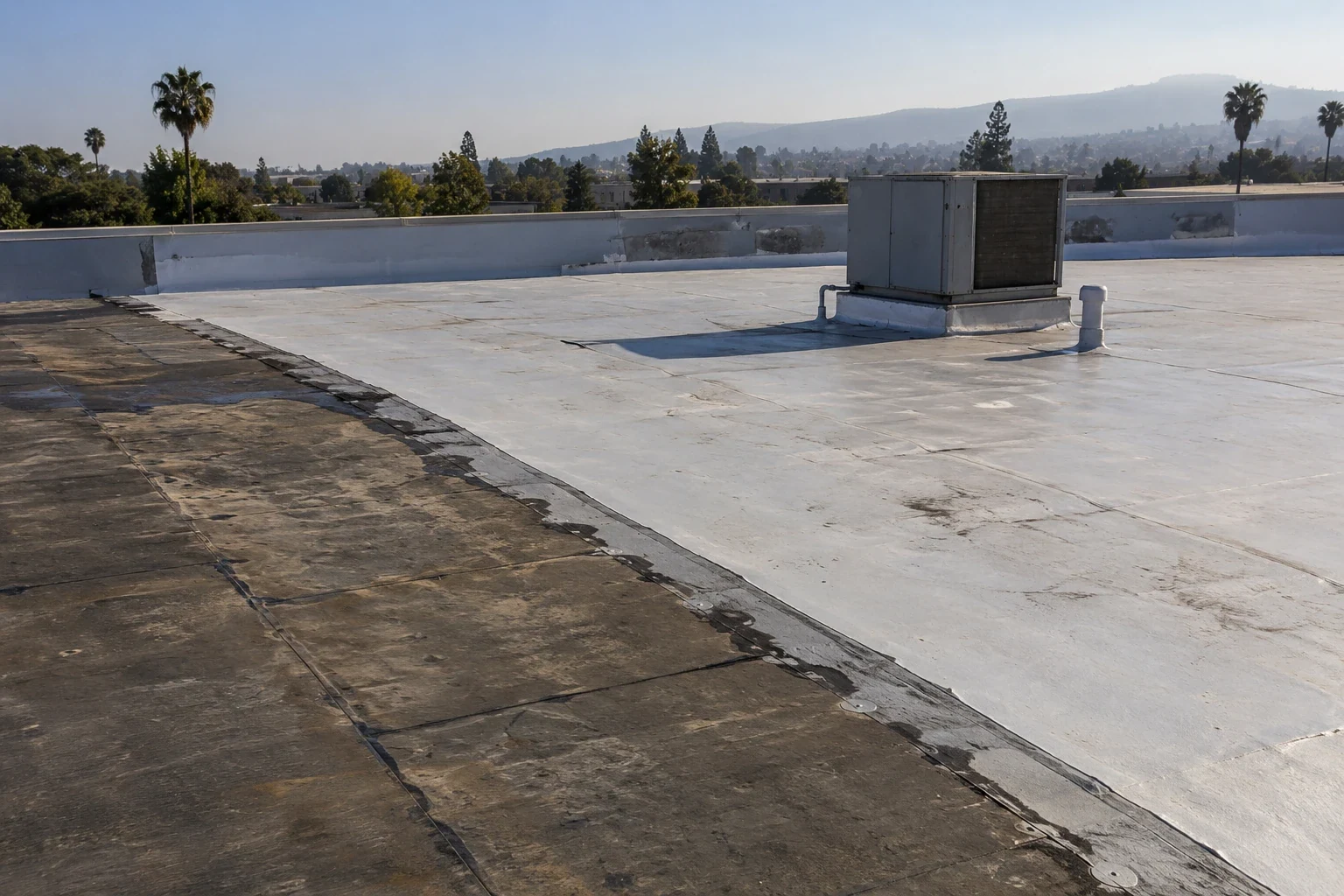
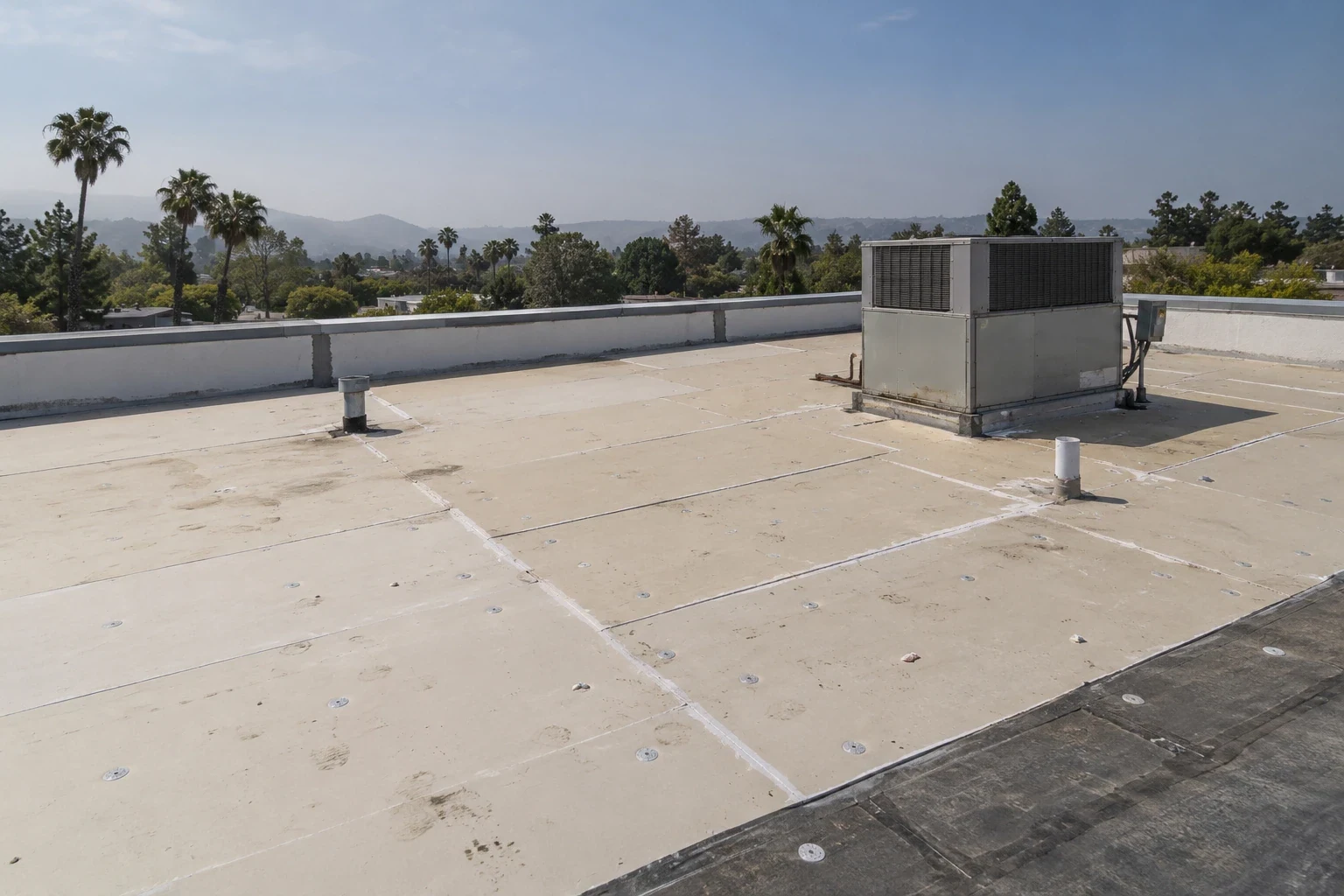
Keeping existing layers can save some tear-off cost, but the new roof still needs a sound surface to attach to. We check moisture, the existing attachment and the proposed installation method before recommending an overlay. A roof that works for one system may not work for another. The price should include preparation and any spot tear-off needed, rather than assuming the old roof answers those questions.
Pricing a roof recover includes the requirements of the new system and any design review needed. We put those costs next to full tear-off, including how unknown conditions would affect either option. Keeping the old roof is worthwhile when the result is well defined. If deck repairs or wet insulation make a recover impractical, we explain why a full tear-off is the better answer.
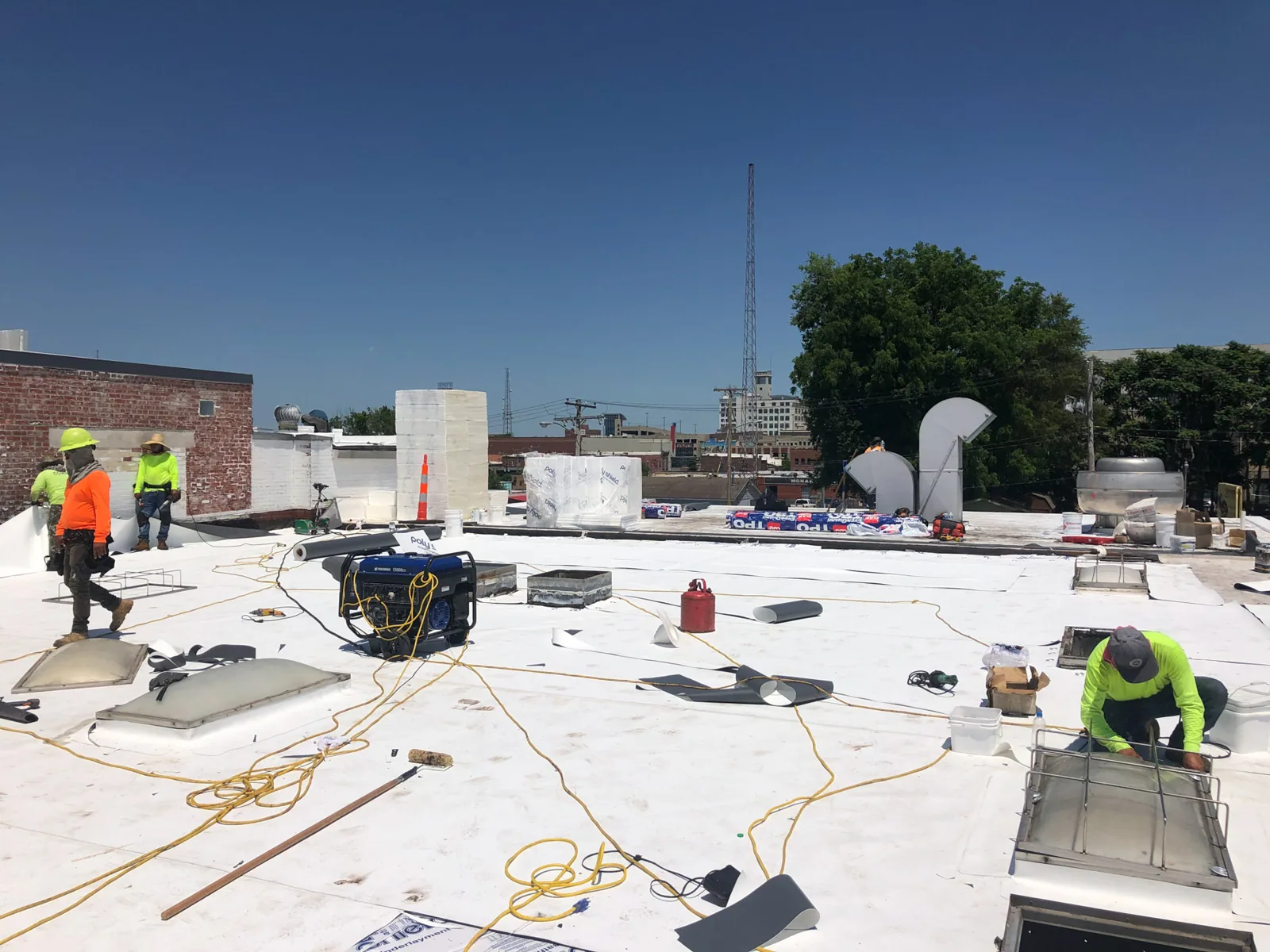
Once the old roof comes off, the building is exposed until the deck repairs and new waterproofing are done. How much roof to open at once depends on access, how much repair is needed and how reliably the area can be sealed before the end of the day. A big opening may look efficient but can be more than the crew can safely close up when deck work is still uncertain. We identify that limit before presenting a faster schedule as the cheaper option.
For reroofing over an occupied building, each phase ties interior protection to the tear-off and replacement work. At a property near East Eighth Street, we would agree the affected spaces and access route with the building's manager. Smaller phases can add setup and protection costs; one larger phase may need a longer agreed shutdown. You can compare both with the needed deck repairs included in each.
A replacement is a good time to look at insulation and the roof's reflectivity. Whether an upgrade pays off depends on the existing roof, how the building is used and the materials chosen. A reflective surface absorbs less sunlight, but it does not guarantee a set energy saving for a building nobody has studied. We show the construction work an upgrade requires before using a possible operating benefit to justify the cost.
Adding roof insulation and cover board means coordinating thickness, fastening and transitions with the roof's actual layout. Thicker insulation raises the roof surface, which changes the details at drains, curbs and wall flashings. We price those adjustments as part of the job rather than treating insulation as a simple per-square-foot add-on, so the upgrade comes with a complete cost and none of the affected details are left out.
A second building in San Jacinto may have a different deck and need different testing. We work out its quantities separately before recommending combined purchasing. Looking alike from above does not mean the attachment or deck are the same. Once each scope is defined, a combined purchase can be compared with separate phases using real setup, protection and material needs.
For another building in Hemet, the plan can separate urgent repairs from a later insulation or reflective upgrade. We explain which testing will settle the replacement quantity and what uncertainty remains. You can then choose a recover or a tear-off with the deck work and interruptions clearly shown, instead of picking a finish first and discovering the deck repairs after the price is agreed.
The San Gorgonio Pass wind setting calls for close attention to edge metal, coping attachments and rooftop equipment supports after a strong wind event. Those details should be inspected on the property itself; regional wind exposure is not proof of uplift damage. Note any loosened fastener, displaced sheet metal or membrane separation and distinguish it from older wear. For a warehouse or retail roof, agree on where a lift can operate without blocking service traffic. A repair estimate should specify the tested perimeter and the length of detail actually affected.
Only once we know how far the damage goes and what the fix is. Where the problem may be structural, an engineer should review it. Then the roofing proposal can show the deck work, who is responsible and the installation sequence, instead of guessing at a structural repair.
When the existing layers are dry, well attached and suitable for the new system. We check those things before recommending a recover. Any spot tear-off or deck repair goes into the comparison, so you see the full recover cost next to replacement.
No bigger than the crew can repair, protect and seal before the end of the day. We size phases around the confirmed deck work and the interior protection agreed with you. Smaller phases cost more in setup but reduce exposure while repairs are underway.
It depends on the existing insulation and the cost of adjusting drains, curbs and flashings for a thicker roof. We check what is there and price the full upgrade, so you can weigh the potential benefit against the real cost without assuming every building gains the same.
Anything that could significantly change the tear-off or deck repair quantity. We show what testing will tell us and how test openings will be sealed. With that information you can compare a recover with replacement and set a budget that includes protection and installation.
Send us the Beaumont property address, any concerns about the deck and the roof work you are considering. We will tell you what testing is needed and compare recover and replacement costs with a practical phasing plan.
Request a Roof Assessment