The sun heats a flat roof and the wall beside it at different rates, and over time that movement opens up the flashing where they meet. On many San Jacinto commercial buildings, that roof-to-wall joint is the place to start. Our Temecula, CA team provides commercial roof inspection, repair, restoration and replacement, with the permanent scope tied to the actual flashing and the material around it. For a San Jacinto building, we inspect the wall flashing and the layers behind it before deciding how much roof can stay. We also confirm the affected room, the access route and the building's work hours before pricing the opening and its protection.
A stain near a wall might come from the roof flashing, a crack in the wall itself or somewhere higher up. So the first step is finding where the water gets in and checking what the repair will tie into. Then we compare a flashing repair with a larger tear-off, including interior protection and anything either option would disturb. A lighter roof color can reduce heat gain, but it will not fix a failed roof-to-wall flashing.
The edge of a wall stain is a poor guide to how much roofing needs work. Water can get in at the top of the flashing, run down behind it and show up somewhere else. We inspect the roof flashing and the wall details we can reach, then decide whether a small test opening is needed to answer what is left. Any opening should have a clear purpose and a way to seal it that suits the construction.
Our commercial roof leak repair separates where the water gets in from the damage it causes inside. We identify the material the repair will tie into and whether it is sound enough for a lasting fix. If nearby layers need to come out, that quantity goes in the proposal. You get a defined repair price, not a tempting allowance that depends on leaving bad material behind the new flashing.
A roof and the wall next to it move differently with temperature changes and building movement. The permanent flashing needs proper fastening, a good termination and room for that movement. A rigid patch across a moving joint just pushes the stress somewhere else. We look at what we found and what the roof system requires before choosing a repair method or recommending that the flashing be rebuilt.
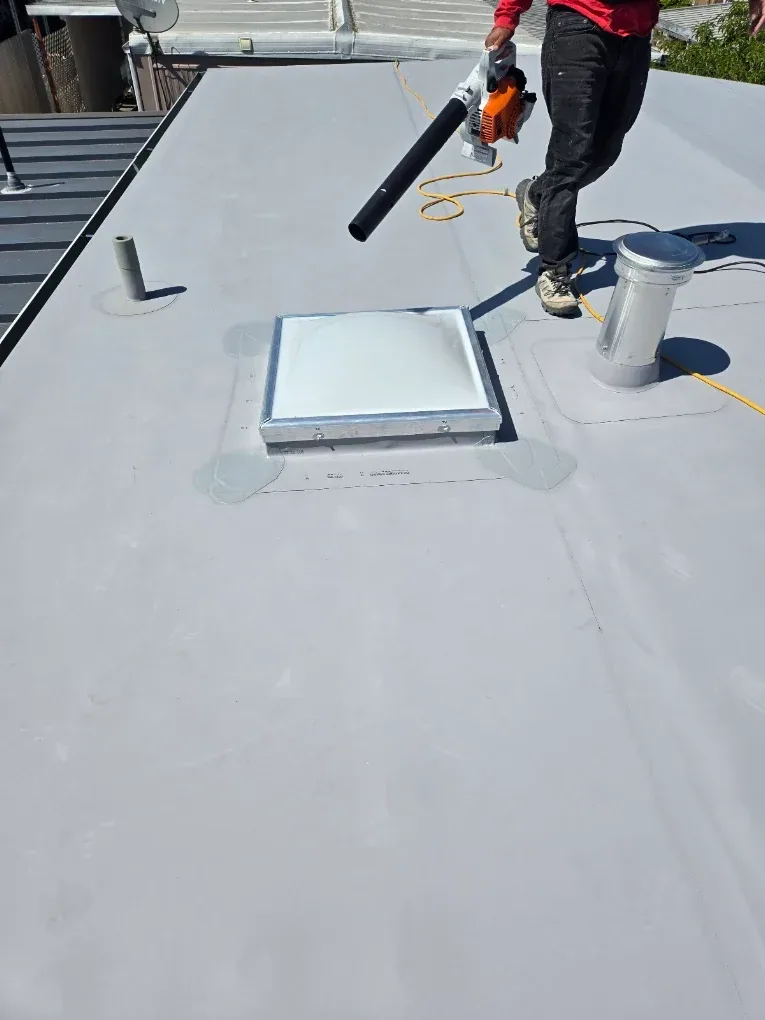
Our skylight and penetration flashing comparison includes the wall surface and anything the repair will disturb. If the wall itself needs work, the right trade and sequence have to be defined. A roofing-only price is hard to compare with a complete wall-flashing repair unless those responsibilities are clear. We explain which work stops the leak and which wall problem still needs attention.
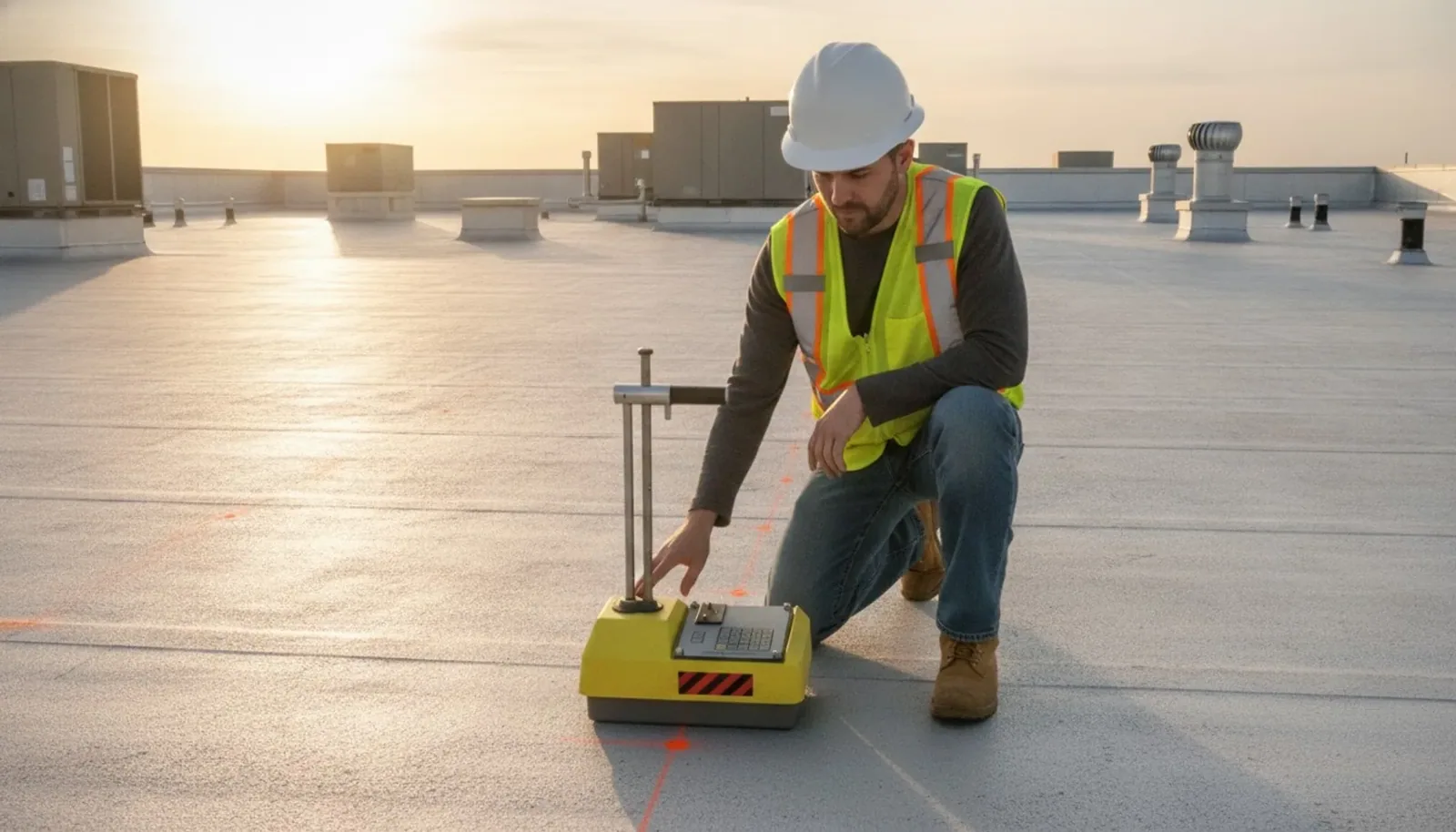
Water behind a wall flashing can spread into insulation well beyond where a surface patch looks reasonable. We check the surrounding roof and use moisture testing to find how far the damage goes before treating a repair as complete. A scan points us in the right direction, while core samples confirm how much to remove. You need both the reasons for the decision and the cost of settling any remaining questions.
An infrared moisture survey can help pick areas for a closer look when the roof and weather conditions allow a meaningful scan. Its results still need to be confirmed rather than turned straight into tear-off quantities. We compare repair and replacement based on what can stay, what needs replacing and the protection each opening needs. That turns a vague question about keeping the roof into a specific construction decision.
Work at a roof-to-wall joint can expose the room below even when the rest of the roof stays covered. Before opening the flashing on a San Jacinto building, we agree with the building's manager on the affected room and access route. Debris handling, temporary sealing and room protection need to match the opening, not the size of the original stain.
Our occupied building reroofing plan should show how testing turns into permanent repair. A smaller phase may fit the building's schedule but add setup or repeated protection. One combined phase can avoid that repetition while needing a longer agreed shutdown. We present those costs with the technical scope so you can choose timing without cutting the flashing work just to shorten the time crews are on the roof.
A related building in Hemet may have a similar wall leak with different construction behind it. We inspect each joint before recommending a shared repair detail or combined material purchase. Coordinating the work can cut duplicate setup where it fits, but each building still needs its own removal limits and protection. Purchasing decisions follow those defined tasks.
For a roof in Winchester, the same order separates stopping the leak from a later surface upgrade. We put wet insulation removal and permanent flashing repairs first, then compare restoration with replacement using full preparation costs. A reflective finish can be chosen once the roof is sound. That way you pay for the work that fixes the problem before paying for an upgrade the repair would tear up.
At the north end of the valley, higher elevation and cooler winters make seasonal scheduling useful for roof maintenance. Before the rainy season, check drains, seams and flashing transitions; after a cold night, check whether water is sitting at a low point. Do not assume freeze damage without visible evidence. School or college buildings may have restricted work windows, so confirm the calendar and interior protection needs before opening the roof. The closeout should note any weather-sensitive item that needs another look.
No. Where water gets in and the condition of the surrounding layers decide that. We inspect the roof-to-wall joint before recommending removal. A defined flashing repair often works where the material around it is sound; wet or damaged layers can make the job bigger, and the proposal explains why.
They should say who fixes each part of the joint and how the pieces connect: the flashing termination, preparation, any wall repairs and temporary sealing. That makes a complete repair comparable with a larger tear-off and keeps an essential step from being left out of both bids.
No. Scans show where to look, and core samples confirm what is wet. We use the scan to guide testing, then set the repair area from the findings, with any remaining uncertainty shown in the price.
No. A reflective surface reduces heat gain but does not fix a failed roof-to-wall flashing. Fix the leak and any wet insulation first, then a coating can be considered for its cooling benefit.
It depends on how securely each opening can be sealed and how the room below is used. We compare setup, protection and repeat disruption for both. Testing first can clarify quantities, while one combined phase avoids duplication once the repair area is known.
Send us the San Jacinto building address, where the stain or leak is showing near the wall and any roof information you have. We will inspect the flashing and compare a complete repair with larger replacement options before you set a budget.
Request a Roof Assessment