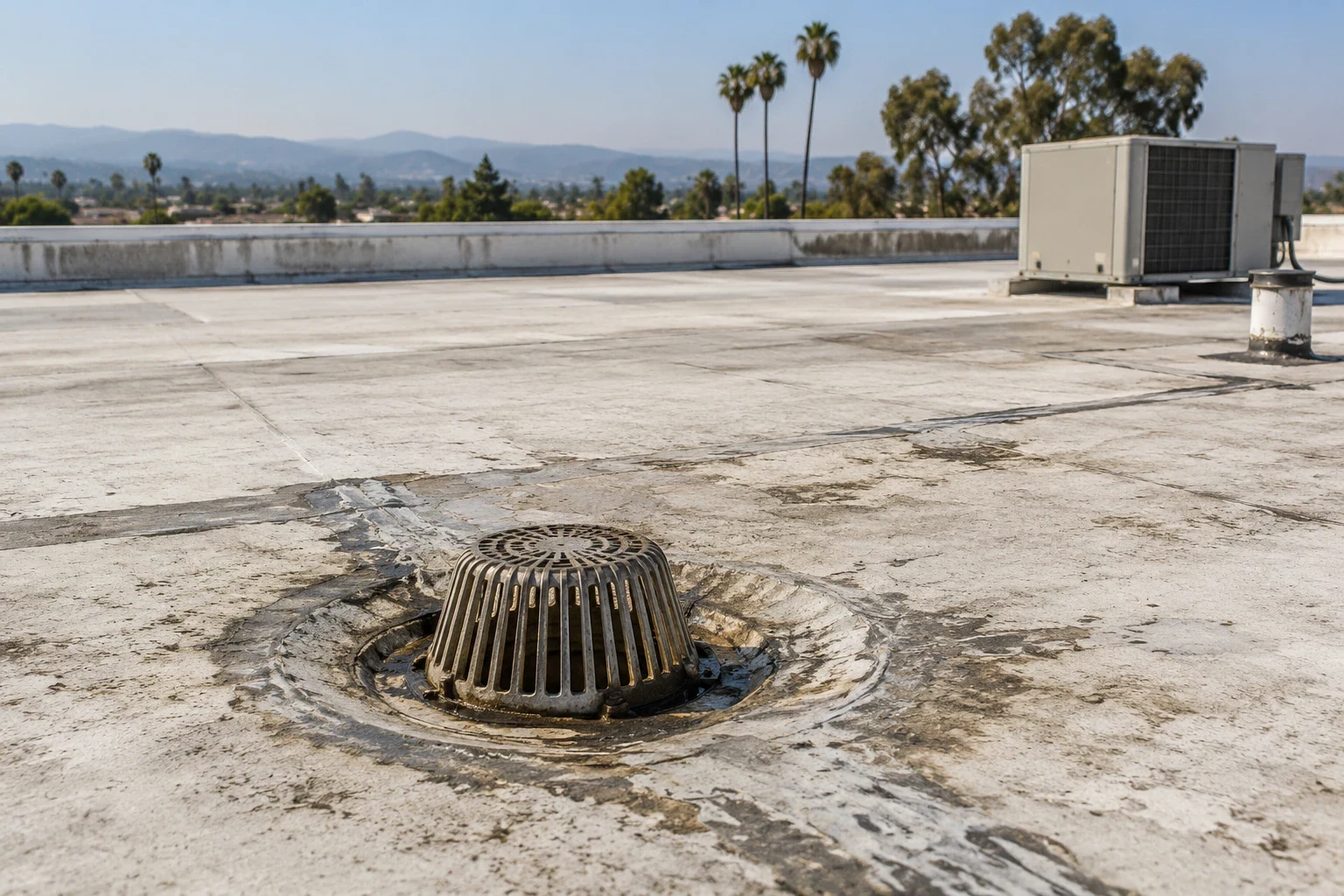
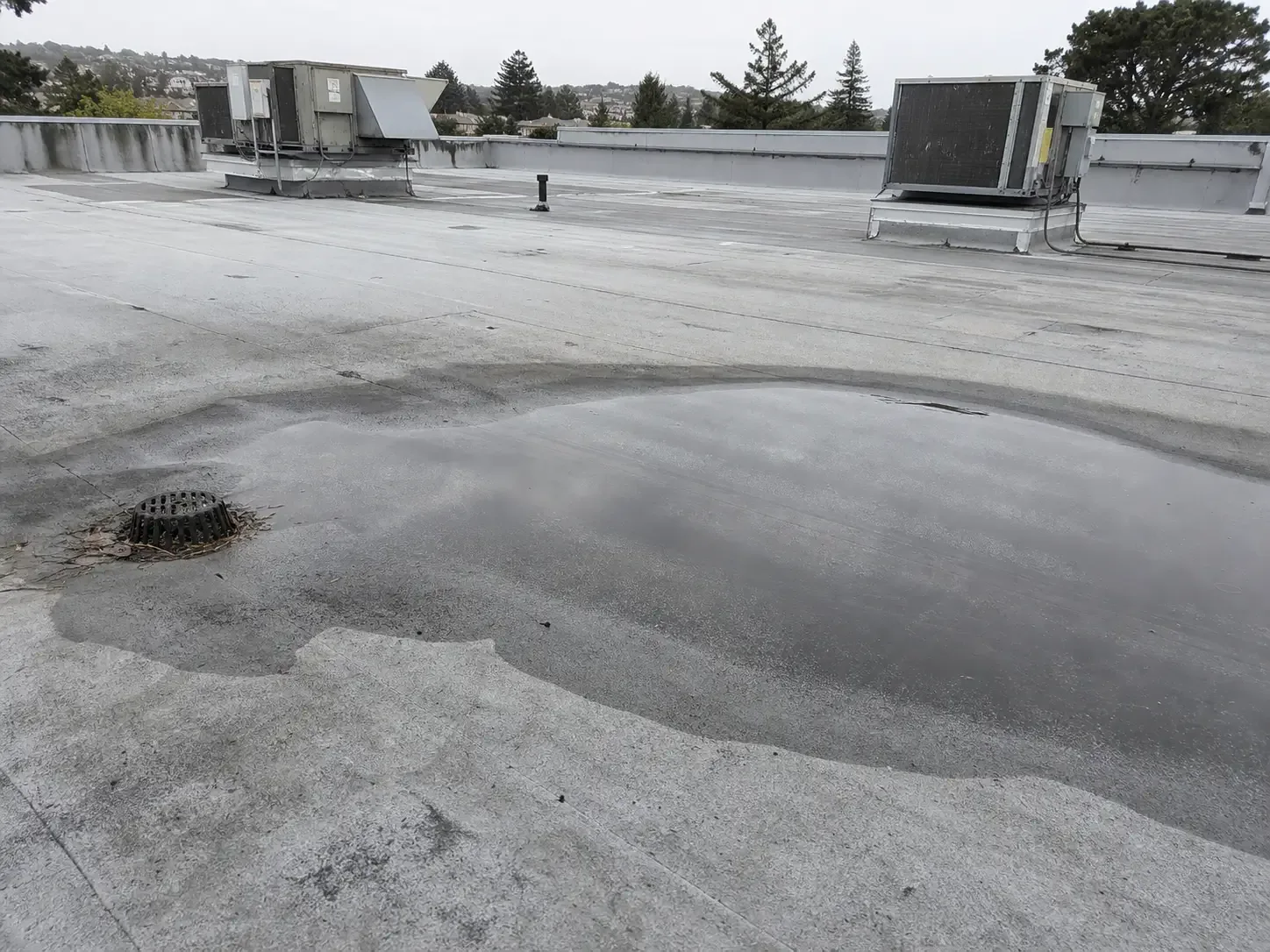
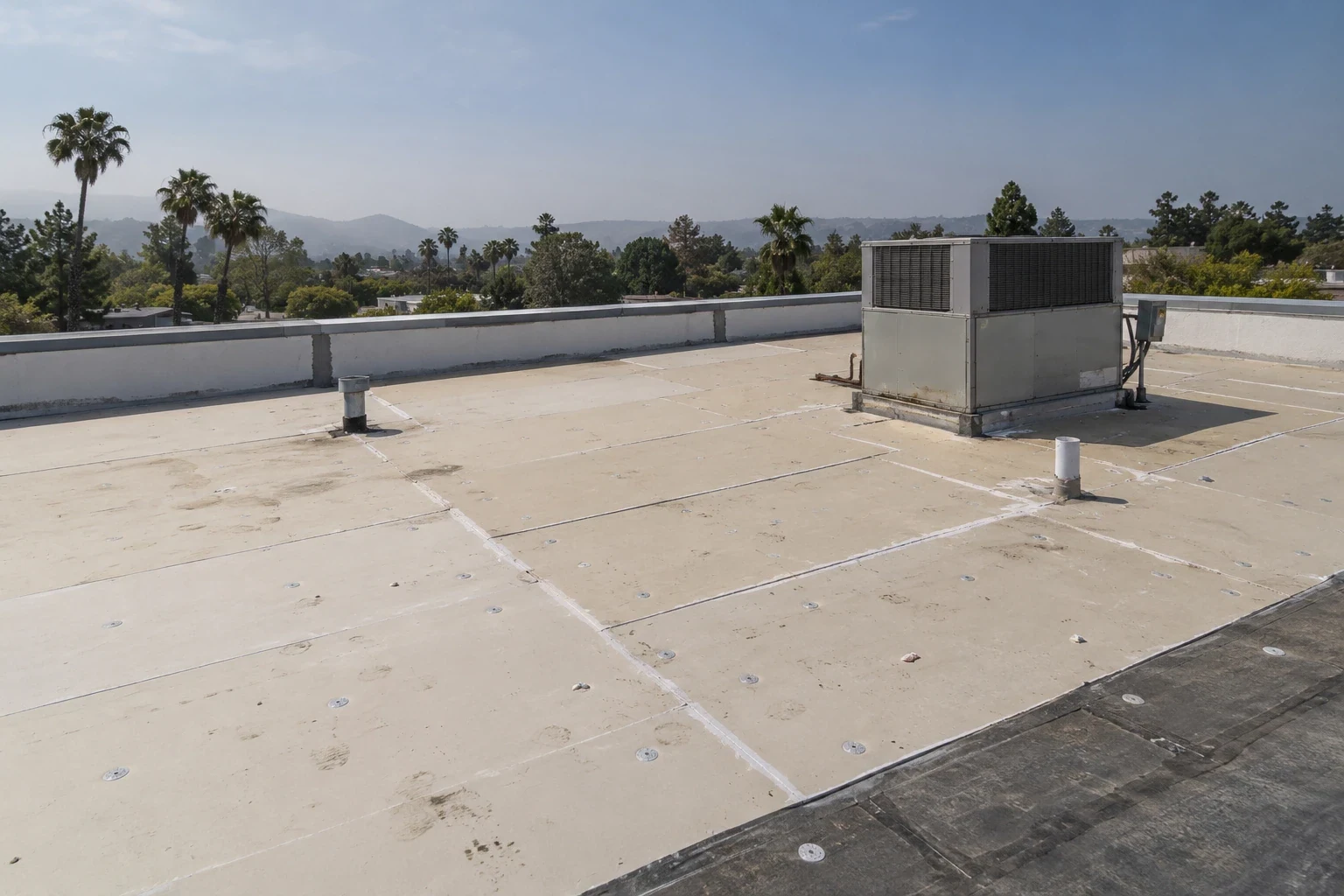
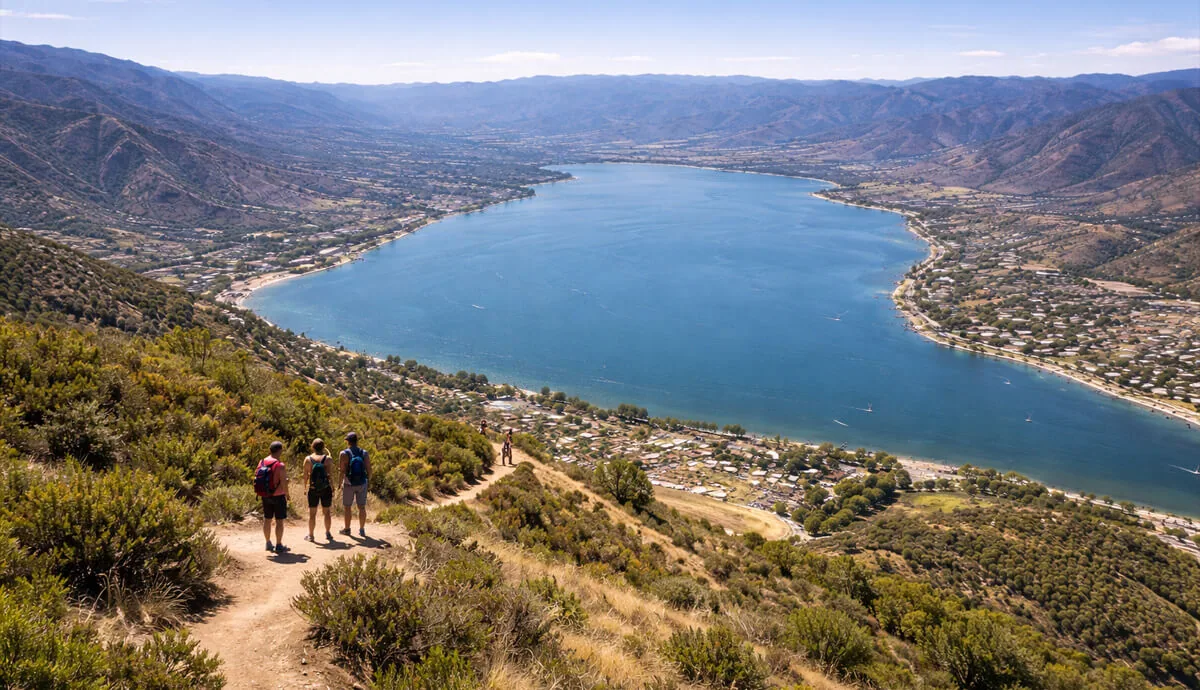
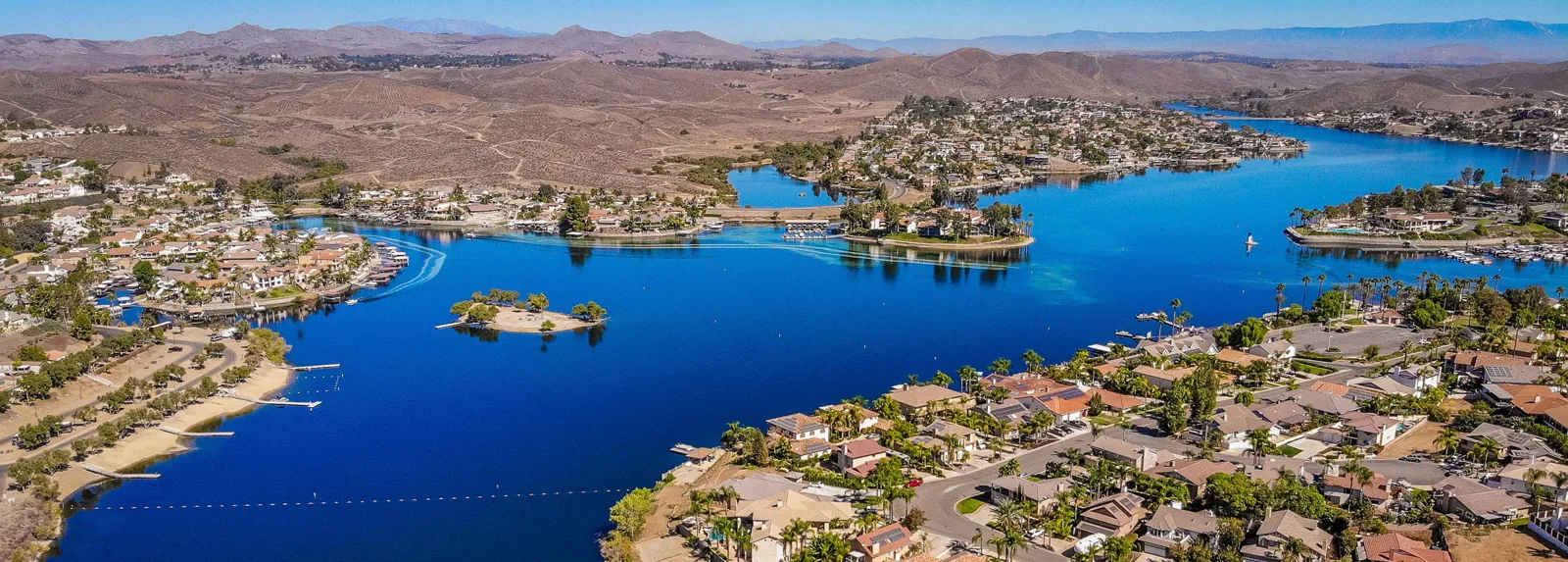
A low spot that holds water can drive the roofing budget on a Lakeland Village commercial building, even when the owner is also thinking about a reflective coating for the summer sun. We inspect, repair, restore and replace commercial roofs from our base in Temecula, CA, and we find the low point and what is causing it before recommending a permanent fix. Lakeland Village sits along Grand Avenue on the western side of Lake Elsinore and is part of our wider service area. Each building is identified by its address and on-site contact and assessed on its own roof conditions.
Standing water does not tell you whether the problem is a clogged drain, a sagging deck or movement in the roof. We look at the drainage path and the material around it, then explain what testing would tell us what to fix. The cost comparison separates drain cleaning from rebuilding and from wider roof removal. A cooler surface can be chosen afterward, but first you need a price for the repair that actually gets water off the roof.
The edge of the puddle is not always the edge of the problem. We inspect the drain, the area leading to it and the slope around it, separating a simple blockage from a condition that requires changing the roof. If insulation or decking has sagged or weakened, the repair may extend beyond the visible low spot. The recommendation should say what we found and flag any open questions before quantities are set.
Our roof drains and scuppers work compares cleaning or minor detail repair with the rebuilding the drainage actually needs. Problems downstream in the drain line get attention when they affect the fix, with a design review if needed. That keeps a local repair price from leaving out the connected drain work. You can tell the difference between routine maintenance and construction that changes how the roof drains.
The insulation around a low area may be wetter or looser than the rest of the roof. We check what we can see and use moisture scans or core samples before recommending that it stay. A dry surface does not mean the insulation underneath is dry. Wet or damaged layers need to be replaced and properly tied into the roof around them.
Our ponding water roof repair scope is based on the condition of the low area. We tie the quantity to what the inspection found and to the drainage detail being installed. The comparison includes rebuilding and protection, so a local repair can be judged against a bigger tear-off on the full scope of work, not just the size of the puddle.
Building up a low area can change the flashings at nearby walls, curbs and drains. The added thickness and transitions have to suit the roof system and still let water drain properly. We look at those details before choosing a repair method. What looks like a simple fill can create a new problem at the next detail if those connections are not planned and priced.
Our roof insulation and cover board planning, including tapered insulation where it helps, ties the change to fastening, preparation and the details it affects. We explain any design input needed rather than treating more insulation as a cure-all for drainage. That gives you a complete comparison between a targeted fix and tear-off. The price includes the transitions needed to make the new slope work, so a small drainage improvement does not leave a bigger flashing job unpriced.
A low-spot repair can leave the interior exposed while insulation and drain details are being rebuilt. For a Lakeland Village property, we agree on the affected space and access route with the building's manager. Temporary protection, material handling and end-of-day sealing need to match the tear-off and rebuilding work. The right phase size is the area that can be fixed and sealed with those steps included.
Our occupied building reroofing planning compares smaller openings with a single larger phase where either would work. Repeated setup can add cost, while a larger phase may need a longer agreed shutdown. We present both with the same permanent drainage work. You can choose timing based on the actual construction, not the size of the puddle or a coating schedule that skips the repairs underneath.
Another building in Lake Elsinore may have a similar low area with a different drain or a different problem underneath. We inspect it separately before recommending shared materials or a common detail. Buying together helps once repair quantities and preparation are known. Each building still has its own drainage work, access needs and protection costs.
For a roof in Canyon Lake, the plan can also put drainage repairs ahead of a reflective coating. A cooler surface may help with heat, while insulation and how the building is used affect the result. We compare that option after the drainage and existing roof are sorted out. That keeps you from paying for a coating that the drainage repair would later tear up.
Properties beside Lake Elsinore should receive a site-specific review of wind exposure and drainage, especially at perimeter transitions. The nearby lake is geographic context, not evidence that a building has moisture damage or corrosion. For commercial roofs, inspect the membrane and metal details directly, then trace any interior leak toward the nearest curb, wall or outlet. Smaller community sites may have only one person available to grant access, so confirm that contact and any tenant notification in advance. A clear record prevents an incomplete visit from being mistaken for a clean roof assessment.
Keep the owner's service record tied to the actual building and roof zone so a future inspection does not confuse nearby residential conditions with commercial findings.
No. A clogged drain may just need cleaning. A sagging deck or wet insulation may need rebuilding. We check the drain, the slope and what is underneath before recommending tear-off, and the proposal explains what we found and what the fix includes.
Sometimes, but it has to be planned with the fastening, drains and nearby flashings. We check those transitions and get design input where needed. The price includes those details so the fix does not just move the ponding or create a flashing problem nearby.
Ask how the repair changes the low spot and how water will get from there to the drain. Problems in the drain line itself should be identified too. That lets you compare maintenance with rebuilding based on a clear result, not a surface patch that leaves the same low spot.
No. Drainage repairs can tear up a coating applied first. Fix the drainage and the material underneath, then consider a coating. Combining both in one scope can work once the preparation and details are defined.
The interior protection needs and end-of-day sealing set the practical phase size. We compare setup and protection costs for small openings with one larger phase, so the building's contact can choose timing with the full drainage repair included.
Send us the Lakeland Village property address, where water is ponding and anything you know about the drains. We will trace the problem and compare complete repair options before you decide on any larger roof work.
Request a Roof Assessment