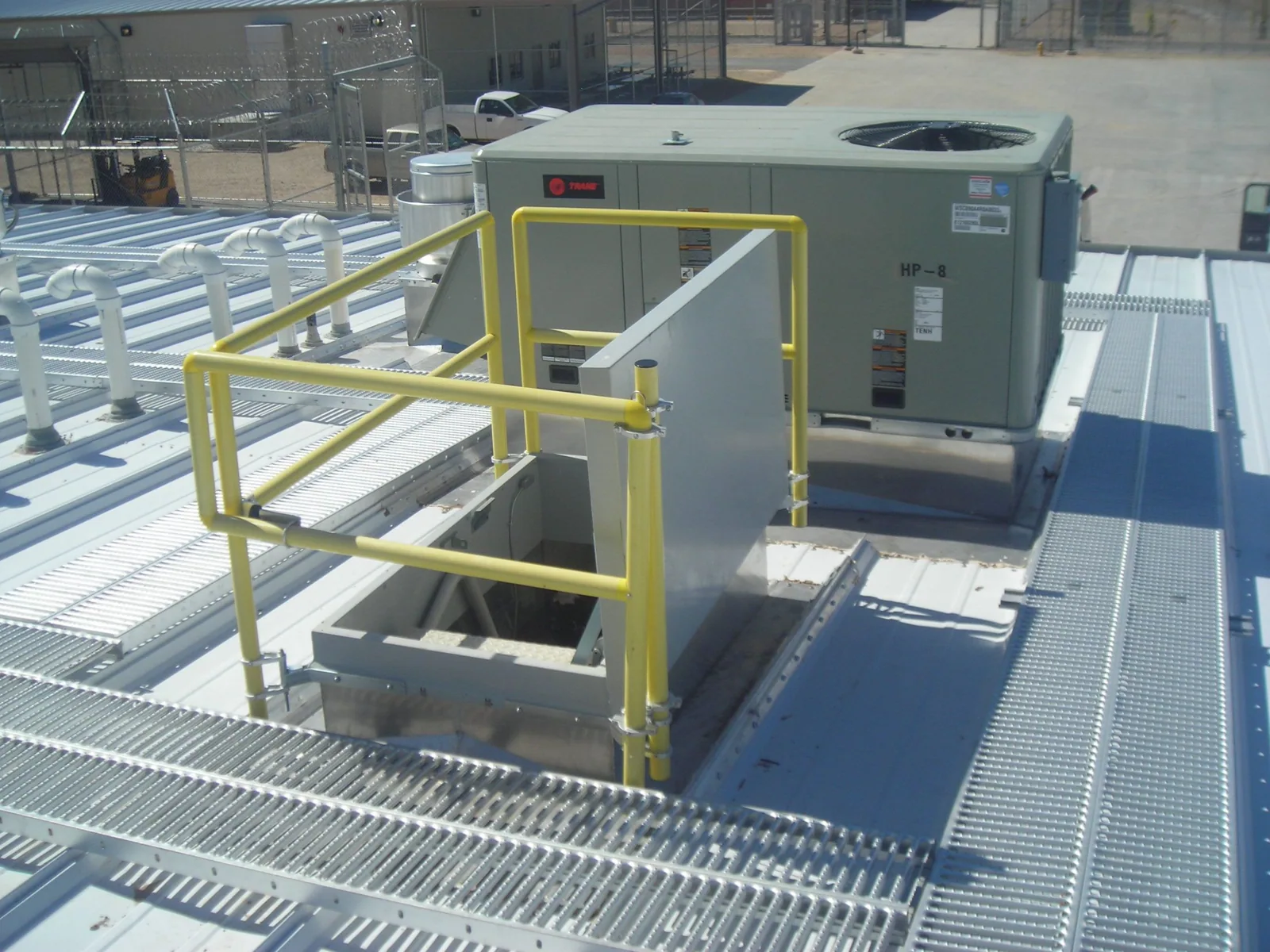
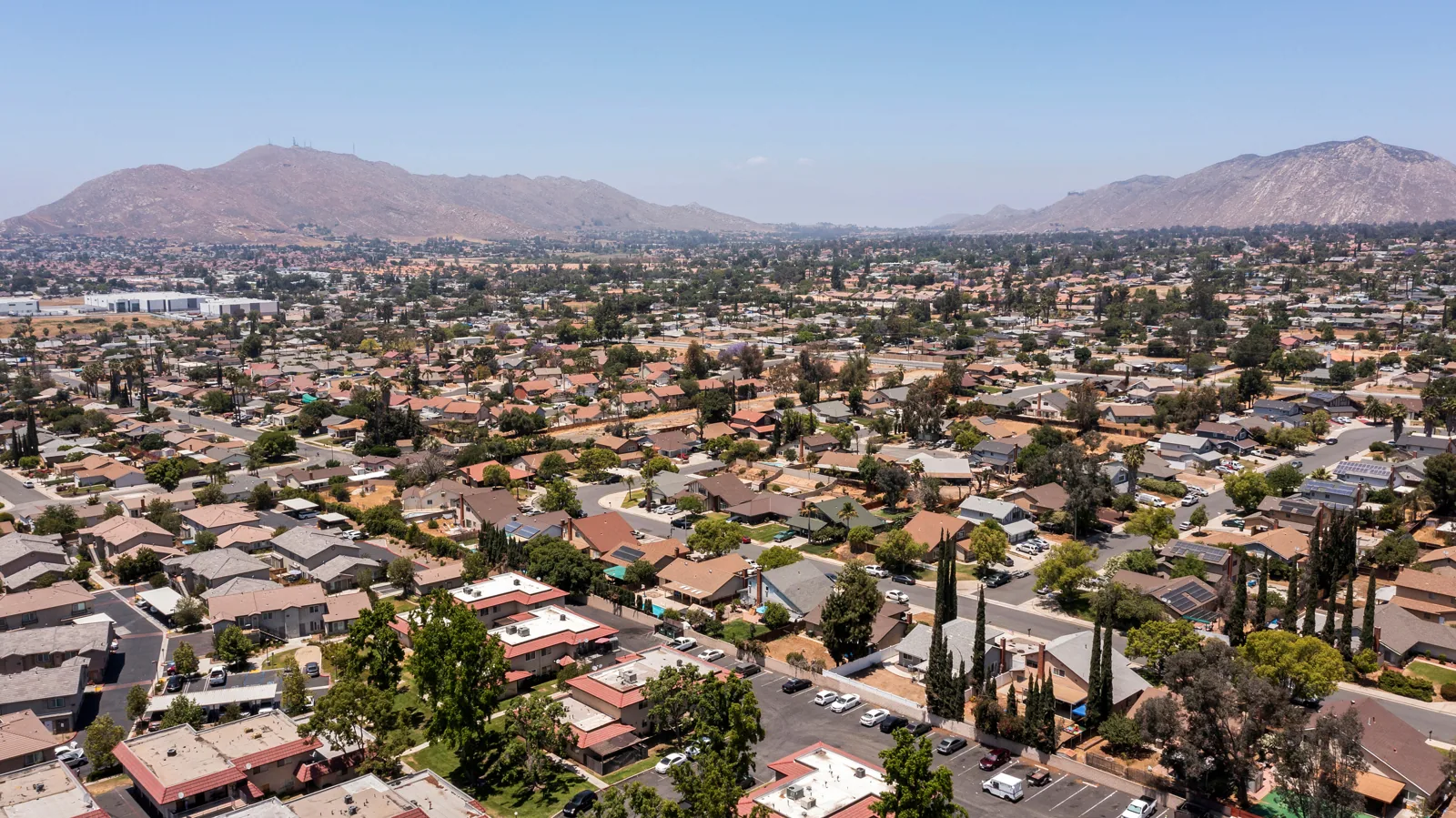
On industrial roofs in the March Inland Port and Meridian area, the problem is often under the equipment. A rooftop unit or pipe support pressing into a sun-heated membrane can crush the insulation and split the roof, and a quick surface patch is usually the wrong fix. We handle commercial roof inspection, repair and replacement from our base in Temecula, CA, and we look at how each support meets the roof before choosing a repair. The March Inland Port and Meridian area includes industrial and aviation-related properties in Moreno Valley. For each building, the conversation starts with its actual supports, the condition of the roof and the approved access route.
Industrial buildings around Meridian may share purchasing needs, but each one still needs its own look at supports and roof construction before scopes are combined. Summer heat makes exposed materials move at their connections, while concentrated weight from a support can damage the roof below it. We separate those two problems and compare a permanent repair with the real cost of equipment handling, testing and interior protection.
A support pad sinking into the roof surface can concentrate weight in a way the insulation underneath was not built for. We inspect the support, any visible dent and the membrane around it, then decide what testing is needed to check the layers below. A larger bearing pad can help as part of a proper design, but swapping pads based on looks alone does not prove the loads or the roof structure are right.
Our rooftop equipment curbs and supports work includes coordination with the mechanical contractor and an engineer where loads, bearing or layout need review. The proposal separates that work from the roof repair itself. Lifting or disconnecting a unit can affect the schedule and protection needs even when the damaged spot is small. We explain the full effort before you choose between a patch and rebuilding the support connection.

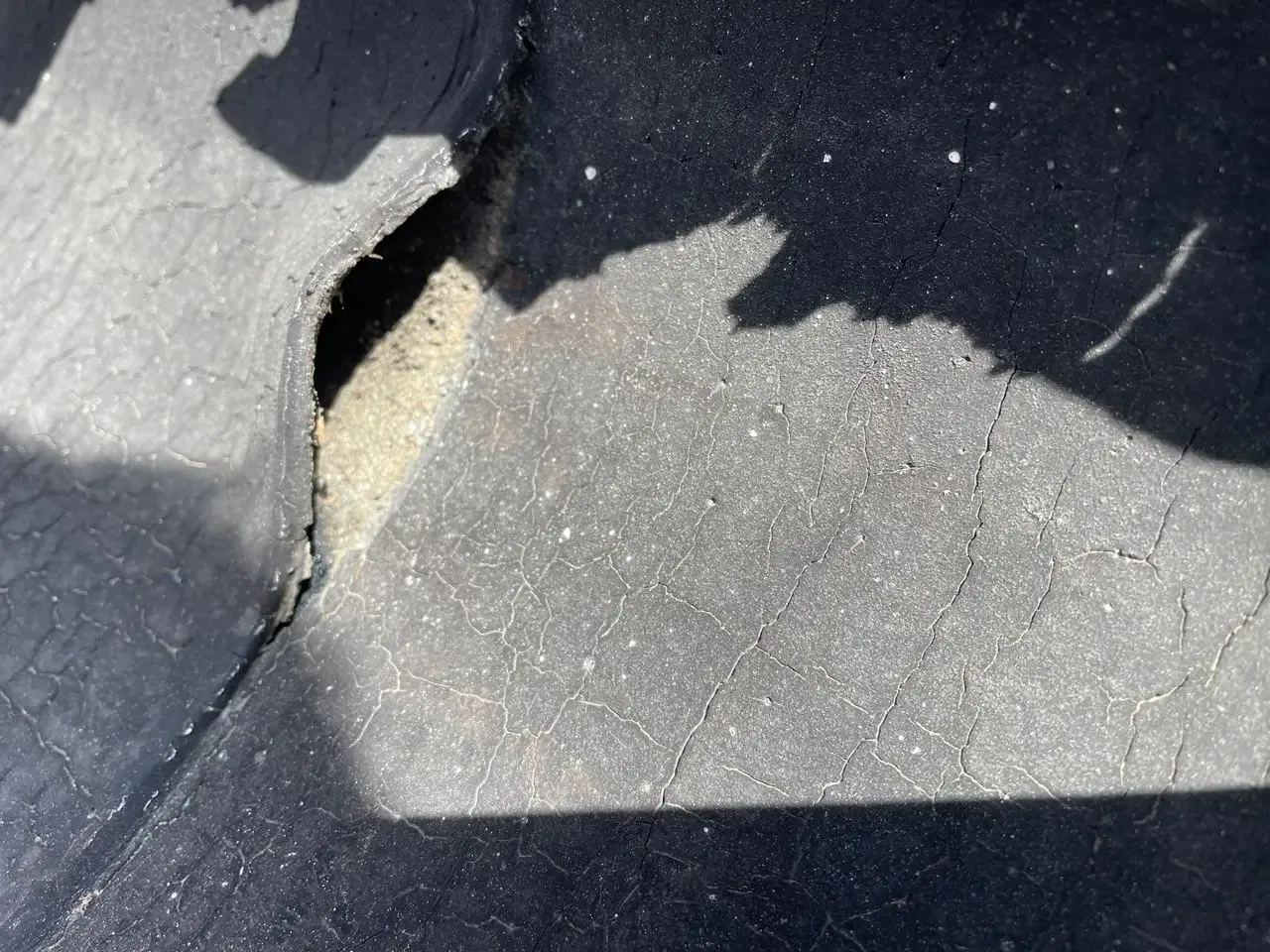
A rigid support and the membrane around it expand and contract differently as they heat and cool. We check whether the support is pinning the roof in a way that concentrates strain at a nearby seam or corner. The permanent detail has to suit the roof system and allow for that movement. A patch over the damaged spot may only be temporary if the same restraint is still there.
For seam failure repair near equipment, we check the membrane and the right repair method before setting the repair area. A proper repair may need cutting back past the visible split to sound membrane. We compare that with broader work where the inspection supports it. The cost includes preparation and any support changes that fix the cause, not just the new material you can see once the patch is done.
Soft spots under a support can mean wet insulation, crushed board or a problem in the deck. We inspect what we can reach and take test cuts where needed to find out what can stay under the permanent repair. A dent does not tell you how much to remove or whether the deck is strong enough. Any structural question gets an engineer's input before a new roof covers it up.
A commercial roof inspection around the supports ties those findings to clear next steps. We explain whether a test opening is needed and how the result would affect tear-off, rebuilding and fastening. You can then compare a local repair with replacement based on confirmed conditions, instead of accepting a coating or recover price while the area under the heaviest equipment is still a question mark.
Moving equipment can open up the roof and restrict operations below at the same time. For a building like the general aviation terminal on Heacock Street, we would confirm the affected interior, permitted access and the coordinating contact before setting the schedule. Those details come from the specific building. The plan ties lifting the equipment to tear-off and reinstallation, so a support area is never left open waiting on another trade.
Our occupied building reroofing plan includes debris handling and protection suited to each opening. A smaller phase can reduce disruption but adds setup or crane time. We compare workable schedules with those costs visible, so you can choose based on real dependencies. The permanent repair and its requirements stay the same while the operating calendar decides how the work is staged.
A second building in Moreno Valley may have equipment mounted differently from a Meridian-area roof. We keep each building's support, attachment and roof findings separate before discussing combined purchasing. Similar equipment does not mean matching roof details. A combined schedule can help once the lifting, testing and protection needs of each building are known.
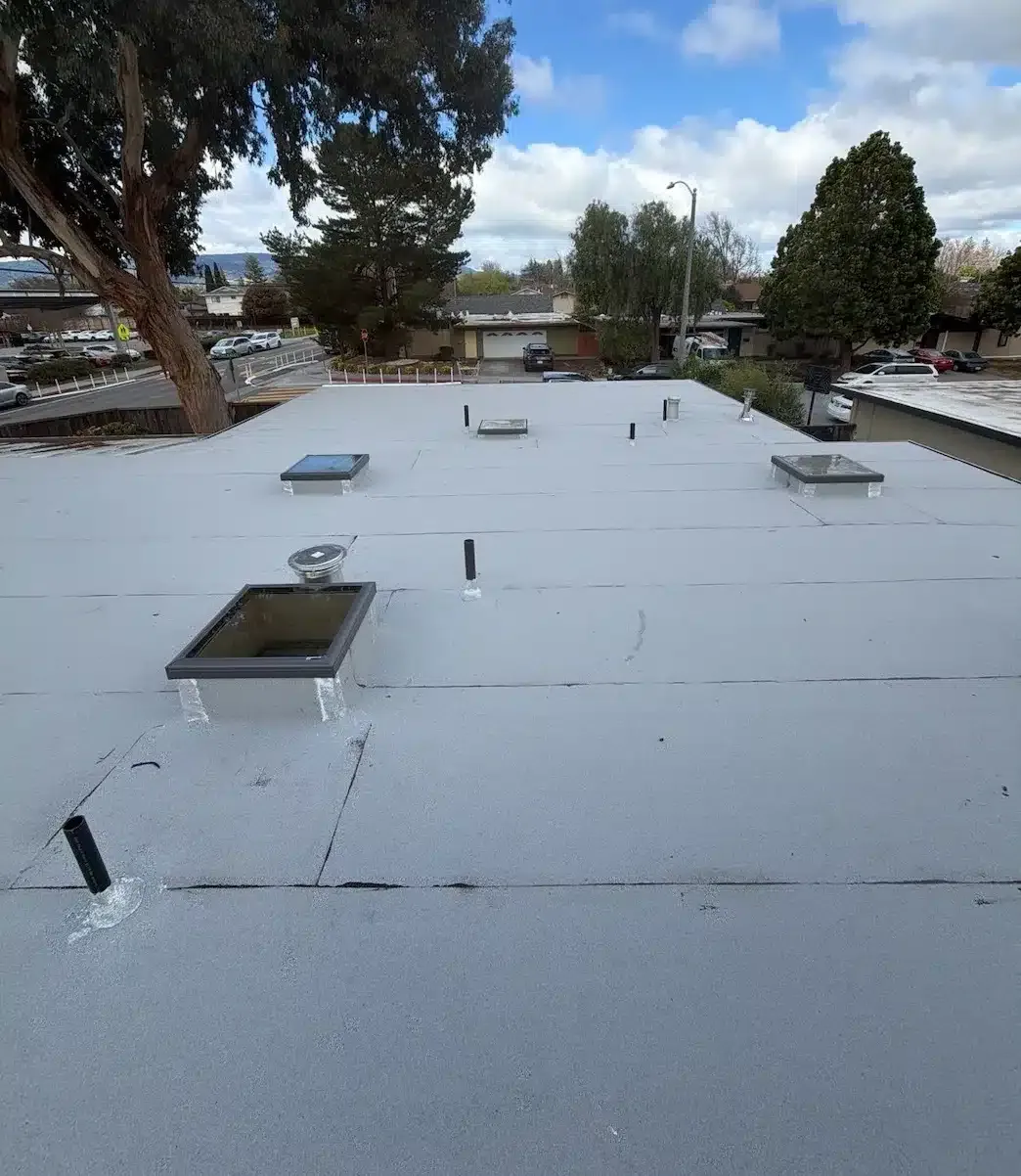
A project in Riverside can be included with its own recommendation. We put active leaks and damaging support contact ahead of an optional coating, then look at a reflective finish for heat. Insulation, equipment and interior loads affect any cooling result. That order lets you compare the full permanent repair with a surface upgrade, without installing new work that unresolved support problems would later tear up.
The March area's combination of air cargo, redevelopment and rail access makes it important to identify which operator controls each building. Ask about gate procedures, truck paths and any active construction that could affect roof access. Logistics buildings often have large drainage fields; mark their low points and note whether drains were inspected or tested. Keep neighboring redevelopment parcels outside the repair scope unless the owner authorizes them. A dated closeout should record the roof section, any temporary protection and the contact handling follow-up.
Maybe, but the loads, bearing area and roof structure need to be checked first. We inspect the support and bring in the mechanical contractor or an engineer where needed. The roof repair is priced separately from changes that need a load or layout review.
Sometimes. It depends on whether we can reach sound membrane and whether the equipment is causing the strain. If the support has to move to fix the cause, the proposal includes that work rather than calling a partial patch a permanent repair.
It means we need to find out what is underneath, whether wet insulation, crushed board or deck damage, before setting the repair quantity. We recommend the right test opening and explain how it could change the repair and whether an engineer is needed.
We confirm access rules and operating requirements with the building's manager before any lifting or tear-off is scheduled. The plan ties equipment lifts, roof repair and end-of-day sealing together, and shows the protection and setup costs for each phase.
No. A coating can lower surface temperature but does nothing for a support that is crushing the roof. Fix the support and any damaged insulation first, then compare a coating on a roof that is ready for it.
Send us the building address in the March Inland Port or Meridian area, the support problem you are seeing and who coordinates equipment work on site. We will inspect the roof and compare a permanent repair with the equipment handling it requires.
Request a Roof Assessment